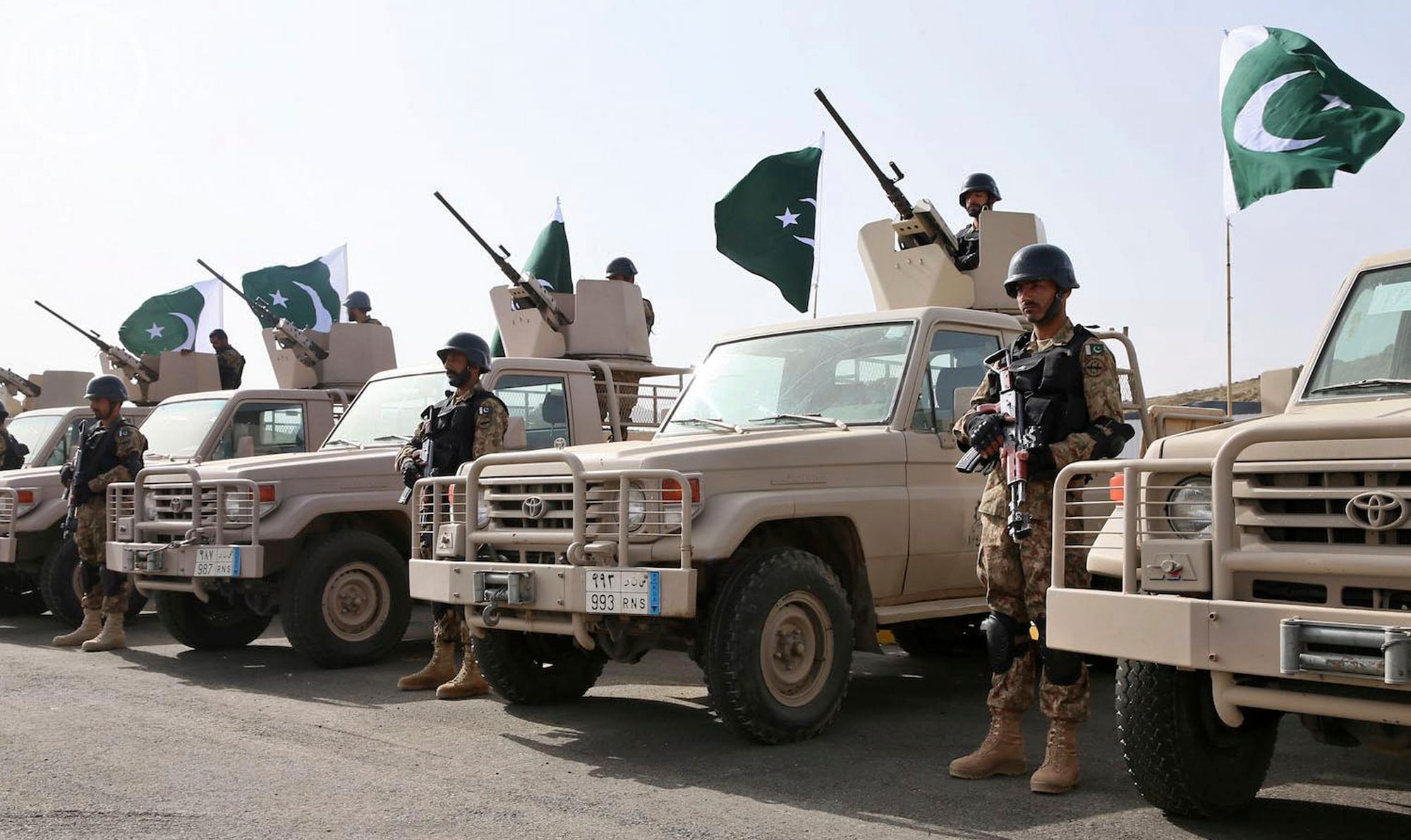
The headlines are screaming about a "total break." Media outlets are salivating over the optics of Pakistani jets striking targets in Kabul and Kandahar, framing it as the beginning of a terminal divorce between Islamabad and the Taliban. They want you to believe we are witnessing a fundamental shift in regional geopolitics—an "open war" that resets the board.
They are wrong.
What you are seeing isn't a war. It’s a domestic dispute between two entities that are fundamentally inseparable. Framing this as a traditional state-on-state conflict misses the mechanical reality of how these two powers function. Pakistan isn't trying to destroy the Taliban; it is trying to "fix" a subordinate that has forgotten its place.
The Fallacy of the Strategic Pivot
The "lazy consensus" suggests that Pakistan has finally realized the Taliban is a liability. For twenty years, the narrative was that Islamabad played a double game, sheltering the insurgency while taking American billions. Now, the pundits claim the "chickens have come home to roost."
This analysis is shallow. It treats the relationship as a tactical alliance when it is actually a structural dependency.
Pakistan’s military establishment doesn't have a "Taliban policy" that it can simply discard. The Taliban is the cornerstone of Pakistan’s "strategic depth" doctrine. Without a friendly—or at least manageable—regime in Kabul, Pakistan faces the nightmare of a two-front encirclement by India. You don't go to war with your only shield against your existential rival. You might kick the shield when it gets dented, but you don't throw it away.
I’ve sat in rooms with former intelligence officers who describe the TTP (Tehrik-i-Taliban Pakistan) and the Afghan Taliban not as separate organizations, but as a spectrum of the same ideological force. When Pakistan bombs Kandahar, it isn't declaring war on the Taliban movement. It is performing a high-stakes, kinetic intervention intended to force a renegotiation of terms.
The TTP is a Symptom, Not the Disease
The current friction stems from the TTP’s increased attacks inside Pakistan. The conventional wisdom says the Afghan Taliban is "protecting" these militants.
Let's dismantle that premise. The Afghan Taliban isn't protecting the TTP out of some sense of brotherly love; they are protecting them because they cannot dismantle them without shattering their own internal legitimacy.
The Taliban’s entire brand is built on a specific, uncompromising interpretation of Deobandi Islamism. If Hibatullah Akhundzada—the reclusive Emir in Kandahar—were to turn over TTP fighters to a "secular" Pakistani government, he would face an immediate internal mutiny. His fighters would defect to Islamic State-Khorasan (IS-K) in droves.
Pakistan knows this. General Asim Munir and the leadership in Rawalpindi aren't stupid. They aren't asking for the impossible; they are applying pressure to see how much "disruption" the Taliban will tolerate.
The Calculus of Kinetic Pressure
Imagine a scenario where a corporation owns a subsidiary that starts leaking trade secrets to a competitor. The CEO doesn't burn the subsidiary's headquarters to the ground; they fire the manager and cut the budget until the behavior changes.
The airstrikes are the budget cut. They are meant to:
- Signal to the domestic audience that the military is "doing something" about the surge in terrorism.
- Pressure the Taliban's pragmatic wing (the Baradar/Haqqani factions) to reign in the TTP's operational freedom.
- Test the limits of the Doha Agreement’s ghosts—reminding the world that Pakistan remains the primary arbiter of Afghan stability.
Why "Open War" is a Logistic Impossibility
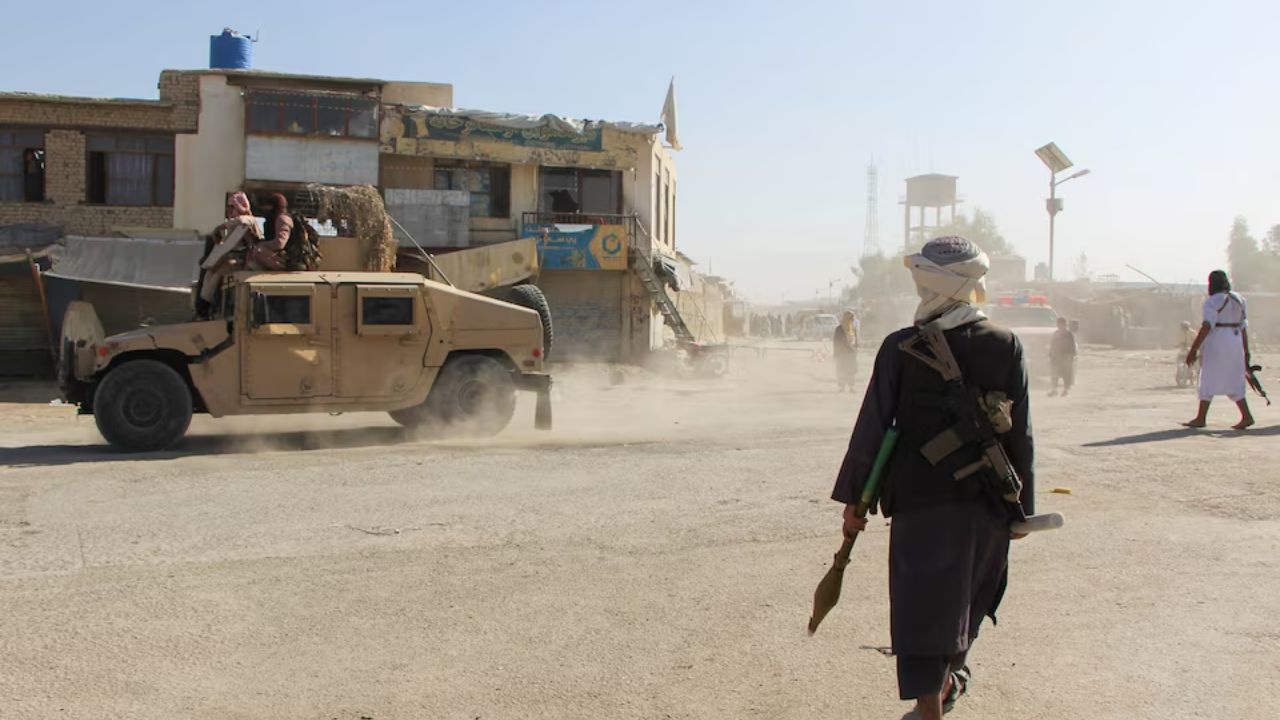
If this were truly an "open war," the borders would be permanently sealed, trade would cease, and the Pakistani Air Force would be conducting daily sorties. Instead, we see a pattern of "strike and talk."
The economic interdependence is too deep to fail. Afghanistan is landlocked. It survives on Pakistani ports and Pakistani markets. Conversely, Pakistan needs the transit routes to Central Asia to salvage its own cratering economy.
Total war would mean:
- A refugee crisis that would finish off Pakistan's failing infrastructure.
- The total radicalization of the Pashtun belt on both sides of the Durand Line.
- A power vacuum that India and Iran would immediately fill.
The Pakistani military establishment is many things, but it is not suicidal. It is currently managing a "controlled escalation." It’s the geopolitical equivalent of a couple throwing plates in the kitchen. It’s loud, there’s broken glass, and the neighbors are calling the police—but they’re still sleeping in the same house tonight.
The Indian Factor: The Ghost in the Room
Every mainstream article ignores the real driver of this tension: New Delhi.
Pakistan’s greatest fear isn't a few TTP hideouts in Kunar. It is the Afghan Taliban opening a diplomatic channel with India. We’ve already seen Indian technical teams return to Kabul. We’ve seen humanitarian aid flowing from Delhi to Kandahar.
For the Pakistani generals, this is the ultimate betrayal. They spent decades backing the Taliban to ensure India was kept out of the backyard. Now, the Taliban is playing the field. The recent bombings aren't just about terrorism; they are a jealous partner’s reaction to seeing their "asset" go on a date with their worst enemy.
The Failure of the "Westphalian" Lens
The biggest mistake analysts make is viewing this through a Westphalian lens—the idea of two sovereign nations with clear borders and national interests.
The Durand Line is a fiction. The ethnic ties are the reality. The Pakistani state is currently trying to impose a "border" on a population that has ignored it for centuries. This isn't a war between two countries; it's a violent attempt to force a pre-modern society into a modern border framework.
You can't bomb a culture into accepting a line on a map drawn by a British civil servant in 1893.
The Cost of the Double Game
Let's be brutally honest: Pakistan is currently paying the price for a strategy it perfected. You cannot breed "good" militants to fight in Kashmir and Kabul while expecting the "bad" ones to stay in their cages.
The distinction between "Good Taliban" and "Bad Taliban" was always a lie, but it was a lie that worked for twenty years. Now, the distinction has collapsed. The ideology has blurred. A TTP fighter in North Waziristan uses the same rhetoric, the same weapons, and the same networks as an Afghan Taliban fighter in Helmand.
By bombing targets in Afghanistan, Pakistan is essentially trying to perform surgery on a conjoined twin. It’s messy, there’s massive blood loss, and there’s a high probability that if one dies, the other follows shortly after.
What People Also Ask (and why the answers are wrong)
Q: Will the UN or the US intervene?
A: No. The West is suffering from "Afghan fatigue." As long as the chaos is contained within the region, Washington is happy to let the two parties bleed each other out. The US is more interested in its "Over-the-Horizon" capability than in mediating a dispute between two entities it views as untrustworthy.
Q: Is the Taliban regime at risk of collapsing?
A: Not from Pakistani airstrikes. The Taliban is more unified today than it was in the 1990s. External pressure usually causes them to circle the wagons. If the regime collapses, it will be due to internal economic failure or a massive IS-K insurgency, not because of a few F-16s crossing the border.
Q: Can China fix this?
A: China wants stability for its "Belt and Road" investments, but Beijing is notoriously allergic to getting bogged down in religious and ethnic insurgencies. They will offer "mediation" while doing exactly nothing to change the facts on the ground.
Stop Looking for a Winner
In a traditional war, someone wins. In this scenario, everyone loses, but everyone is forced to stay in the game.
Pakistan will continue to strike targets when the TTP pushes too far. The Taliban will continue to issue stern condemnations while quietly allowing the TTP to operate. This is the new status quo. It’s not "war." It’s an abusive, codependent relationship that neither side can afford to leave.
The media wants a climax. They want a declaration of war and a clear frontline. They won't get it. They will get a decade of "border skirmishes," "unidentified drone strikes," and "high-level delegations" that resolve nothing.
If you’re waiting for Pakistan to "defeat" the Taliban, you’re waiting for a man to cut off his own leg to win a race. It isn't going to happen. The strikes aren't a sign of strength; they are a scream of frustration from a state that has realized its most successful foreign policy asset has become its most dangerous domestic threat.
The "open war" is a fantasy. The reality is a permanent, low-boil crisis that will define the region for the next generation. Stop looking for a peace treaty and start looking at how this cycle of violence has become the fundamental operating system of the region.
Pack away the "War" headlines. This is just a typical Tuesday in the graveyard of empires.
The generals in Rawalpindi and the clerics in Kandahar are locked in a death embrace. They can't live with each other, and they certainly can't survive without each other. Everything else is just theater for the masses.
Don't buy the tickets.