A single, dust-caked drone sits on a tarmac in the Negev desert. It looks skeletal, almost fragile against the shimmering heat haze of the Israeli sun. Thousands of miles away, in a humid facility on the outskirts of Hyderabad, an engineer runs a finger over a carbon-fiber wing that looks identical. They have never met. They speak different languages. Yet, they are currently building the same future, part of a geopolitical marriage that has moved past the honeymoon of diplomatic visits into the gritty, profitable reality of the factory floor.
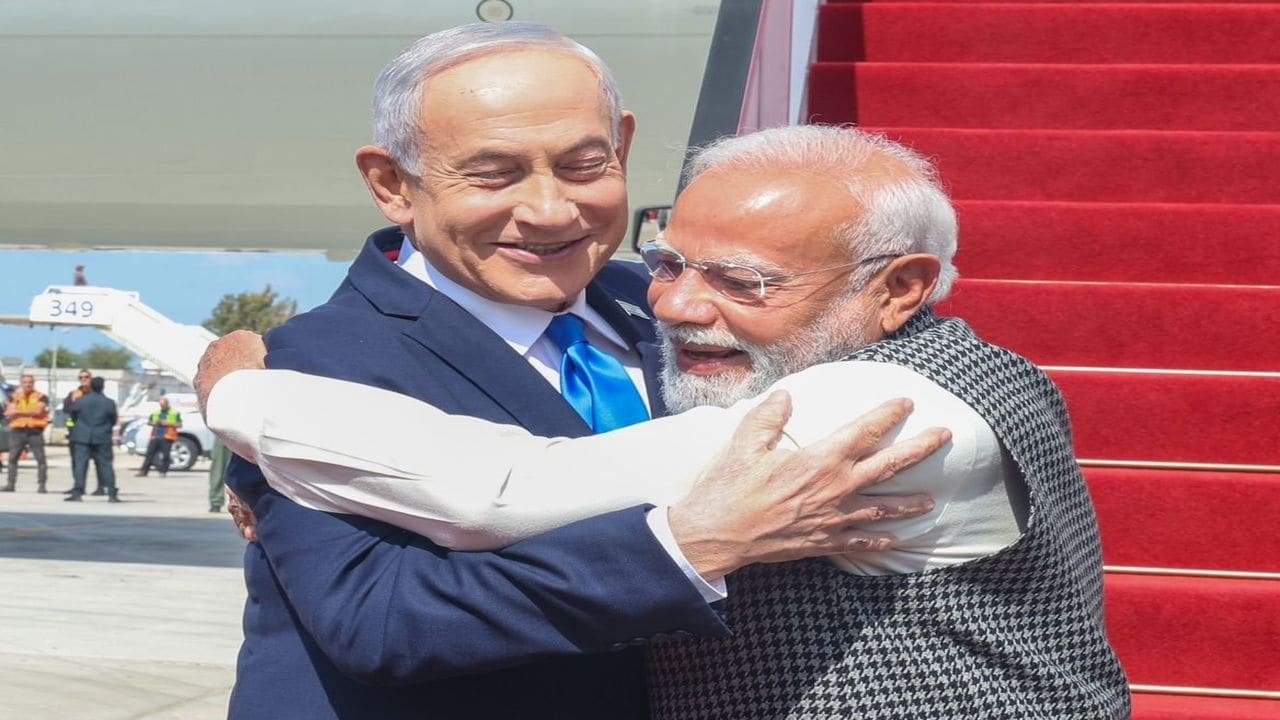
When Narendra Modi became the first Indian Prime Minister to set foot on Israeli soil, the cameras captured the optics: the hugs, the stroll on the beach, the shared reverence for history. But the real story wasn't in the photographs. It was in the ink. The shift from a "buyer-seller" relationship to a "co-production" powerhouse is a seismic pivot in how the world’s largest democracy intends to defend its borders—and how a tiny Middle Eastern tech giant intends to scale its genius.
India has spent decades as the world’s most prolific shopper of foreign arms. For a long time, the ritual was predictable. New Delhi would write a massive check, a foreign power would ship a crate of hardware, and India would pray nothing broke, because the "black box" of proprietary technology stayed locked tight in Moscow, Paris, or Washington.
That era is dead.
The Logic of the Shared Blueprint
Israel possesses something India craves: an existential need for innovation. When you are a small nation surrounded by hostiles, your tech cannot just be good. It must be perfect. India, conversely, possesses what Israel lacks: massive industrial scale and a strategic geography that demands a constant, overwhelming presence.
The partnership is no longer about buying a missile system off the shelf. It is about co-developing the heart of the machine. Take the Medium-Range Surface-to-Air Missile (MRSAM) project. This isn't just a weapon; it is a laboratory. By working with Israel Aerospace Industries (IAI), Indian firms like Bharat Dynamics are learning the "why" behind the "how." They are peering into the source code.
Consider a hypothetical engineer named Arjun in Bengaluru. Ten years ago, if a radar system failed, Arjun waited for a technician from Haifa to fly in with a proprietary screwdriver. Today, Arjun is the one suggesting a modification to the cooling system to better handle the punishing humidity of the Indian Ocean. He isn't a customer anymore. He is a partner.
From the Borders to the Global Market
The most radical part of this evolution isn't just that India is making Israeli tech for itself. It’s that they are planning to sell it to everyone else.
The global arms market is traditionally dominated by a few Goliaths. But a "Made in India" tag on a "Designed in Israel" platform creates a formidable middle ground. It offers the battle-proven reliability of Israeli intelligence with the cost-efficiencies of Indian mass production. We are seeing the birth of a new export engine.
When we talk about joint production, we are talking about the "Make in India" initiative moving from a political slogan to a hard-metal reality. The numbers are staggering. We are looking at billions of dollars in potential contracts as Southeast Asian and African nations look for sophisticated defense tech that doesn't come with the heavy-handed strings of a superpower.
The Invisible Stakes of a Changing Sky
In any modern conflict, the real battle happens in the digital ether. The air above a contested border is no longer just filled with metal and jet fuel. It’s filled with invisible data. Israel’s mastery of electronic warfare—the ability to blind an enemy’s eyes and deafen their ears—is now being baked into the very DNA of Indian defense assets.
This isn't a luxury for New Delhi. It is a necessity. With a persistent threat from the Himalayas and the Arabian Sea, the margin for error is zero. When an Indian pilot climbs into a cockpit or an Indian commander looks at a satellite feed, they are seeing a vision of the battlefield that was forged in the research labs of Tel Aviv and the software hubs of India’s Silicon Valley.
The Quiet Reality of the Factory Floor
Walk through an assembly plant today and the atmosphere is a far cry from the cold, clinical rhetoric of a defense white paper. There is a specific kind of hum in these places. It’s the sound of thousands of people whose livelihoods now depend on a quiet, high-stakes handshake between two nations that couldn't be more different on paper.
Is there a cost? Always. Deepening a partnership with Israel is a delicate tightrope in a region where India has long-standing ties with the Arab world. But the genius of this particular alliance is its pragmatism. It isn't built on ideology. It’s built on survival. It’s built on the realization that in the twenty-first century, a nation’s sovereignty is only as strong as its supply chain.
When a country depends on a foreign power for its spare parts, its sovereignty is an illusion. When that country builds those parts in its own backyard, its independence becomes a fact.
The shift we are witnessing is a move from dependence to defiance. It’s about a nation that once bought its future deciding to build it instead. This isn't just about missiles, or drones, or radar systems. It’s about a new kind of power. One that doesn't just ask for a seat at the table, but builds the table itself.
The next time you see a headline about an Indian defense contract, look past the billions. Look past the acronyms. Look at the people in the desert and the delta, the ones whose hands are dirty with the same grease, staring at the same blueprint, building a world that no longer waits for permission.
The desert sun is hot, and the humidity in Hyderabad is thick. But the steel they are forging together is cold, hard, and permanent.
Would you like me to analyze the specific economic impact of these joint ventures on India's GDP growth over the next decade?