The air in a luxury hotel suite in Muscat or Vienna doesn't smell like history. It smells like industrial carpet cleaner, expensive espresso, and the faint, metallic tang of recycled air conditioning. But for the men sitting in these rooms, the air is heavy. It carries the weight of eighty million people waiting for a single signature to change the price of bread.
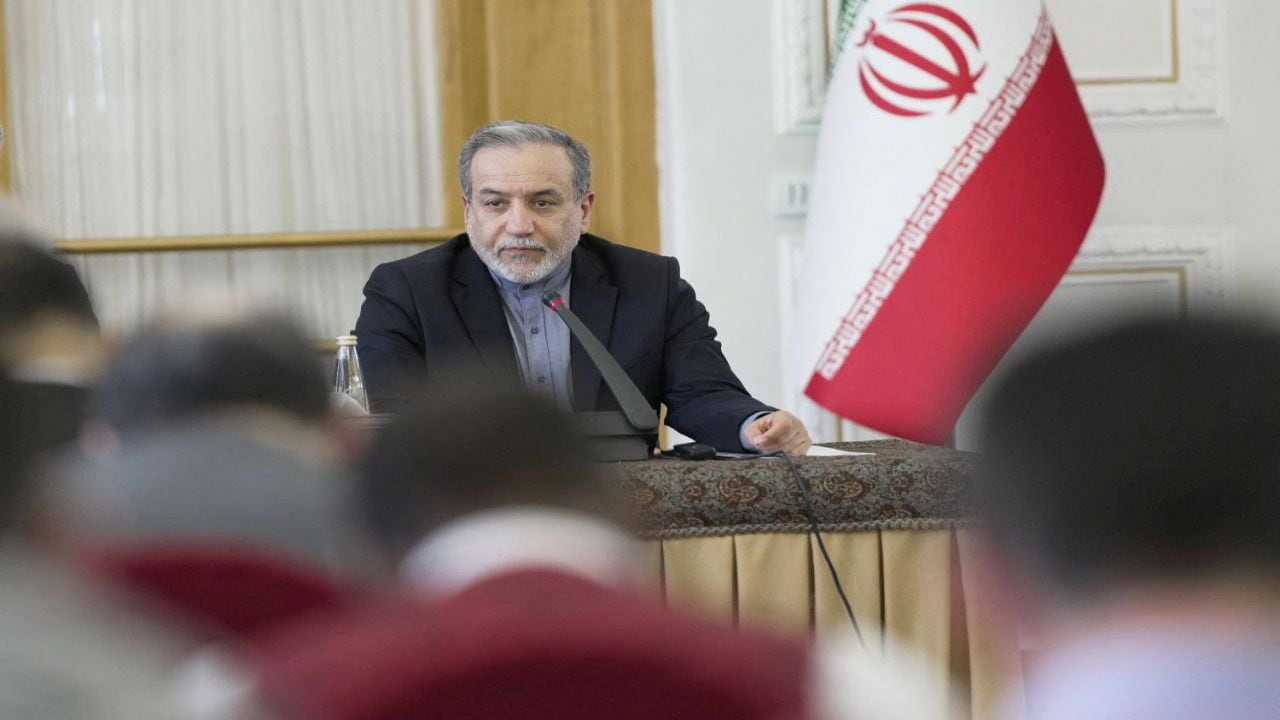
When Iranian Foreign Minister Hossein Amir-Abdollahian stepped before the cameras to describe the latest rounds of indirect talks with the United States, he didn't use the triumphant language of a diplomat who had just won a war. He sounded tired. He called them some of the "most intense and longest" negotiations of his career.
To the casual observer scrolling through a news feed, this sounds like standard bureaucratic stalling. Another meeting. Another delay. Another acronym like JCPOA tossed into the void. But "long" in the world of high-stakes nuclear diplomacy isn't measured in hours on a clock. It is measured in the silence between rooms.
The Messenger in the Hallway
Imagine two rooms at opposite ends of a gilded hallway. In one room sits the American delegation, surrounded by binders, laptops, and secure communication lines back to Washington. In the other sits the Iranian team. They are only fifty yards apart, yet they do not speak. They cannot look each other in the eye.
Between them stands a mediator—perhaps an official from the European Union or a Omani diplomat—acting as a human bridge. This person walks. They carry a proposal from the Americans, pace the length of the carpeted hallway, and present it to the Iranians. They wait for a reaction. They listen to the counter-argument. Then they walk back.
This is the physical manifestation of a forty-year chasm. Every word is scrubbed by lawyers. Every comma is debated for three hours because a misplaced punctuation mark could, in the eyes of hardliners back home, look like a surrender. When the Foreign Minister speaks of "intensity," he is talking about the psychological exhaustion of trying to build a bridge with someone who isn't allowed to touch the same side of the river as you.
The stakes are invisible but absolute.
Consider a hypothetical family in Isfahan. Let’s call the father Reza. Reza doesn't care about the technicalities of uranium enrichment percentages or the specific centrifugal force of an IR-6 machine. He cares that the medicine his daughter needs for her chronic respiratory condition has tripled in price because of sanctions-induced inflation. He cares that the spare parts for his aging Peugeot are no longer available.
For Reza, these "long and intense" talks are not a political theater. They are a ticking clock. Every day the diplomats stay in their separate rooms is another day his savings account loses its value against the dollar.
The Ghost of 2015
The shadow in every room of these negotiations is the memory of 2015. Back then, there was a handshake. There was a deal. For a brief window, the tension broke. International brands began eyeing the Iranian market. Young Iranians felt a sudden, electric surge of hope that their country was finally rejoining the global fold.
Then, the floor fell out.
The U.S. withdrawal from the original nuclear deal under the Trump administration remains the central trauma of these negotiations. It created a paradox that defines the current "intensity": Iran wants a guarantee that a future president won't rip up the deal again, while the U.S. constitutional system makes such a guarantee nearly impossible to provide legally.
How do you negotiate a marriage with someone who has already left you at the altar once?
You do it slowly. You do it with a level of suspicion that borders on the tectonic. You demand "verification." You demand that the other side moves first. You spend eighteen hours debating what "first" even means.
This isn't just about centrifuges. It is about the fundamental lack of trust that occurs when two superpowers have forgotten how to speak the same language. The Foreign Minister’s exhaustion stems from the fact that he isn't just negotiating a policy; he is negotiating a history of grievances that stretches back to the 1953 coup, the 1979 revolution, and the decades of proxy wars that followed.
The Economics of Exhaustion
While the diplomats argue over the lifting of sanctions on specific banks, the reality on the ground in Iran has shifted. The "Resistance Economy" is a phrase often touted by the leadership in Tehran, suggesting that Iran can thrive despite being cut off from the West.
But no economy is an island.
The intensity of these talks is fueled by a simple, brutal reality: Iran needs the frozen billions of dollars currently sitting in foreign banks to be released. They need to sell their oil on the open market without resorting to "ghost armadas" and back-alley transfers.
On the other side, the U.S. faces its own pressure. The specter of a nuclear-armed Iran is a red line for every administration, regardless of party. The longer the talks drag on, the closer Iran’s "breakout time"—the period needed to produce enough fissile material for a bomb—shrinks.
Wait.
That is the primary weapon in this room. The Iranians are masters of the long game, betting that the West’s internal political cycles will eventually force a concession. The Americans are betting that the economic pressure will eventually become unsustainable for the Iranian street.
It is a game of chicken played by men in tailored suits while a population of eighty million holds its breath.
Beyond the Gilded Doors
When we hear that the talks were "longest" and "most intense," we should think of the details that don't make the press release. The cold dinners eaten over stacks of translated documents. The 3:00 AM phone calls to supreme leaders and presidents. The realization that even if a deal is reached, the political cost for both sides will be astronomical.
In Washington, any deal is labeled as "appeasement" by the opposition. In Tehran, any deal is labeled as a "sell-out" by the ultra-conservatives. To find a middle ground is to stand in a crossfire.
The Foreign Minister isn't just fighting the Americans across the hallway; he is fighting the hawks in his own capital. He is trying to prove that diplomacy can still yield results in a world that increasingly favors the fist over the word.
Is a breakthrough actually close?
The language of diplomacy is designed to be opaque. "Intense" can mean a breakthrough is imminent, or it can mean that the two sides have finally reached the point where they realize they have nothing left to say. The "length" could be a sign of diligence, or a sign of paralysis.
But for the person in Tehran watching the exchange rate on their phone every morning, the meaning is clear. The delay is the tax. Every hour of negotiation is paid for in the struggle of ordinary people trying to maintain a middle-class life in a world that has decided to make them a collateral consequence of geopolitics.
The Weight of the Pen
The tragedy of the "longest round" is that the men in the rooms are rarely the ones who feel the consequences of failure. If the talks collapse, the diplomats return to their capitals. They continue their careers. They write memoirs about the "near misses."
But the people don't have memoirs. They have lives that are being put on hold.
The intensity described by the Foreign Minister is the friction of two civilizations trying to find a way to exist in the same space without destroying each other. It is the sound of a pen hovering over a page, held back by a thousand "what-ifs" and a forty-year-old grudge.
As the sun sets over the Muscat coastline, the lights in the negotiation wing stay on. The shadows of the guards lengthen against the marble floors. Somewhere, in a room that smells like stale coffee and high-stakes anxiety, a man is looking at a sentence he has read a hundred times, wondering if this is the one that will finally let his country breathe.
The carpet in the hallway is worn thin from the mediator's footsteps. Fifty yards. It shouldn't be that far. But sometimes, fifty yards is a distance that takes a lifetime to cross.