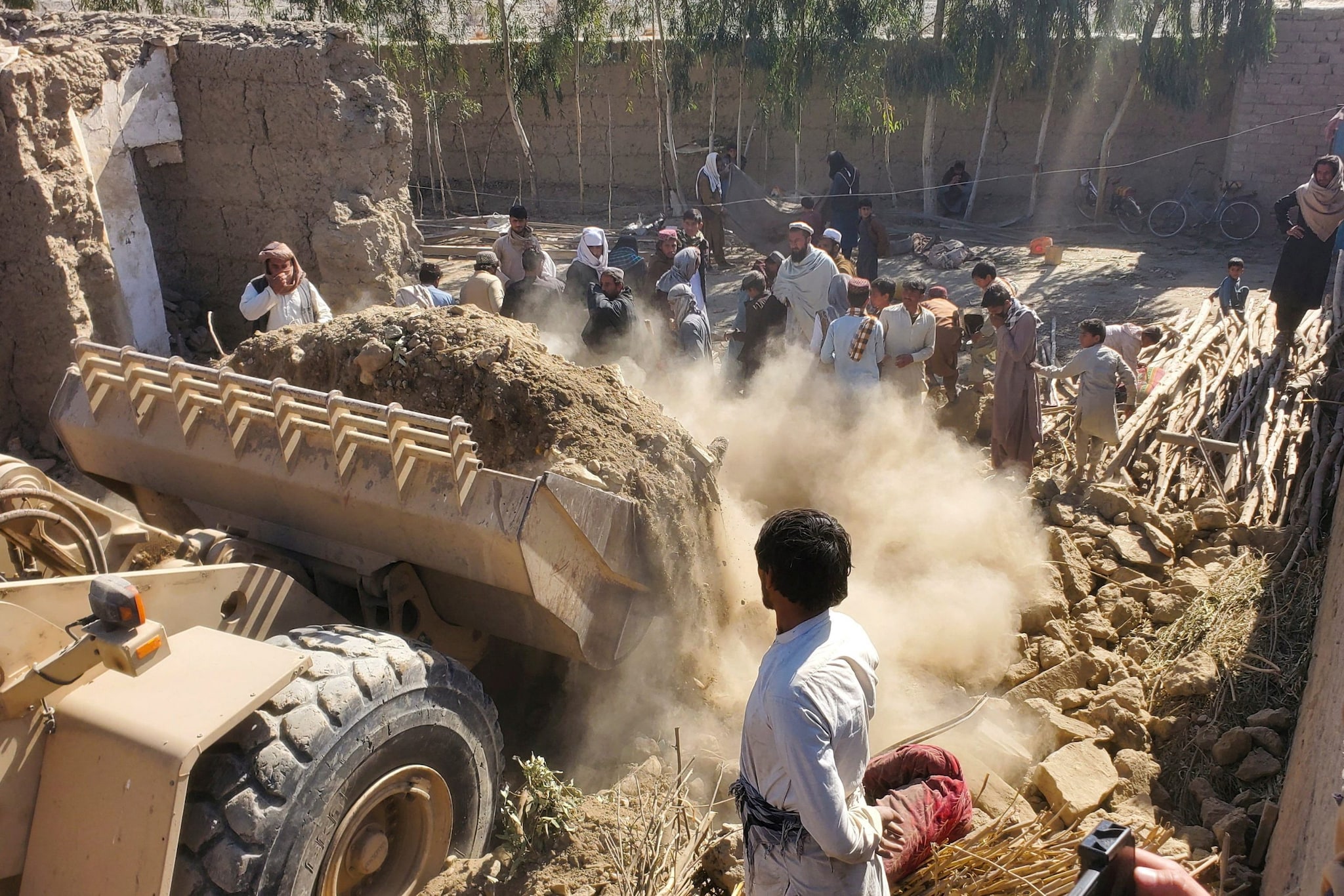
Pakistan’s Deputy Prime Minister Ishaq Dar recently shifted the regional security narrative from uneasy containment to the brink of active confrontation. By warning of a "decisive strike" against terror hideouts across the Afghan border, Islamabad is signaling that its patience with the Taliban-led administration in Kabul has finally evaporated. This isn’t just political theater for a domestic audience; it is an admission that the decade-long strategy of using the border as a strategic buffer has collapsed. For the first time in years, the threat of cross-border military intervention is being treated as an immediate policy option rather than a distant deterrent.
The tension stems from a sharp spike in attacks within Pakistan, primarily orchestrated by the Tehrik-i-Taliban Pakistan (TTP). Islamabad maintains that these militants operate with near-impunity from Afghan soil, a claim the Taliban consistently denies. However, the data on the ground suggests a different reality. Since the Taliban took power in August 2021, terror incidents in Pakistan’s border provinces have surged by over 70 percent. The "decisive strike" rhetoric reflects a desperate need to stop this bleeding before it destabilizes Pakistan’s fragile economic recovery.
The Failure of the Strategic Depth Doctrine
For decades, Pakistan’s military and intelligence apparatus viewed a friendly government in Kabul as a necessity for "strategic depth" against India. That theory is now dead. The current Taliban administration, despite its historical ties to Islamabad, has proven to be a fiercely independent actor that prioritizes its own internal cohesion over Pakistan’s security concerns.
The TTP and the Afghan Taliban share an ideological umbilical cord. Expecting the latter to forcibly disarm the former was always a gamble based on shaky logic. When Dar speaks of a decisive strike, he is acknowledging that diplomacy has reached a dead end. The billions spent on fencing the 2,640-kilometer Durand Line have failed to stop the movement of small, highly mobile militant cells. This failure has forced a pivot toward kinetic military action—striking the source rather than defending the perimeter.
The Mechanics of a Potential Cross Border Operation
What would a "decisive strike" actually look like? It is unlikely to involve a full-scale ground invasion, which would be a logistical and political nightmare. Instead, the Pakistani military is looking at a blend of high-precision tools:
- Drone Strikes: Utilizing indigenous and imported unmanned aerial vehicles to target TTP leadership in the Kunar and Paktika provinces.
- Special Forces Raids: Small-unit "in-and-out" operations designed to destroy training camps without holding territory.
- Long-Range Artillery: Shelling suspected launch pads from across the border, a tactic already used sporadically but never at the scale Dar is suggesting.
Each of these options carries massive risks. A drone strike that results in Afghan civilian casualties would give the Taliban the domestic legitimacy they need to retaliate openly, potentially sparking a conventional border war that neither country can afford.
The Economic Shadow Over Military Ambition
You cannot fight a war on an empty stomach. This is the central paradox of Pakistan’s current stance. While Ishaq Dar, who also serves as the Foreign Minister, beats the drum of war, he is simultaneously managing a country under the strict oversight of the International Monetary Fund (IMF).
A sustained military campaign against Afghan-based targets would drain foreign exchange reserves and likely spook the very investors Pakistan is trying to attract from the Gulf. Modern warfare is expensive. The cost of fuel, munitions, and troop mobilization would run into hundreds of millions of dollars. If Islamabad chooses the path of a "decisive strike," it must do so knowing it might jeopardize the fragile stability of the rupee.
Furthermore, the border at Chaman and Torkham serves as a vital trade artery. Every time tensions flare, these gates close. Thousands of trucks carrying perishable goods get stuck, costing traders on both sides millions. A military strike would likely lead to a long-term closure of these points, effectively strangling the formal economy of the border regions and pushing more people toward the shadow economy—or worse, toward the very militant groups the government is trying to eradicate.
The Role of China and the US in the Border Calculus
The international community is watching this escalation with a mix of dread and calculated interest. Washington has largely stepped back from the region, but it remains wary of any conflict that might allow Al-Qaeda or ISIS-K to exploit the chaos. While the US would likely not condemn a strike against the TTP—a group it also designates as a terrorist organization—it has no desire to see a full-scale war between two nuclear-adjacent neighbors.
China, on the other hand, is the silent power broker in this equation. Beijing has invested heavily in the China-Pakistan Economic Corridor (CPEC) and sees regional instability as a direct threat to its belt-and-road ambitions. Recently, Chinese nationals have been targeted in Pakistan by militants, some of whom are believed to have links to cross-border networks. Beijing has been uncharacteristically blunt in demanding that Pakistan protect Chinese workers. This pressure may be the real catalyst behind Dar’s "decisive strike" warning. Islamabad needs to prove to its biggest benefactor that it can control its own territory, even if it means violating Afghan sovereignty.
The Taliban’s Counter Gambit
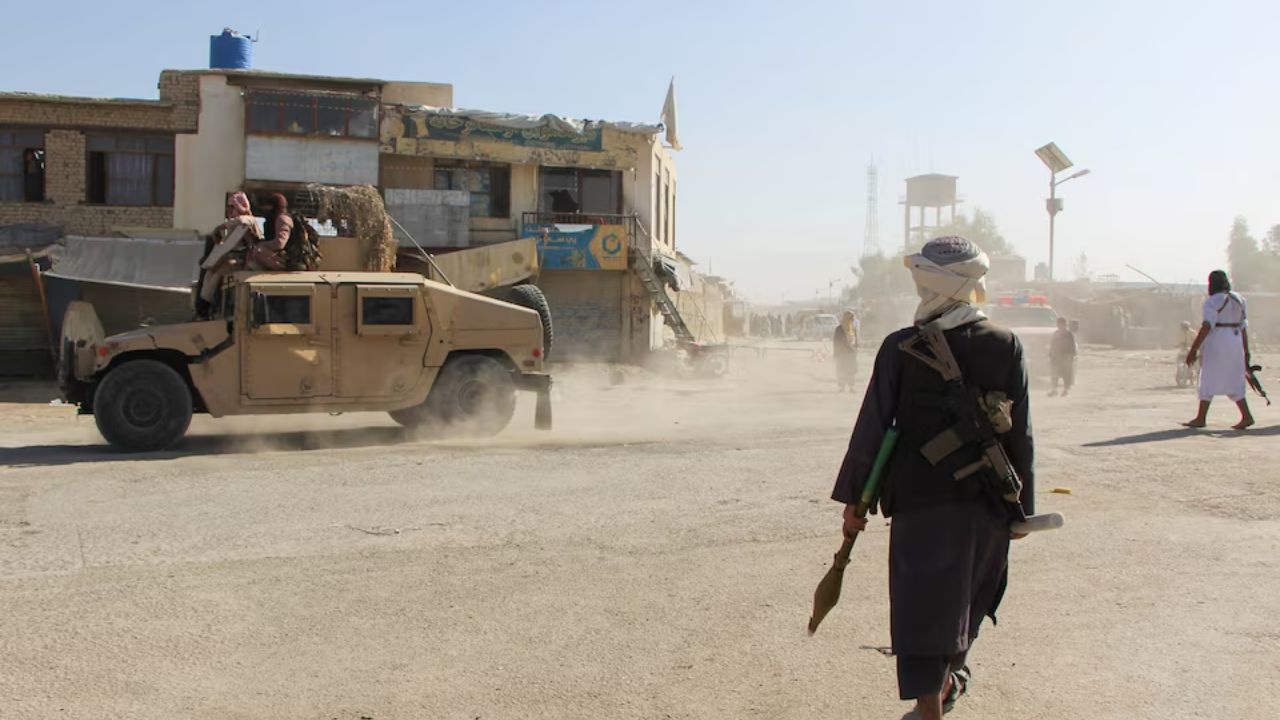
The Afghan Taliban are not the ragtag insurgency they were twenty years ago. They are now a de facto state military equipped with billions of dollars worth of abandoned American hardware. They have already shown a willingness to engage in border skirmishes, using heavy weaponry and mortars against Pakistani border posts.
If Pakistan initiates a major strike, the Taliban have several levers to pull:
- Weaponizing Refugess: They could encourage a mass exodus toward the border, creating a humanitarian crisis that Pakistan cannot manage.
- Intellectual Warfare: Kabul has begun questioning the legitimacy of the Durand Line more aggressively, a move that stokes Pashtun nationalism on both sides of the border.
- The ISIS-K Wildcard: If pushed too hard, the Taliban could stop their internal operations against ISIS-K, allowing the group to expand and target Pakistan as well.
Intelligence Gaps and the Ghost of Past Failures
A "decisive strike" requires surgical intelligence. In the past, Pakistani operations in the tribal areas were often criticized for being too broad, leading to internal displacement and a "whack-a-mole" effect where militants simply moved to the next valley. Striking targets inside a foreign country is infinitely more complex.
Does the Pakistani intelligence community have enough "eyes on" inside Afghanistan to ensure they are hitting TTP commanders and not local villagers? The risk of an intelligence failure is high. In 2022, a series of alleged Pakistani airstrikes in Khost and Kunar provinces reportedly killed dozens of civilians, leading to a massive diplomatic backlash and a surge in TTP recruitment. A "decisive" move that results in high collateral damage would be a strategic defeat, regardless of how many militants are neutralized.
The rhetoric from Ishaq Dar also ignores the internal political fractures within Pakistan. The opposition and civil society groups in the border provinces are weary of more "forever wars." They argue that the state’s failure to provide services and governance in the former FATA regions is what allows militancy to thrive in the first place. You cannot bomb an ideology into submission if the underlying grievances remain unaddressed.
The Shift From Diplomacy to Deterrence
The current standoff marks the end of the "Brotherly Muslim Nations" facade. Islamabad is now treating Kabul like a hostile neighbor rather than a strategic partner. This shift is permanent. Even if a strike is avoided in the short term, the trust between the two capitals is broken.
The immediate next step for Pakistan is not necessarily a flurry of missiles. It is the intensification of "grey zone" warfare. This includes increased electronic surveillance, targeted assassinations of middle-management militants, and using economic leverage to force the Taliban’s hand. The "decisive strike" threat serves as the ultimate hammer in the toolkit—a warning that if the grey zone tactics fail, the kinetic ones are ready to go.
The situation on the ground remains highly volatile. Every small exchange of fire at the Torkham border crossing carries the potential for unintended escalation. The Pakistani leadership is betting that the Taliban will blink first, fearing the loss of their only real link to the global economy. It is a high-stakes game of chicken where the price of a miscalculation is a regional conflagration.
The government in Islamabad must now decide if it is willing to live with the consequences of its own rhetoric. If another major attack occurs on Pakistani soil and the state does not deliver the "decisive strike" Dar promised, the government’s credibility will be shattered. If it does strike, it enters an unpredictable new chapter of a war that has already lasted two decades. The window for a peaceful resolution is closing, and the sound of the drums is getting louder.
Watch the troop movements near the border for a clear sign of intent. While the politicians talk, the logistics of ammunition and fuel transport toward the Western front will tell the real story of whether a strike is imminent or just another empty threat in a long line of regional bluster.