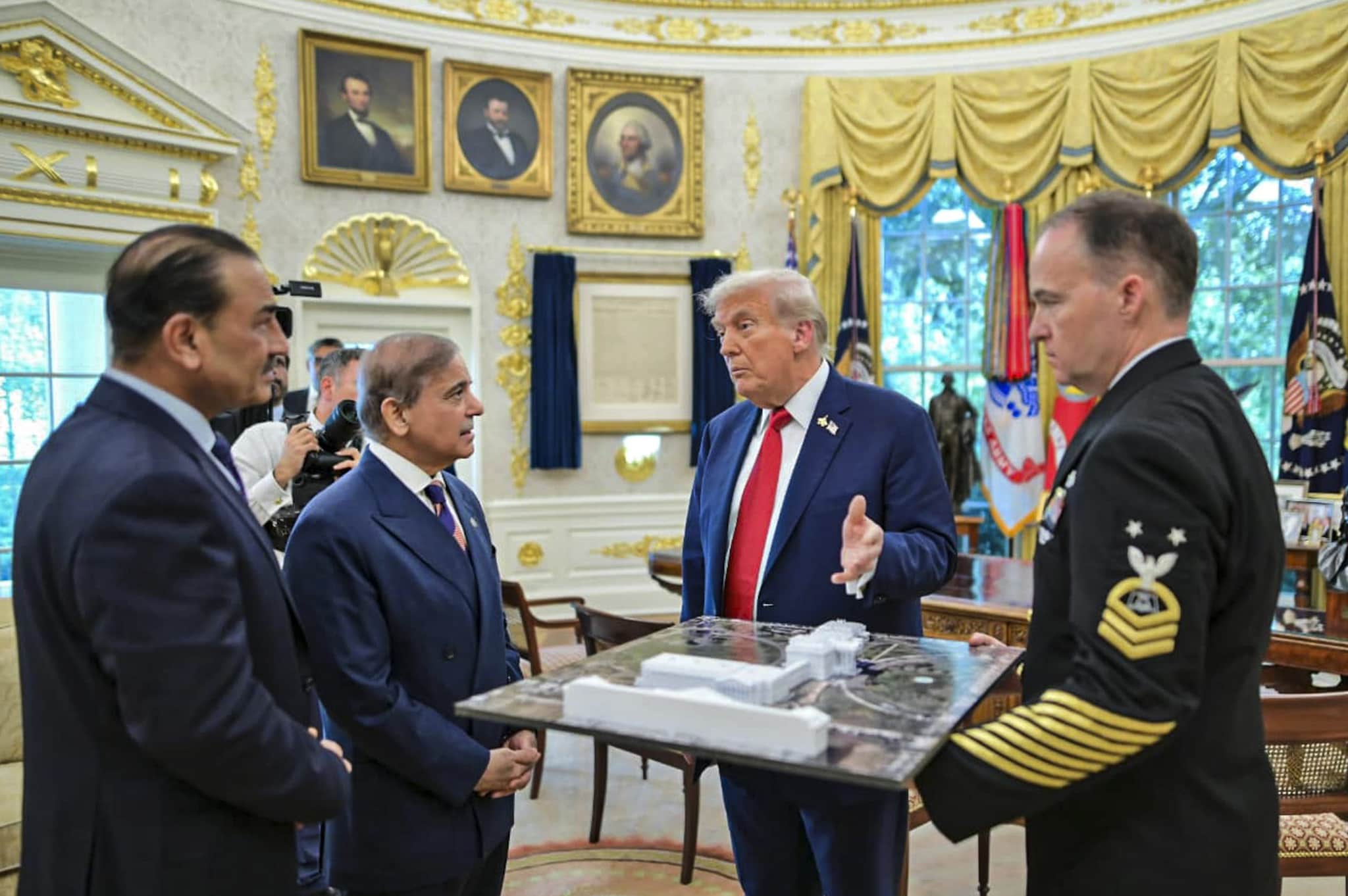
Donald Trump has a knack for turning complex nuclear brinkmanship into a campfire story where he’s the lone hero. His recurring claim that he personally averted a war between India and Pakistan—one that would’ve supposedly killed 35 million people—is a classic example of his "Art of the Deal" diplomacy. While the numbers sound like they were pulled from a hat, the tension he’s talking about was very real.
If you followed the 2019 Balakot crisis, you know how close these two nuclear-armed neighbors came to the edge. Trump likes to tell audiences that the Pakistan Prime Minister at the time—Imran Khan—admitted that tens of millions would’ve perished without Trump’s intervention. It's a bold statement. It’s also one that stretches the fabric of diplomatic reality until it’s nearly transparent.
Where those 35 million deaths actually come from
When Trump throws around a number like 35 million, he isn't citing a specific classified intelligence briefing. He’s likely riffing on academic models of nuclear winter. For years, researchers at Rutgers University and the University of Colorado Boulder have looked at what happens if India and Pakistan exchange warheads.
Their studies suggest that a full-scale nuclear conflict wouldn't just kill people in New Delhi or Islamabad. It would trigger a global famine. In a 2019 study published in Science Advances, researchers estimated that 50 to 125 million people could die from the direct effects of a nuclear exchange between these two nations. So, in a weird way, Trump’s "35 million" is actually a conservative estimate compared to the scientific worst-case scenario.
But here’s the kicker. Trump claims the Pakistan PM told him this. In reality, no head of state goes into a meeting with the U.S. President and says, "Hey, I’m about to kill 35 million of my own people, please stop me." That’s not how international relations work. Leaders project strength. They don't beg for an exit ramp by citing their own casualty projections.
The 2019 crisis that started it all
To understand why Trump keeps bringing this up, we have to look at the Pulwama attack in February 2019. A suicide bomber killed 40 Indian paramilitary police in Kashmir. India responded with an airstrike on what it called a terrorist training camp in Balakot, Pakistan.
Things got messy fast.
Pakistan launched its own retaliatory strikes. An Indian pilot, Abhinandan Varthaman, was shot down and captured by Pakistani forces. This was the moment the world held its breath. This wasn't just another border skirmish. This was two nuclear powers dogfighting in the clouds.
Trump was in Hanoi, Vietnam, at the time for a summit with Kim Jong Un. He told reporters, "We have some reasonably decent news from India and Pakistan... we’ve been involved in trying to have them stop." Shortly after, Imran Khan announced the release of the Indian pilot as a "peace gesture." Trump took the win. He framed the pilot's release as a direct result of his administration's pressure.
Did Trump actually stop a war
Diplomacy is rarely a one-man show. While the Trump administration definitely put in the work, they weren't the only ones on the phone. The UAE, Saudi Arabia, and even China were reportedly leaning on both sides to cool it.
The U.S. State Department, led then by Mike Pompeo, was working the phones 24/7. In his memoir, Pompeo described the situation as much more precarious than the public realized. He claimed he was woken up in Hanoi to be told that India was "preparing to go nuclear." Whether that was an accurate assessment or an overreaction to intelligence is still debated by South Asia experts today.
What’s certain is that Trump loves the narrative of the "Great Mediator." He views himself as the only person capable of talking sense into world leaders. By claiming he saved 35 million lives, he’s not just reporting history. He’s branding it.
Why the 35 million figure keeps changing
You might notice that in different rallies or interviews, the numbers Trump uses fluctuate. Sometimes it’s 20 million. Sometimes it’s "millions and millions." The "35 million" version usually pops up when he wants to emphasize the scale of his success.
It’s important to remember that India and Pakistan have fought four wars since 1947. Both countries have "No First Use" policies or "Credible Minimum Deterrence" strategies, but the red lines are blurry. India’s doctrine says it won't use nukes first, but it will respond with "massive retaliation" if hit. Pakistan doesn't have a No First Use policy at all, keeping its options open to counter India’s conventional military superiority.
When Trump talks about this, he skips all that boring policy stuff. He focuses on the human drama. He wants you to see a world on the brink of total destruction that only he could pull back from the ledge. It’s effective political storytelling, even if the specifics are a bit "vibes-based."
What this means for future South Asia policy
The world has changed since 2019. Imran Khan is no longer in power; he’s in a jail cell in Pakistan. India has doubled down on its "zero tolerance" policy toward cross-border strikes. The risk of another flare-up is always there.
If you’re looking at this from an SEO or news perspective, the lesson isn't just about whether Trump told the truth. It’s about how nuclear tension is used as a domestic political tool. In the U.S., it’s used to prove "strength." In India and Pakistan, it’s used to rally nationalist bases.
Trump’s claim serves a specific purpose. It reminds his base that he handled "big league" problems. But for those living in the shadow of the Himalayas, the 35 million figure isn't a talking point. It’s a nightmare they live with every day.
Keep an eye on the upcoming election cycles in both the U.S. and the subcontinent. You’ll hear these stories again. The next time someone mentions 35 million people, remember that while the diplomacy was a team effort, the danger was—and remains—entirely real. If you want to dive deeper, look into the 1999 Kargil War or the 2001-2002 standoff. History repeats itself, usually with higher stakes and louder rhetoric.
Instead of taking these quotes at face value, look at the actual de-escalation steps taken by the State Department. Watch for official statements from the Ministry of External Affairs in India or the Foreign Office in Pakistan. They rarely align with the "hero" narrative, but they provide the actual roadmap of how we avoided a global catastrophe. Read the 2019 Rutgers study on "Multi-decadal global cooling and unprecedented regional famine following a regional nuclear war" to see what that 35 million figure really implies for the planet's climate.