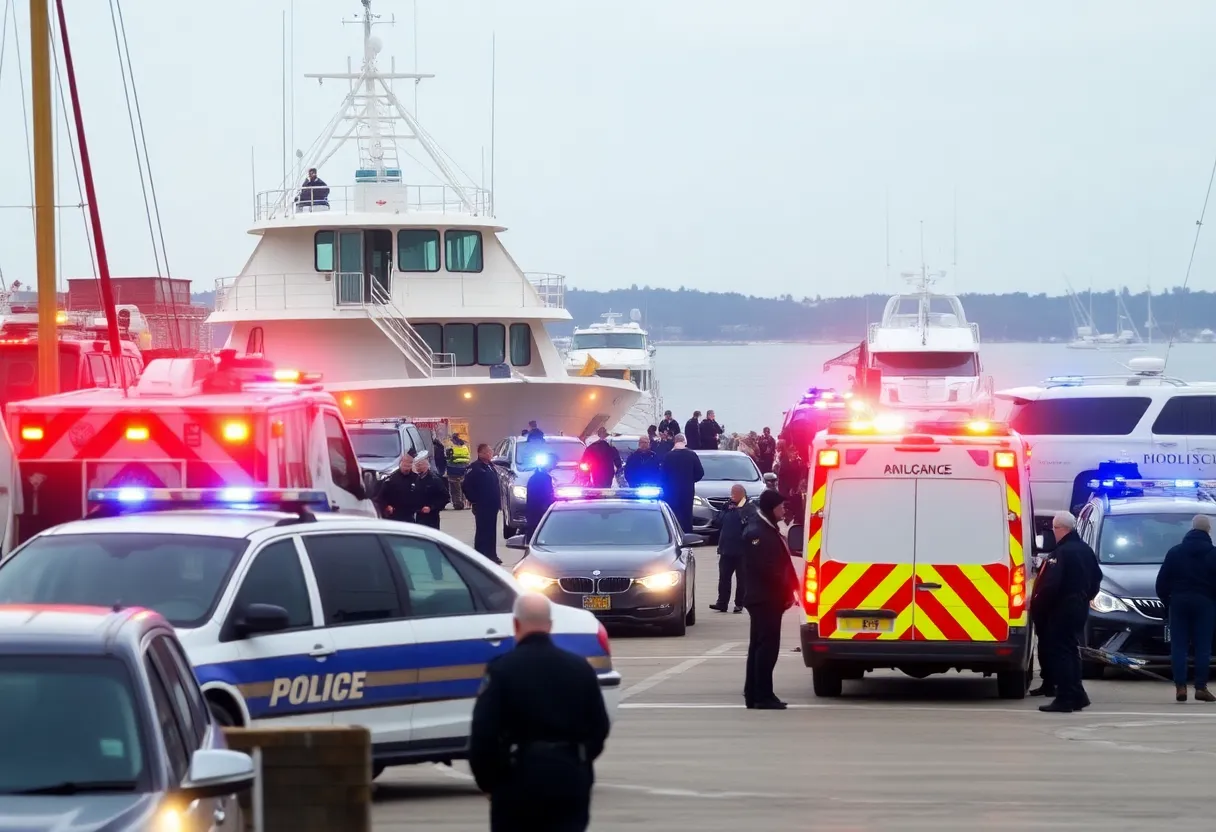
A Florida-registered speedboat doesn't just end up in a high-stakes shootout with the Cuban Border Guard by accident. On February 25, 2026, a 30-foot vessel packed with enough firepower to start a small local war drifted into Cuban waters near Cayo Falcones. By the time the smoke cleared, four people were dead, six were in custody, and a Cuban commander was bleeding from a gunshot wound.
Now, the Cuban Ministry of the Interior has started dumping details about what they found on that boat. They’re calling it a "terrorist mission." They’ve even put the evidence on display like a morbid museum exhibit at the former Cuban Institute of Radio and Television. But if you look past the grainy photos of camouflage gear and bulletproof vests, there's a much messier story of desperation, failed logistics, and a second boat that never made it to the fight. For an alternative view, see: this related article.
What Actually Happened Near Cayo Falcones
According to 1st Col. Ivey Daniel Carballo of the Cuban Border Guard, his team spotted the intruder on a Wednesday morning. They closed in to about 600 feet to investigate. Instead of a standard maritime ID check, they were met with high-caliber gunfire.
Cuba claims they found 13 bullet holes in their own patrol boat. The suspect vessel? It was riddled with 21. That's not a misunderstanding; that’s a full-on combat engagement. Three people on the Florida boat died instantly. A fourth died later from his wounds. Similar reporting on the subject has been provided by Associated Press.
The most revealing bit of new info isn't the body count, though. It’s the fact that this wasn't a solo run. The suspects told Cuban interrogators they actually launched from Florida in two boats. One of those boats suffered a mechanical failure early on. Rather than calling it quits, they shoved all the men and supplies onto the remaining 30-foot craft and left the broken one drifting in the Florida Straits.
The Arsenal in the Cooler
When Cuban authorities searched the boat, they didn't just find a few handguns. They found a calculated tactical kit. The list is heavy:
- A dozen high-powered rifles (at least one with a precision scope).
- 11 pistols.
- A massive cooler packed with over 12,800 rounds of ammunition.
- Helmets equipped with cameras.
- Heavy-duty boots and camouflage backpacks.
- Improvised explosives (Molotov cocktails).
This equipment suggests a plan that went way beyond a simple landing. You don't bring 12,000 rounds of ammo if you're just dropping someone off at a beach. You bring that much when you're planning to hold territory or engage in prolonged urban combat.
Who Were the Men on the Boat
Havana has identified several of the men, and their backgrounds paint a picture of long-standing friction.
- Michel Ortega Casanova: One of the deceased. He’d lived in the U.S. for over 20 years and worked as a truck driver. His brother described him as "obsessed" with freeing Cuba.
- Amijail Sánchez González: The alleged leader. He runs a group called Auto Defensa del Pueblo (People’s Self-Defense).
- Leordan Enrique Cruz Gómez: Like Sánchez, he was already on Cuba's "most wanted" list for previous alleged plots.
The Cuban government also nabbed a guy on land, Duniel Hernández Santos, who they claim was the "reception committee" sent ahead to coordinate the arrival. While Cuba is quick to label them "terrorists," many in the Miami exile community see them as desperate men who felt the only way to spark change on the island was through force.
The Political Minefield for the U.S.
This couldn't have happened at a worse time for Washington. Secretary of State Marco Rubio, a man who has built his career on a hardline stance against Havana, had to walk a very thin line. He’s already gone on record saying this was not a U.S. government operation.
But Rubio is also signaling that he doesn't take Cuba’s word for anything. The U.S. is running its own investigation to see if these men were U.S. citizens or legal residents. If they were, the legal battle over their detention is going to be a nightmare. Florida Attorney General James Uthmeier has already jumped in, ordering a state-level probe and calling the Cuban government "communists who cannot be trusted."
Why You Should Care About the Timing
This shootout happened almost exactly 30 years after the infamous 1996 shootdown of the Brothers to the Rescue planes. In that case, Cuba used MiGs to blast two civilian Cessnas out of the sky. The tension in the Florida Straits is at its highest point in decades, fueled by a crushing energy crisis and food shortages in Cuba that make the island feel like a tinderbox.
Cuba wants to use this incident to justify its heavy-handed security and blame the U.S. for "harboring terrorists." Meanwhile, the U.S. is looking for any proof that the Cuban Border Guard used excessive force or fired first.
How to Track This Story
If you're following this, don't just read the state-run media from Havana. Watch for the U.S. Coast Guard's report on the "drifting" second boat. If that boat is recovered and analyzed, its GPS data and contents will either confirm or debunk the "failed mission" narrative Cuba is pushing.
Keep an eye on the Southern District of Florida’s legal filings. If the U.S. finds that the boat was stolen—as its owner claims—the charges for the survivors might shift from political "terrorism" to more standard criminal offenses like grand theft or arms smuggling. Either way, those six men in Cuban custody are likely looking at 30 years to life in a Cuban prison.
Don't expect a quick resolution. These maritime incidents usually drag on for years in diplomatic backchannels. Check for updates from the U.S. State Department's weekly briefings to see if they've secured consular access to the detainees. That'll be the first real sign of how much the U.S. is willing to fight for them.


