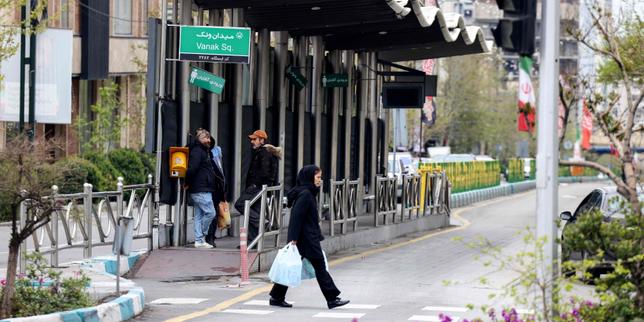
Li Wei sits in a small, dim office in the Vardavard industrial district, west of Tehran. Outside, the air tastes of dust and diesel exhaust. On his desk sits a porcelain tea set from Jingdezhen, a delicate reminder of a home seven thousand kilometers away. He pours a cup of chai, but his eyes are fixed on a smartphone screen that refuses to stop vibrating.
He is not a diplomat. He is not a spy. He is a mid-level manager for a Chinese automotive parts manufacturer, one of thousands of entrepreneurs who saw Iran not as a "rogue state," but as a frontier of immense, untapped profit. For a decade, the logic was simple: Western companies, hamstrung by sanctions and moral posturing, had left a vacuum. China moved in to fill it.
Now, that logic is shattering.
The tension in the Middle East is no longer a distant headline for men like Li. It is a line item on a balance sheet that is bleeding red. When the missiles fly, the exchange rate of the rial doesn't just dip—it vanishes into a black hole. For the Chinese business community in Iran, the dream of the "New Silk Road" is currently being choked by the very real possibility of a regional conflagration that no amount of Beijing’s "soft power" can stop.
The Mirage of the Empty Market
To understand why Li and his colleagues are here, you have to look at the streets of Tehran. Look past the political murals and the revolutionary slogans. You will see the Chery Tiggo SUVs, the Saipa cars built with Chinese chassis, and the endless sea of Huawei and Xiaomi storefronts.
In 2021, China and Iran signed a twenty-five-year "strategic cooperation pact." It was whispered to be worth 400 billion dollars. It was a bold middle finger to the US-led sanctions regime. For a Chinese factory owner in Zhejiang or Guangdong, the message was clear: The state has your back. Go west.
But the state’s protection ends where the physics of war begins.
Consider a hypothetical, but very common, scenario for a small-scale Chinese investor. Let’s call him Mr. Chen. He owns a textile plant in Isfahan. He imported his machinery from Ningbo. He pays his local staff in rials, but he has to buy his raw materials in dollars or yuan. When Israel and Iran exchange threats, the rial collapses. Suddenly, Chen’s monthly payroll costs him three times more in real value than it did thirty days ago. He isn't losing money because his product is bad. He is losing money because the ground beneath his factory is shaking.
The "invisible stakes" here aren't just about oil. It’s about the death of the middleman.
A Marriage of Convenience in a Burning House
The relationship between China and Iran has always been a marriage of necessity, not love. China needs energy; Iran needs a customer. China needs an anchor in the Middle East that isn't a US ally; Iran needs a veto-wielding friend at the UN Security Council.
For the Chinese expatriate, this created a false sense of security. They believed they were shielded by China's neutrality. They thought they could be the "friends of everyone," trading with the Saudis in the morning and the Iranians in the evening.
That neutrality is now their greatest liability.
When a drone strike hits an Iranian facility, the Chinese managers are the first to realize that Beijing’s "balanced approach" offers no physical protection. They are trapped in a country that is increasingly isolated, and their own government is hesitant to pick a side for fear of jeopardizing its much larger trade interests with the West and the Arab Gulf states.
The silence from the Chinese embassy in Tehran is often louder than the explosions. The advice is always the same: Stay vigilant. Avoid crowds. Have your documents ready. It is the language of an exit strategy, not a partnership.
The Logistics of Fear
Business is, at its heart, the management of predictable outcomes. War is the ultimate unpredictable variable.
Logistics in and out of Iran have become a nightmare of "grey zone" shipping. Because most major global shipping lines avoid Iranian ports to stay clear of US sanctions, Chinese goods often have to be "washed" through third-party hubs like Dubai. This adds layers of cost, time, and bribery.
Imagine a container of specialized valves sitting on a dock in Bandar Abbas. The Chinese supplier wants payment before release. The Iranian buyer can’t get the foreign currency because the central bank is hoarding it for "war contingencies." The valves sit. They rust. The contract expires.
This isn't a theoretical hurdle. It is the daily reality for hundreds of Chinese firms. They are discovering that being the "only game in town" doesn't matter if the town is barricading its doors.
The Human Toll of the "Grand Strategy"
We often talk about geopolitics as if it were a game of chess played by giants. We forget the pawns have families.
Li Wei hasn't seen his daughter in Hangzhou for fourteen months. He stays in Tehran because he has invested his life savings into a distribution network for industrial lubricants. If he leaves now, he loses everything. He watches the news not for political insight, but to see if the airport will be open tomorrow.
There is a specific kind of exhaustion that comes from living in a state of permanent "almost-war." It wears down the entrepreneurial spirit. The bold risks that Chinese businessmen are famous for—the "eat bitterness" attitude—are being replaced by a cynical survivalism.
They are realizing that they are not the vanguard of a new empire. They are hostages to a geography they cannot control.
The Great Recalibration
The exodus hasn't started as a stampede, but as a slow, quiet leak.
Large state-owned enterprises (SOEs) can afford to wait. They have the deep pockets of the Chinese Communist Party to absorb losses. They see Iran as a long-term geopolitical play. But the private sector—the small and medium-sized enterprises that actually drive the "Belt and Road" on the ground—is terrified.
They are looking at the map again. They are looking at Vietnam, at Mexico, at Poland. They are looking for places where the "incertitude of war" isn't the primary topic of conversation at the breakfast table.
The Chinese gamble on Iran was based on the idea that the world was becoming "multipolar," and that American influence was a spent force. They banked on the idea that trade could trump theology and that the dollar could be bypassed.
They were half right. The world is indeed changing. But they forgot that in the transition between the old world and the new, there is a period of violent friction. Iran is the epicenter of that friction.
The Porcelain Cracks
Back in the office in Vardavard, Li Wei finishes his tea. He looks at the Jingdezhen cup. It is beautiful, ancient, and incredibly fragile.
If he drops it on the concrete floor, it won't matter how much it cost or how long it took to make. It will just be shards.
He picks up the phone. He isn't calling a client. He is calling a logistics broker in Erbil to see if there is a land route out through Iraq, just in case. The bravado of the 25-year pact has faded. In its place is the cold, hard realization that when the giants finally decide to settle their scores, the businessmen who came to profit are usually the ones left to sweep up the glass.
The sun sets over the Alborz mountains, casting long, jagged shadows across a city that is waiting for a sound it hopes never to hear. Li Wei closes his laptop. The screen goes black, reflecting a face that looks much older than it did when he arrived. He is still there, for now. But he is no longer building a future. He is simply waiting to see if he has one.