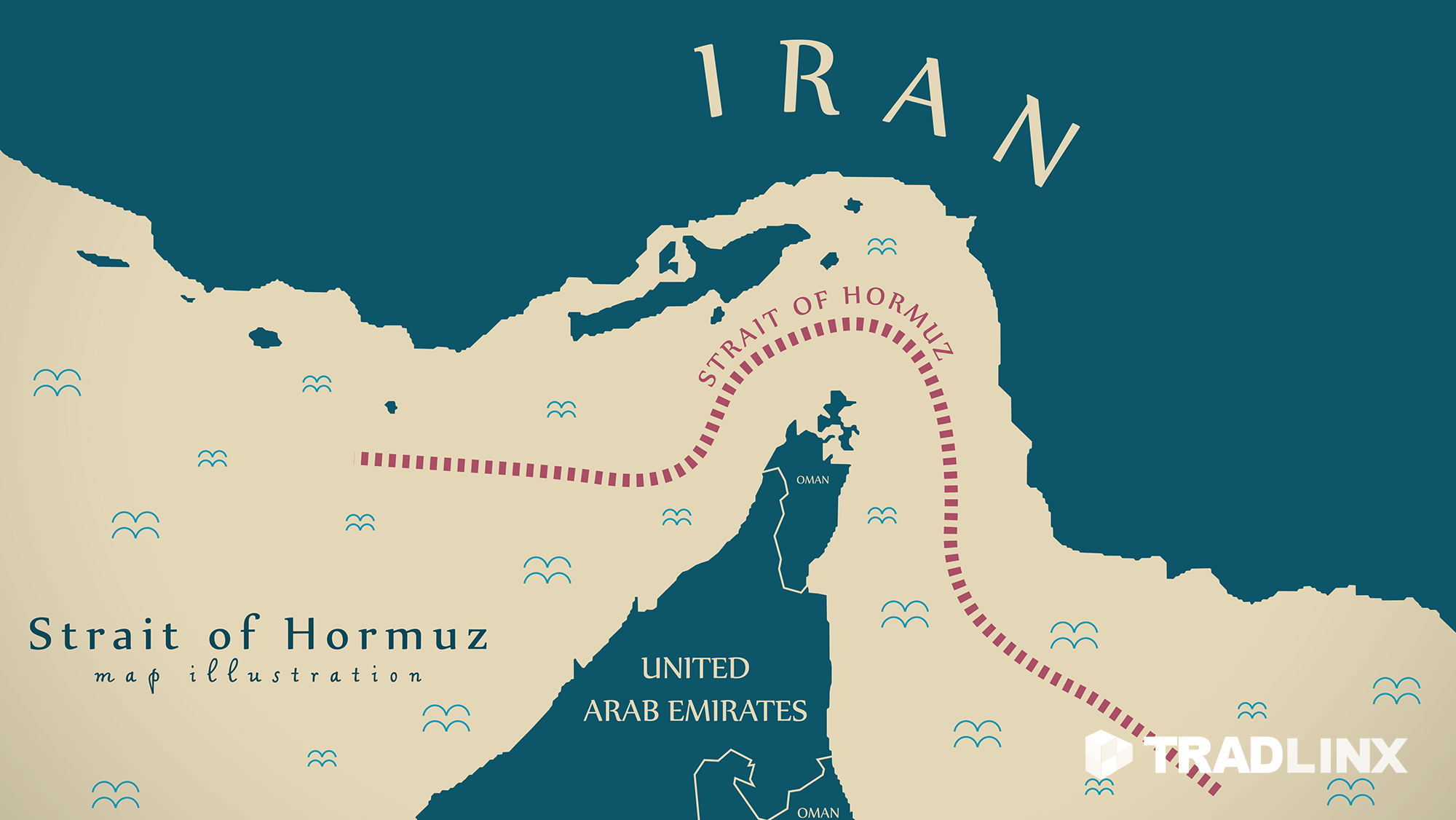
The shadow war in the Persian Gulf just stepped into the light. On Sunday evening, a commercial tanker was struck by unidentified projectiles roughly 78 nautical miles north of Fujairah, according to reports from the United Kingdom Maritime Trade Operations (UKMTO). While the crew is safe and no oil has spilled into the turquoise waters of the Gulf of Oman, the timing is anything but accidental. This strike occurred just hours before the White House is set to launch Project Freedom, a massive military-led evacuation designed to break the de facto Iranian blockade that has paralyzed the world’s most vital energy artery since February.
The Strait of Hormuz is currently a graveyard of global commerce. Nearly 1,000 ships and 20,000 seafarers are effectively trapped behind a wall of Iranian mines, drone threats, and a U.S. counter-blockade. For the veteran analysts who have watched this region for decades, the Fujairah strike is a clear signal. It is a reminder that while Washington talks about "humanitarian gestures," the tactical reality on the water remains a hair-trigger standoff where a single miscalculation leads to fire.
The Logistics of a High-Stakes Extraction
Project Freedom is not a standard naval exercise. It is a desperate response to a total market collapse. Since the conflict ignited on February 28, the "handmaid of commerce"—the insurance industry—has walked away. War risk premiums for hulls transiting the Strait have rocketed from 0.05% to a staggering 3% of vessel value. For a $100 million tanker, that is a $3 million bill just to weigh anchor. When insurers cancel coverage, trade stops.
The U.S. Central Command (CENTCOM) plan, slated to begin Monday morning, involves a force of 15,000 service members, over 100 aircraft, and a fleet of guided-missile destroyers. But the "how" is more complex than just muscle.
- Mine Clearance: U.S. minesweepers are currently working at triple their usual pace to carve "blue lanes" through waters infested with Iranian-laid explosives.
- The Unmanned Shield: CENTCOM is deploying multi-domain unmanned platforms—sea drones and aerial surveillance—to provide a 360-degree persistent watch over every ship in the convoy.
- De-escalation via Force: The mission is framed as a one-way exit for trapped vessels, a "humanitarian" move meant to allow ships to leave and promise they won't return until the region stabilizes.
The Iranian response has been predictably sharp. Ebrahim Azizi of Iran’s national security commission has already labeled the move a violation of the fragile April 8 ceasefire. The rhetoric from Tehran is clear: any U.S. intervention in the "new maritime order" of the Strait will be met with force.
Why Fujairah Matters
The strike near Fujairah is a tactical masterpiece of intimidation. Fujairah sits just outside the Strait of Hormuz. It is the world’s third-largest bunkering hub and the terminal point for the Habshan–Fujairah pipeline—the UAE’s primary bypass to avoid the Strait entirely. By hitting a ship here, the attackers are demonstrating that the "safe" zones are an illusion.
The projectiles used remain unidentified, a hallmark of gray-zone warfare designed to maintain plausible deniability while maximizing psychological impact. If you can hit a ship 78 miles north of Fujairah, you can hit the Project Freedom convoys at their most vulnerable point: the moment they exit the "protected" corridor and head into open water.
The Economic Blockade and the Shadow Market
While the world watches the destroyers, the real war is being fought in the ledgers. The U.S. Treasury recently sanctioned 35 entities involved in Iran's "shadow banking" architecture. Washington isn't just trying to move ships; it is trying to starve the Iranian leadership that seized control after the January strikes.
There is a deep irony in the current deadlock. Iran has used the Strait as a lever to gain standing in ceasefire negotiations, yet its own economy is in what some U.S. officials call a "state of collapse." Meanwhile, the U.S. has imposed its own naval blockade, turning back 39 vessels suspected of carrying Iranian cargo in the last month alone.
This is a duel of two blockades. Iran blocks the world's oil to force a deal; the U.S. blocks Iran's ports to force a surrender. In the middle are 1,000 ships and a global economy that is seeing 20% of its petroleum and LNG supply choked off.
The Fragility of the Blue Lanes
The success of Project Freedom depends entirely on whether Iran views the evacuation as a face-saving exit or a tactical encroachment. President Trump has framed this as a response to global pleas from "countries all over the world" whose ships are caught in a fight they didn't start.
However, the military reality is fraught. A convoy of merchant ships is only as fast as its slowest member. These are massive, lumbering targets. Protecting them against "swarm" attacks from small, fast-attack IRGC craft or loitering munitions requires a level of coordination that the maritime world hasn't seen since the "Tanker War" of the 1980s.
The technical challenge is exacerbated by GNSS interference. GPS spoofing in the region has been sporadic but remains a persistent threat, capable of sending a multi-billion dollar cargo ship veering off course into a minefield or sovereign Iranian waters.
A Decisive Shift in Maritime Order
We are witnessing the end of the era of "freedom of navigation" as a self-sustaining norm. The rules of the sea are being rewritten by insurance underwriters and drone operators. If Project Freedom succeeds, it proves that only a superpower-led escort can guarantee trade in the 21st century. If it fails—if a single ship in that "protected" convoy is sunk—the Strait of Hormuz may remain closed for a generation.
The tanker hit on Sunday was a warning shot. The response on Monday will determine if the world’s most important trade route still belongs to the global market, or if it has truly become a forbidden zone. Move the ships now, or watch them rust in a sea of fire.