The air in the Situation Room doesn't smell like history. It smells like stale coffee, recycled oxygen, and the faint, ozone tang of high-end electronics running at full tilt. On the glowing screens, a map of the Middle East pulses with the digital heartbeat of troop movements, carrier strike groups, and the jagged lines of ballistic trajectories. Donald Trump sits at the center of this web, a man who has spent a lifetime treating every interaction as a zero-sum game. In his mind, there is a winner and there is a loser. There is no in-between.
But the Persian Gulf is not a boardroom in midtown Manhattan. It is a labyrinth of ancient grievances and modern desperation where the very act of "winning" a skirmish can ensure you lose the larger struggle.
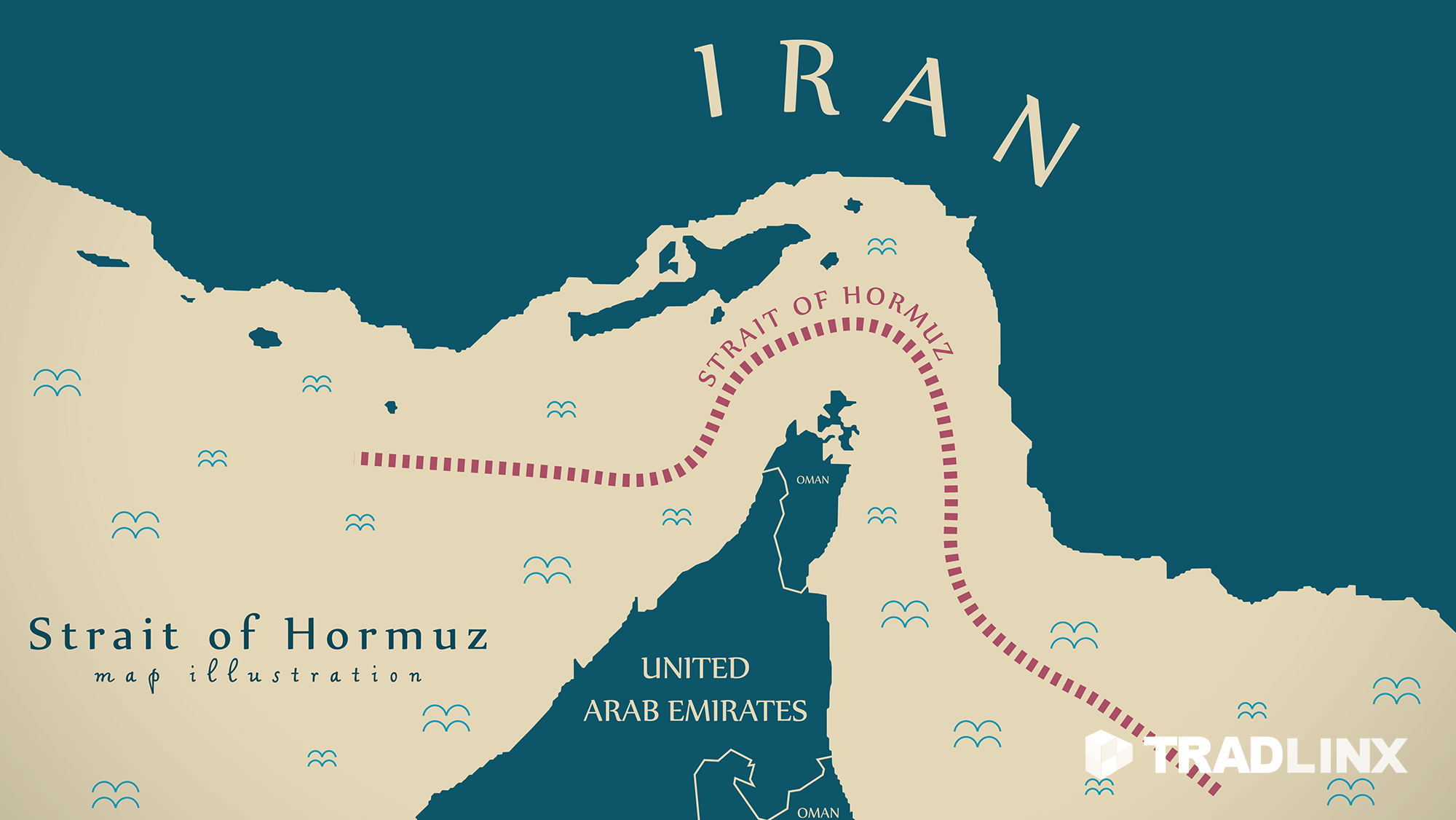
Consider a young officer stationed on a destroyer in the Strait of Hormuz. Let’s call him Miller. He isn't thinking about geopolitical leverage or the nuances of the 2015 nuclear deal. He is looking at a radar sweep, watching a swarm of Iranian fast-attack boats buzz his multi-billion-dollar vessel like hornets around a bear. For Miller, the stakes are immediate and visceral. For the man in the Oval Office, Miller is a chess piece. The problem is that once you move that piece into a position of direct conflict, the board changes in ways no computer model can fully predict.
The Mirage of the Maximum Pressure Campaign
The logic behind the "Maximum Pressure" campaign was deceptively simple. If you squeeze the Iranian economy hard enough—if you choke off the oil exports and freeze the bank accounts—the regime in Tehran will eventually crawl to the negotiating table, broken and ready to sign whatever paper you put in front of them. It was a strategy born of a builder’s mindset: find the structural weakness and apply force until the foundation cracks.
It didn't crack. It hardened.
The facts on the ground tell a story of unintended consequences. When the United States withdrew from the Joint Comprehensive Plan of Action (JCPOA), it bet that the rest of the world would follow its lead. Instead, it created a vacuum. While the Iranian Rial plummeted and the average family in Isfahan struggled to buy meat, the hardliners in the Iranian Revolutionary Guard Corps (IRGC) found their greatest gift: a common enemy. Nothing validates a radical like a blockade.
As the pressure mounted, the "war" became a shadow play. A drone shot down here. A tanker limping into port with a hole in its hull there. To the Trump administration, these were signs that the squeeze was working. They saw a cornered animal lashing out. What they failed to see was that the animal was becoming comfortable in the corner.
The Arithmetic of Escalation
In a traditional conflict, the stronger power dictates the terms. The United States possesses an overwhelming kinetic advantage. It isn't even close. If the metric is purely about who can destroy more targets in a twenty-four-hour window, the U.S. wins every time.
But modern conflict isn't arithmetic. It’s psychology.
By escalating toward the brink of a hot war, the administration inadvertently gave Tehran a seat at the table they hadn't earned. Every time a missile was prepped for launch, the global oil markets spiked. Every time a carrier moved into the Gulf, America’s allies in Europe shivered, worried they would be dragged into another "forever war" they neither wanted nor could afford.
Trump went to war—rhetorically and through proxy—to prove that the old ways of diplomacy were for the weak. He wanted to show that a "Great Deal" could only be forged through the threat of total annihilation. Yet, the closer he got to that annihilation, the more he realized the cost was higher than he was willing to pay.
Imagine the political optics of a sustained conflict. Thousands of body bags returning to Dover Air Force Base during an election cycle. Gas prices hitting seven dollars a gallon. The "America First" base, promised an end to foreign entanglements, suddenly finds itself mired in the most complex geopolitical swamp on the planet. This is the paradox of the bully: you have to be willing to throw the punch, but if you do, you might break your hand.
The Empty Table
When the smoke clears from a strike, you are left with the same geography you had before. Iran remains a regional power with a footprint that stretches from Beirut to Baghdad. The "Maximum Pressure" didn't move the borders. It didn't stop the enrichment of uranium; in fact, it accelerated it. By removing the guardrails of the nuclear deal without a viable replacement, the administration essentially told a locksmith to stop using his keys and start using a sledgehammer.
Now, look at the diplomatic map. The United States is more isolated on this issue than it has been in decades. Traditional allies like the UK, France, and Germany spent years trying to create a workaround for the sanctions, not because they love the Iranian regime, but because they fear a world where the U.S. acts as a lone wolf.
The strategy was supposed to leave Iran weaker and Trump stronger. Instead, we see an Iran that has learned how to survive in the dark. They have mastered the art of the "grey zone"—actions that are aggressive enough to hurt but subtle enough to avoid a full-scale American retaliation. They have built a resistance economy. They have deepened their ties with China and Russia, two players more than happy to watch the United States exhaust its political capital in a desert standoff.
The Human Cost of High Stakes
The invisible stakes are found in the homes of the Iranian middle class, where the dream of a "normal" life has been extinguished by a decade of economic warfare. They are found in the eyes of American soldiers who are told they are there for "deterrence," a word that sounds increasingly hollow when the missiles start flying.
There is a specific kind of exhaustion that sets in when you realize the person across the table isn't afraid of you anymore. Fear is a finite resource. If you use it too much, people become numb to it. The Iranian leadership realized that Trump, for all his fire and fury, was deeply allergic to a protracted war. Once they called that bluff, the "Maximum Pressure" became a rhythmic, dull ache rather than an acute, life-threatening crisis.
Trump finds himself in a position that is worse than where he started. Before the escalation, there was a flawed but functioning agreement that kept inspectors on the ground. Now, there is no agreement, no inspectors, and a heightened risk of a miscalculation that could ignite the entire region. He is left holding a pile of sanctions that have already done their worst, leaving him with no more "squeeze" to apply.
The map in the Situation Room doesn't show the loss of prestige. It doesn't show the way the world has learned to move around the United States rather than through it. It only shows the coordinates of targets.
But you cannot bomb a country into liking you, and you cannot starve a regime into a "Great Deal" if that regime believes its very survival depends on saying no. The builder found a project he couldn't finish. The negotiator found a partner who walked away from the table.
In the end, the standoff didn't prove American strength. It exposed the limits of it. The master of the deal is left standing in the center of the room, shouting at a door that has been locked from the other side, while the rest of the world quietly begins to look for another exit.