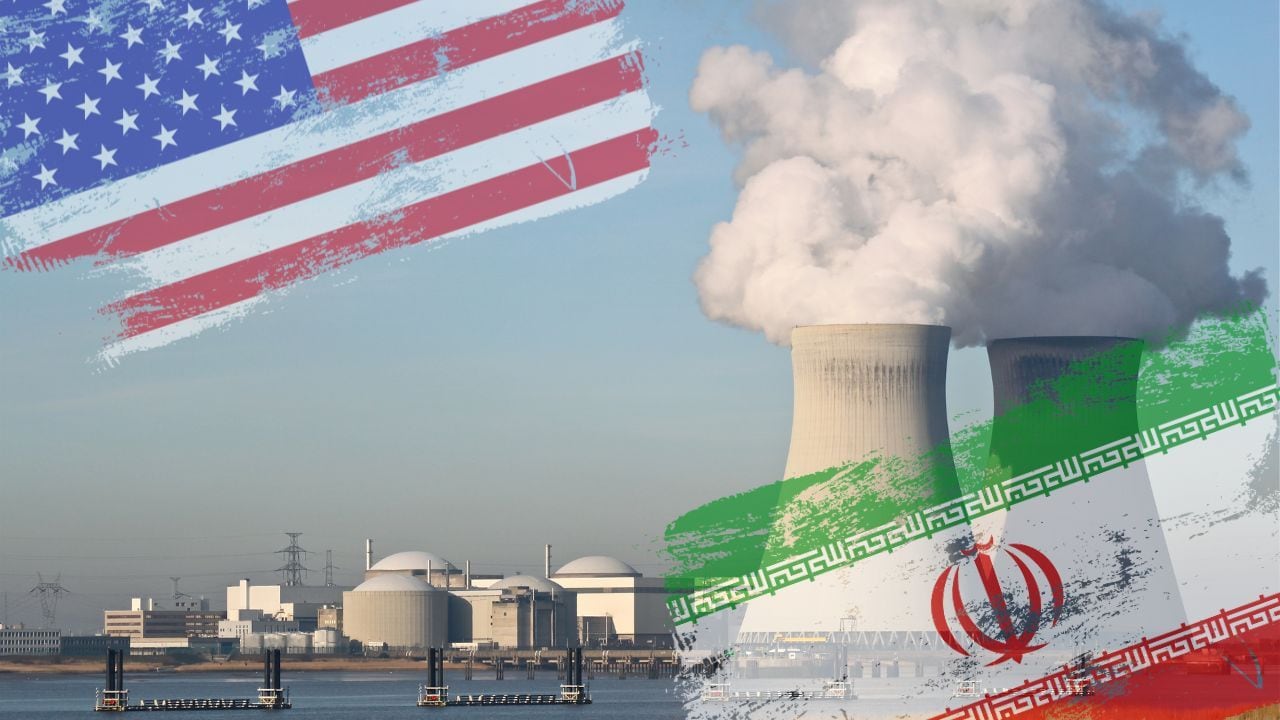
The coffee in the Hotel des Bergues is too expensive to taste this bitter. Across the street, the Jet d'Eau blasts five hundred liters of Lake Geneva water into the air every second, a white plume that looks like a permanent scar against the grey Swiss sky. It is March 2026. Inside the gilded rooms of the Four Seasons, men in tailored suits are trying to decide if the world ends or if it simply gets much more expensive.
They call it the Geneva Framework. To the diplomats, it is a "de-escalation roadmap." To a shopkeeper in Isfahan watching his currency evaporate, it is a lifeline. To a drone technician in the American Midwest, it is a target list.
History is rarely a straight line. It is a series of frantic pivots. To understand why these men are whispering behind reinforced glass today, you have to look at the debris of the last twenty-four months. The timeline isn't just a list of dates. It is a ledger of broken promises and kinetic consequences.
The Year the Silence Broke
In early 2024, the ghost of the old nuclear deal—the JCPOA—finally stopped rattling its chains. It was dead. Everyone knew it, but no one wanted to be the first to sign the death certificate. Iran had reached the "threshold" state, a polite term for having enough highly enriched uranium to make a physicist sweat.
Then came the hardware.
By mid-2025, the technical became the tactical. We saw the deployment of the Fattah-2 missiles, hypersonic birds that turned the regional defense architecture into a collection of very expensive lawn ornaments. Washington responded not with words, but with "Integrated Sanctions 3.0." This wasn't the old game of freezing bank accounts. This was digital strangulation. They cut off the firmware updates for Iranian industrial controllers. They ghosted the servers.
Imagine a hospital where the MRI machines simply stop working because a server in Virginia refused to say "hello." That isn't just policy. That is a quiet, sterile form of siege.
The Ghost in the Centrifuge
Consider a hypothetical engineer in Natanz. Let’s call him Omid. He isn't a fanatic. He is a man with a PhD and a mortgage. For years, Omid watched the dials on his monitors. He knew that every time he increased the enrichment percentage, he was shortening the fuse on a bomb that might fall on his own house.
When the talks collapsed in late 2025, Omid’s monitors went dark. A cyber-intrusion, suspected to be a joint Western operation, didn't just break the machines; it made them scream. Centrifuges spun until they shattered, turning into shrapnel.
This was the "Kinetic Pivot." The moment when the war transitioned from the shadows of the internet to the heat of the desert. In October 2025, we saw the first direct exchanges. Not through proxies. Not through "militias." Direct.
The retaliatory strikes on Iranian port infrastructure in Bandar Abbas didn't just stop oil; they stopped food. The price of bread in Tehran tripled in a week. When you can't feed your children, "sovereignty" is a very thin blanket.
The Geneva Calculus
Now, we are back in Switzerland. Why? Because both sides realized they were staring into a basement with no floor.
The US delegation is led by a woman who hasn't slept since the New Year. She knows that the 2026 elections are looming. She knows that $7-a-gallon gas is a political death sentence. The Iranian delegation is led by a "pragmatist" who knows that his government is one bread riot away from a total collapse.
The "full timeline" the newspapers love to cite is actually a story of three specific failures:
- The Monitoring Gap: After 2024, the IAEA lost its "eyes." They were flying blind. You cannot negotiate a deal when you don't know where the hardware is hidden.
- The Drone Proliferation: Iran didn't just want a bomb; they wanted a market share. By shipping thousands of Shahed-series loitering munitions to various theaters, they became a global defense player. You can't sanction a country that has become the world’s discount hardware store for asymmetric war.
- The China Variable: In early 2026, the "Dragon’s Lifeline" was formalized. Beijing began settling oil trades in digital Yuan, bypassing the SWIFT system entirely. The "almighty" dollar suddenly looked a lot less almighty.
The Invisible Stakes
If you sit in a café in Geneva today, the world feels stable. The watches are synchronized. The chocolate is tempered. But the document being drafted in the Bergues is about more than uranium.
It is about the definition of power in the mid-21st century.
We are moving away from a world of "treaties" and into a world of "managed hostility." The 2026 talks aren't looking for a grand peace. They are looking for a way to stop the bleeding. The proposed "Status Quo Plus" agreement would allow Iran to keep its current enrichment levels in exchange for a total freeze on missile exports and a "humanitarian corridor" for electronic parts.
It is a cynical deal. It is a messy deal.
But for Omid in Natanz, it means the monitors might stay on. For the sailor in the Persian Gulf, it means the horizon might stay quiet.
The negotiators are currently stuck on "Annex B." This is the section regarding the "reversibility of sanctions." Iran wants a "Snap-Back Guardrail." They want a guarantee that if a new administration takes over in Washington, the rug won't be pulled out again.
Washington can’t give that guarantee. No democracy can.
So they sit. They drink the bitter coffee. They look at the lake.
Outside, a group of protesters holds a banner that says "History is Watching." They are wrong. History doesn't watch. History waits for someone to blink.
The real story of the 2026 Geneva talks isn't found in the communiqués or the press briefings. It is found in the silence between the sentences. It is the sound of two exhausted giants realizing they can no longer afford to kill each other, but haven't yet figured out how to live together.
As the sun sets over the Jura mountains, casting long, purple shadows across the water, the lead negotiators emerge. They don't look like victors. They look like survivors. They carry folders filled with compromises that will satisfy no one and protect almost everyone.
The ink is still wet. The air is still cold. The world remains, for one more night, precariously intact.