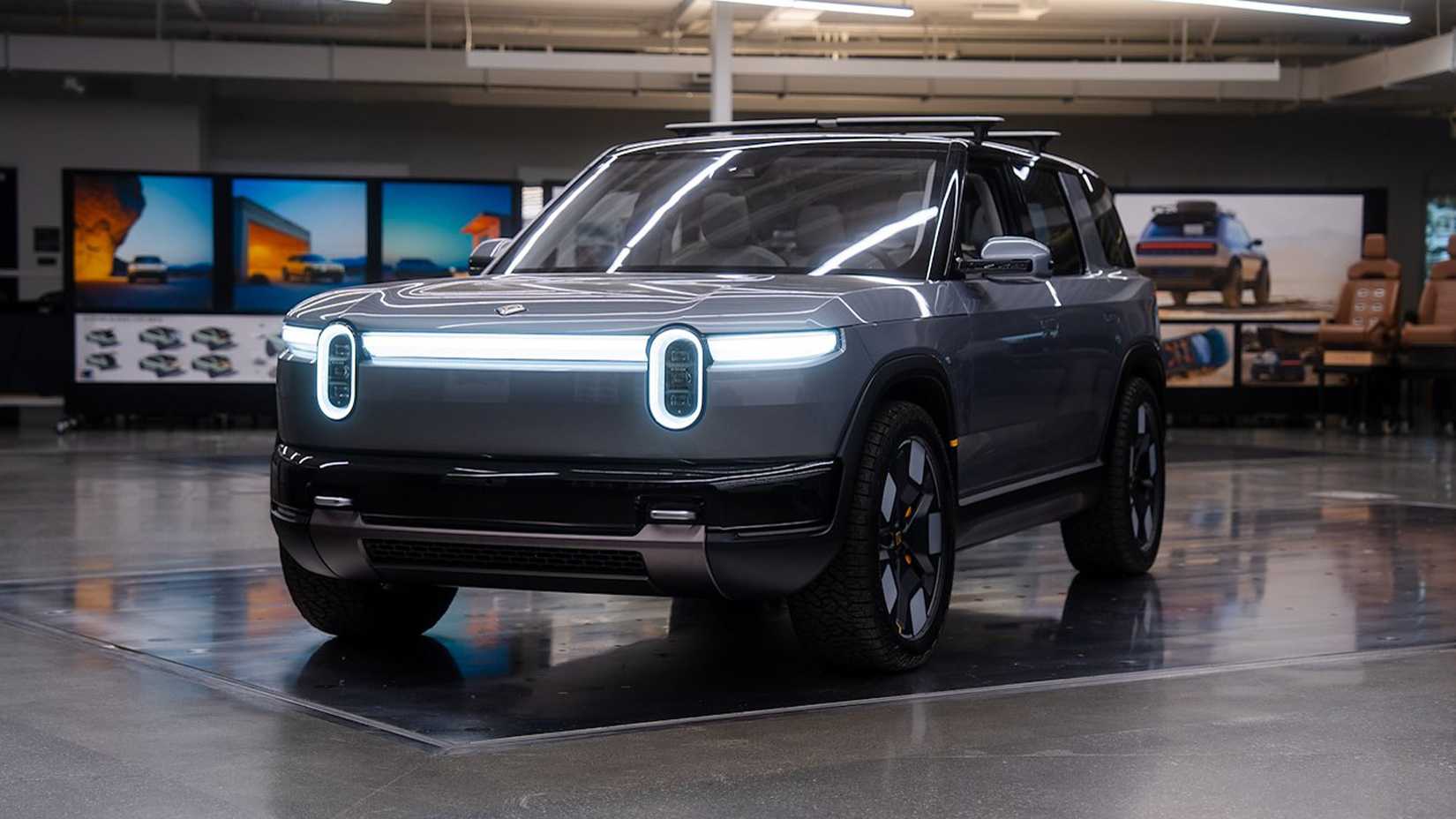
Rivian Automotive is attempting a high-wire act that would make most legacy automakers nauseous. After a 2025 defined by production plateaus and a bruising 27% stock slide, the California-based EV maker has finally signaled a turn, reporting a surprise full-year gross profit for 2025 and setting an aggressive 2026 delivery target of up to 67,000 vehicles. This is not just a modest bump; it is a 50% year-over-year surge predicated entirely on the success of the R2, a midsize SUV that represents Rivian’s first real attempt at the mass market.
The math is simple and brutal. Rivian expects its existing R1T and R1S models to remain flat at roughly 42,000 units. To hit its guidance, the company must successfully manufacture and deliver between 20,000 and 25,000 R2 units starting in the second quarter of 2026. This is the moment where the "adventure brand" ethos meets the cold reality of industrial scaling. If the R2 fails to launch on time or hits a snag in the Illinois factory, the company's $6 billion cash cushion will start to look like a very thin safety net. Read more on a related issue: this related article.
The Cost of the $45,000 Promise
Rivian’s path to the mass market is paved with a $45,000 price tag. While the R1 series catered to the six-figure "outdoor enthusiast" niche, the R2 is designed to go head-to-head with the Tesla Model Y. To achieve this price point without hemorrhaging cash, Rivian has completely re-engineered its manufacturing philosophy.
The R2 uses a new Midsize Platform (MSP) that reportedly cuts production costs by nearly 50% compared to the R1. This efficiency is driven by a massive reduction in parts count and a simplified electrical architecture. During the recent Q4 earnings call, CFO Claire McDonough was clear: 2026 is a transition year. The company expects automotive gross margins to turn positive by the final quarter of 2026, but the middle of the year will be expensive. Launching a new vehicle line is a capital-intensive nightmare, and Rivian is forecasting an EBITDA loss of up to $2.1 billion for the year as it ramps up. Further analysis by MarketWatch highlights similar perspectives on this issue.
The technical leap is significant. The R2 will debut Rivian’s in-house "Maximus" drive units and a new structural battery pack using 4695 cylindrical cells. These cells, supplied by LG Energy Solution’s Arizona plant, offer higher energy density and faster charging than the current R1 packs. However, relying on a new cell format and a new drive unit simultaneously is a classic "double-risk" scenario in automotive manufacturing. If either component faces a supply chain bottleneck, the entire 2026 guidance evaporates.
The Illinois Pressure Cooker
While the company has dreams of a massive facility in Georgia, the near-term fate of the brand rests entirely on a 1.1 million-square-foot expansion in Normal, Illinois. This factory is currently being pushed to its limits. Rivian has already begun rolling out "Manufacturing Validation Builds"—pre-production units used to calibrate the assembly line.
- Q1 2026: Final testing and certification of R2 units.
- Q2 2026: Official start of customer production on a single shift.
- H2 2026: Introduction of a second shift to hit the 4,000-unit-per-week run rate.
The 68,000 reservations Rivian secured within 24 hours of the R2 reveal are a double-edged sword. They represent a massive order book, but they also create a ticking clock. Early reservation holders are notoriously fickle. If the "Launch Edition" builds—likely priced well above the $45,000 base—don't hit driveways by June, the narrative will quickly shift from "Tesla killer" to "over-promised startup."
The Software Wildcard
Beyond the hardware, Rivian is leaning heavily on software to shore up its balance sheet. Software revenue grew to $447 million in 2025, and the company is preparing to end the trial period for its "Autonomy+" suite in April 2026. This move will transition thousands of users into a subscription model, providing the high-margin recurring revenue that Wall Street craves.
The joint venture with Volkswagen also looms large. This $5.8 billion partnership isn't just about cash; it's a validation of Rivian's zonal electrical architecture. By selling its "brain" to one of the world's largest automakers, Rivian has created a secondary revenue stream that is decoupled from its own manufacturing woes.
| Metric | 2025 Actual | 2026 Guidance (Midpoint) |
|---|---|---|
| Deliveries | 42,247 | 64,500 |
| Revenue | $5.39B | ~$7.0B |
| Gross Profit | $144M | Positive by Q4 |
| CapEx | $1.71B | $2.0B |
Political and Regulatory Headwinds
The most unpredictable factor for 2026 isn't the assembly line; it's Washington. The shifting regulatory environment under the current administration has created a cloud over federal EV tax credits. Rivian has attempted to "lease-loop" around some of these restrictions, but a full repeal of the $7,500 consumer credit would be a gut punch to R2's mass-market appeal.
Furthermore, the threat of new tariffs on imported components could squeeze margins just as the R2 is trying to find its footing. Rivian has countered this by aggressively onshoring its supply chain—exemplified by the LG battery deal in Arizona—but no manufacturer is immune to a global trade war.
The stock's recent 20% surge following the earnings beat shows that investors are willing to believe in the R2 story, but that trust is fragile. Short interest remains elevated, and the market is waiting for the first sign of a production delay to punish the share price. Rivian has spent five years proving it can build a great truck; now it has to prove it can build a great business.
The R2 is the vehicle that will either make Rivian a permanent fixture of the American driveway or serve as a cautionary tale of the difficulties of scaling in a post-subsidy world. There is no middle ground left. Success in 2026 requires flawless execution in a factory that has, until now, only known the slow pace of luxury niche production. The shift starts now.