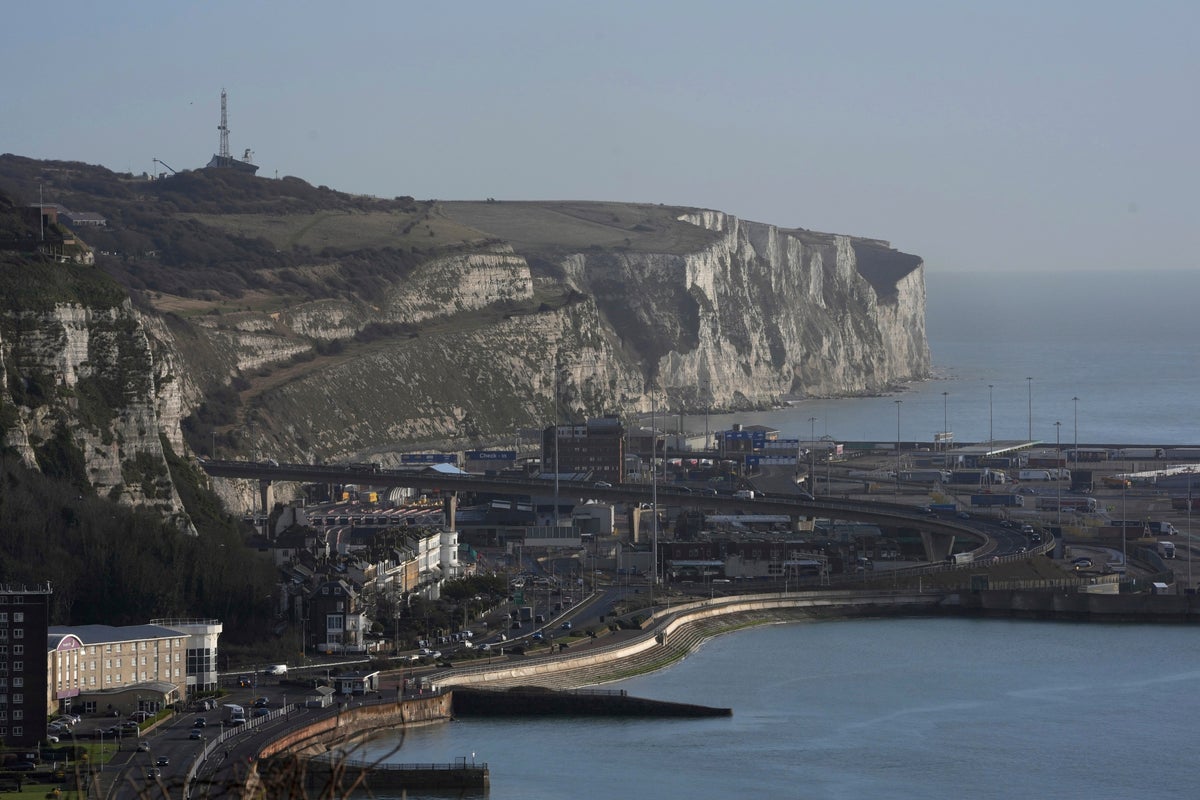
Dusk had barely lifted over Kent when the transport arteries of Britain’s busiest maritime gateway ground to an absolute halt. On Saturday morning, clusters of black-clad individuals wearing balaclavas converged on the A20 and surrounding infrastructure leading directly into the Port of Dover. This was not a spontaneous outburst of local frustration or a standard trade union picket line. It was a calculated, synchronized blockade orchestrated by digital networks and coordinated extremist groups operating under banners like the Patriot Platform, designed to strangle cross-Channel commerce and force a confrontation with the state. Traffic backed up for miles, freight lorries carrying perishable goods sat idling next to bewildered police cruisers, and a critical national supply chain was weaponized for political theater.
Decades of reporting on civil unrest reveal a stark evolution in how public order incidents manifest. Traditional protests rely on visibility, accountability, and a willingness to negotiate with authorities. The events at Dover inverted every pillar of conventional demonstration. The participants hid their faces, refused verbal engagement with commuters, and relied on encrypted messaging channels and prominent far-right agitators like Stephen Yaxley-Lennon, widely known as Tommy Robinson, to broadcast their actions in real time. By shutting down multiple access points simultaneously, the organizers tested the response time and logistical capacity of Kent Police and National Highways, probing the vulnerability of critical national infrastructure with paramilitary precision.
The Anatomy of a Chokepoint
The Port of Dover handles a massive percentage of the trade moving between the United Kingdom and continental Europe. Choosing this specific location is an exercise in strategic disruption. When you plug the funnel connecting Dover to Calais, the economic shockwaves ripple outward within hours. Supermarket supply chains, manufacturing components relying on just-in-time delivery models, and thousands of holiday travelers are held hostage by a few hundred determined actors.
The operational blueprint observed on Saturday mirrors tactics refined over successive summers of unrest across the United Kingdom. Small cells mobilize rapidly, guided by social media direction that circumvents traditional media entirely. They arrive swiftly, establish physical blockades by linking arms across multi-lane highways, and document the confrontation to fuel online fundraising and recruitment loops.
The state response remains caught in a reactive loop. Law enforcement agencies face an unenviable dilemma when confronting masked groups on high-speed roads. Moving too aggressively risks escalating public safety hazards on busy thoroughfares, while moving too slowly allows the perpetrators to achieve their primary objective: capturing high-impact footage for digital consumption before dispersing or submitting to controlled arrests.
The Digital Echo Chamber and Real-World Consequence
Understanding why men in paramilitary-style black gear feel emboldened to shut down international trade requires examining the digital architecture beneath the surface. Figures operating on the fringes of mainstream politics have successfully built parallel media ecosystems. These networks do not just report on grievances; they manufacture momentum.
In the days preceding the Dover blockade, digital calls to action circulated widely, promising a demonstration that would make the government "understand that we will not go down without a fight". This rhetoric transforms local policing issues into existential struggles, drawing participants from far outside Kent. When online influencers amplify these movements, they provide a cloak of pseudo-legitimacy to illegal blockades, framing economic sabotage as patriotic resistance.
The immediate material impact on everyday citizens is severe. Commuters trying to reach workplaces, freight drivers bound for European markets, and local residents dealing with gridlocked town streets bear the direct cost. Yet, for the organizers, these disruptions are mere collateral. The true target is the central government's perceived vulnerability regarding border control and public safety narratives.
Protecting Infrastructure Without Compromising Open Societies
Securing open societies against coordinated domestic disruption presents a profound governance challenge. Democratic institutions are inherently optimized for open movement and public consent, making them exceptionally vulnerable to actors who treat public infrastructure as a chessboard.
Enhancing the resilience of transport hubs like Dover requires moving past reactive policing models toward predictive intelligence architectures. Law enforcement agencies must monitor the digital staging grounds where these actions are planned with the same urgency applied to conventional security threats. Furthermore, the legal framework governing public assemblies may need structural adjustment to deal specifically with anonymous, coordinated blockades of critical trade routes. When masks and anonymity are weaponized to paralyze national supply lines, the line between peaceful assembly and unlawful coercion is crossed.
The barriers on the A20 were eventually cleared, and traffic began to trickle through secondary access points as police reasserted control. But the ease with which a localized network can paralyze a primary gateway to Europe leaves an unsettling precedent. As long as digital networks can mobilize anonymous cells to hold vital trade routes hostage, the security of Britain's borders remains vulnerable from within.