Dawn over the English Channel rarely arrives as an open invitation. More often, it drags itself ashore through a soup of salt, slate-colored mist, and the low, indifferent hum of idling diesel engines.
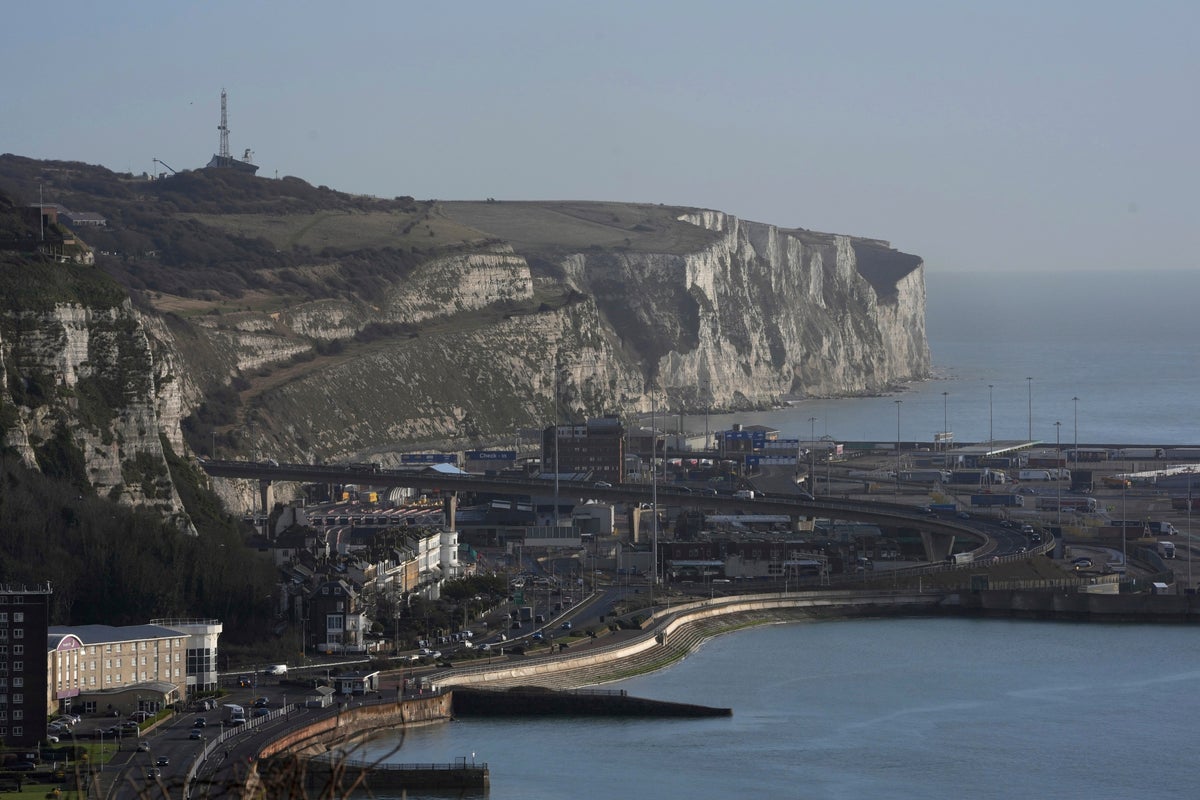
If you stood on the cliffs above Dover on an ordinary morning, you would smell the damp asphalt, the brackish tang of the seaweed far below, and the heavy, sweet exhaust of commercial haulage. You would watch the white-sided juggernauts crawl in endless queues toward the concrete gullets of the ferry terminal, each truck a steel brick in the economic wall that holds together the breakfast tables of a continent.
Then came the morning the wheels stopped turning altogether.
It did not happen because of a mechanical failure, a computer glitch in some customs clearinghouse in Rotterdam, or the usual winter gales that turn the Channel into a churned bowl of grey water. It happened because a handful of men stepped out of ordinary cars, pulled balaclavas over their faces, and planted themselves squarely across the asphalt arteries leading to the port.
Blockades are strange things. They compress miles of geopolitical anxiety into a few feet of blocked tarmac.
Consider the driver four vehicles back from the front line. Let us call him Michael, though he could just as easily be Wojciech or Dave. He has been awake since two in the morning, nursing a lukewarm thermos of chicory coffee in the cab of an eighteen-wheeler loaded down with fresh pharmaceuticals destined for distribution centers across the Midlands. His logbook is a tight, legalistic dance against time and fatigue regulations. When the traffic stutters, slows, and finally congeals into a motionless sheet of red brake lights, he does not immediately curse the protesters. He simply sighs, cuts the engine to save fuel, and stares at the corrugated steel side of the trailer ahead of him.
He is tired. Everyone is tired. That is the subterranean current running beneath these cliffs.
The ostensible trigger for the chaos was sharp and localized: an anti-immigrant demonstration staged against the backdrop of an ongoing national debate about borders, small boats, and the straining sinews of public services. But a blockade is never just about the placards held aloft by the people standing in the road. It is a physical manifestation of a deeper fracture, a symptom of a society trying to negotiate the terms of its own identity while the floorboards creak beneath its feet.
To understand Dover is to understand the geography of a bottleneck. Britain is an island, yes, but it is also a nervous system. The Port of Dover handles roughly seventeen percent of the nation's trade in goods, acting as the primary umbilical cord connecting the British mainland to Calais and Dunkirk. Every day, thousands of lorries rumble off the ferries, carrying everything from Spanish lettuce to machine parts, weaving an invisible web of radical efficiency that modern life takes entirely for granted until the web is sliced.
When you sever that cord, even for an hour, the shockwaves ripple outward with mathematical precision. Warehouses adjust their inventory models. Supermarket shelves grow slightly more vulnerable to the phantom of scarcity. Commuters miss connections. Tempers fray in the pale morning light.
And right there, standing on the tarmac, are the masked men.
There is a profound paradox in masking your face while demanding transparency and control over your country. It is an act that simultaneously claims moral clarity and hides from individual accountability. Behind those knitted woollen tubes and pulled-down hoods lie the messy, contradictory fears of ordinary citizens who feel entirely left behind by the relentless, dizzying velocity of global change.
They look at the small boats crossing the Channel—vessels that have turned a stretch of water into a graveyard and a political battleground all at once—and they feel a sense of absolute powerlessness. The state feels distant. Westminster feels like an abstract painting executed in shades of grey and broken promises. Local infrastructure, from doctors' surgeries to council housing lists, feels stretched to its absolute breaking point.
So they step into the road. They become a human roadblock, demanding that the world stop and look at their grievance.
Yet, stopping the world at Dover does nothing to solve the equations that created the grievance in the first place.
If you walk the streets of Dover away from the port gates, past the grand Victorian terraces that have seen better, more prosperous days, you find a town caught in a strange suspension. It is a place of transit rather than destination. Millions of people pass through it every year, but very few actually stay. They are heading somewhere else—London, Paris, the industrial heartlands, the leafy suburbs. Dover becomes a tollbooth in the human mind, a place where you show your papers, check your mirrors, and hurry on.
This transience breeds a distinct brand of alienation. When a community feels like a waiting room for the rest of the world, the urge to lock the doors and demand a reckoning becomes almost palpable.
When the police finally arrived on the scene of the blockade, the confrontation was remarkably mundane compared to the apocalyptic language used on social media channels an hour later. There were no grand cinematic charges, no tear gas blooming against the chalk cliffs. There were negotiations, raised voices, the slow, methodical clearing of lanes, and the resumption of the mechanical crawl.
The trucks started moving again. Michael turned his key, engaged the gears, and rolled forward into the grey drizzle.
The protest dissolved back into the general murmur of the national conversation, leaving behind no permanent solutions, no sudden epiphanies, and no healing of the deeper social wounds. The placards were rolled up. The masks were pulled off and tucked into coat pockets. The traffic cameras continued to record the endless, hypnotic procession of commerce moving back and forth across the narrowest maritime frontier in Europe.
We remain suspended in that quiet tension. Every time a truck clears customs or a small boat touches the shingle beaches further down the coast, the same fundamental questions hover in the salt air like gulls riding an updraft. Who belongs? Who decides? And how do we share a crowded island when the rest of the world keeps knocking so urgently at the door?
There are no clean answers waiting at the end of the road. There is only the next crossing, the next shift, and the heavy, enduring weight of the sea.