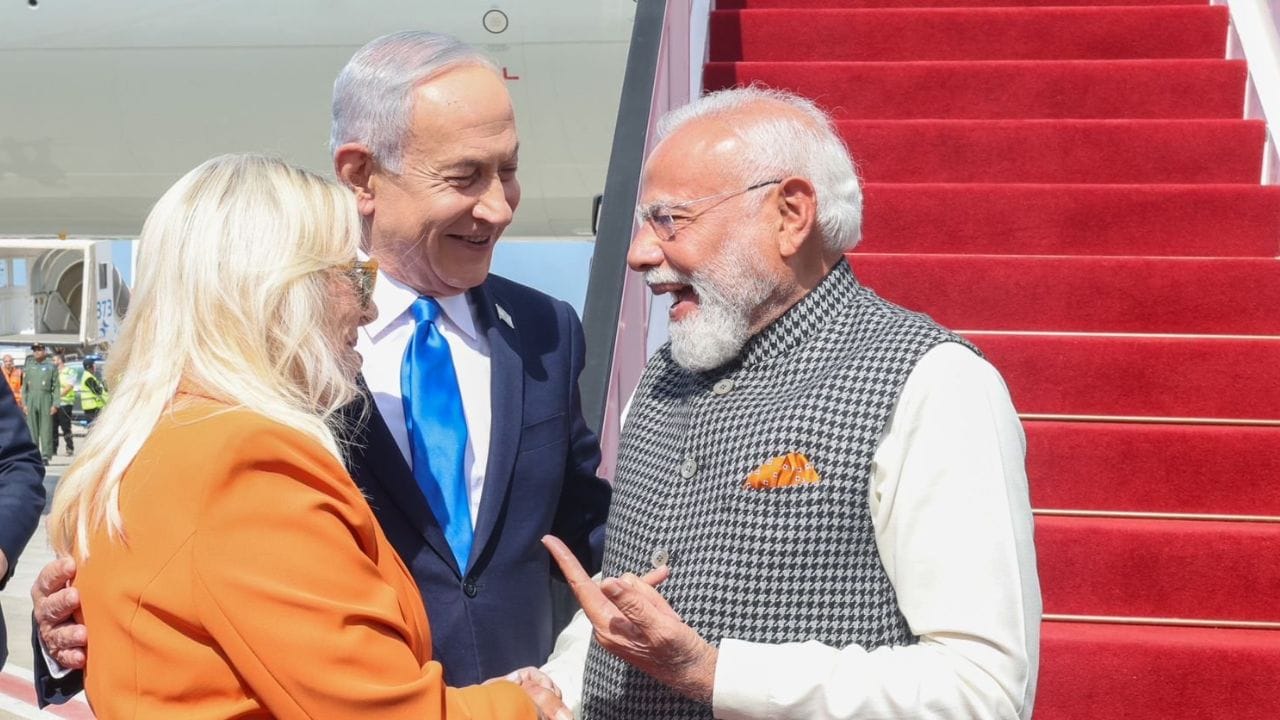
The media is currently obsessing over the optics of Prime Minister Modi’s arrival in Tel Aviv. They see a red carpet, a warm embrace, and a scheduled address to the Knesset. They call it a "historic shift." They describe it as a "new era of strategic depth."
They are wrong. You might also find this related article insightful: Strategic Asymmetry and the Kinetic Deconstruction of Iranian Integrated Air Defense.
What we are witnessing isn't the birth of a superpower alliance. It is a high-stakes transaction between a desperate buyer and a niche seller, both of whom are ignoring the structural rot in their "joint venture" model. The "lazy consensus" dictates that India and Israel are natural allies bound by shared security concerns and a "Make in India" spirit. The reality? This relationship is a stopgap measure that masks India’s failure to build its own industrial base and Israel’s over-reliance on a single, massive client.
The Myth of Technology Transfer
The loudest cheers during these state visits usually surround "defense co-development." It sounds sophisticated. It implies that Israel is handing over the keys to the kingdom. As discussed in recent reports by USA Today, the implications are notable.
It isn't.
Israel’s defense industry survives on intellectual property (IP). They sell the product; they don't sell the brain. When India signs a multi-billion dollar deal for Surface-to-Air Missile (SAM) systems or Heron drones, the "technology transfer" is often little more than local assembly of "knock-down" kits.
I have seen dozens of these "joint ventures" fail to move the needle on actual domestic innovation. You cannot "transfer" a culture of high-tech audacity through a procurement contract. India is buying fish; it is not learning how to build the pond. By the time an Israeli missile system is fully integrated into the Indian ecosystem, the next generation of that technology is already being developed in Haifa or Rehovot. India stays one cycle behind, perpetually paying a "friendship premium" for yesterday’s breakthroughs.
The Security Paradox: Why Tactical Wins Lead to Strategic Debt
The Knesset address will likely touch on counter-terrorism. It’s the easy win. It’s the common ground. But look closer at the hardware.
India’s reliance on Israeli tech—specifically Phalcon AWACS and Pegasus-class surveillance—creates a dangerous monoculture in its defense architecture. If your entire border sensor grid and precision-strike capability share a single point of origin, you haven't achieved "strategic autonomy." You’ve just swapped one master (Russia) for another (Israel), with a side helping of American oversight since much of Israel's tech contains US-regulated components.
- The Dependency Trap: What happens when Israeli and Indian interests diverge on Iran?
- The Intelligence Gap: Are we sure the "black boxes" in these systems don't have backdoors?
- The Cost of Maintenance: Israeli kit is notoriously expensive to maintain. The lifecycle costs often dwarf the initial purchase price, draining the very budget India needs for its own R&D.
Stop Asking if the Alliance is Strong
People always ask: "Is the India-Israel bond unbreakable?"
This is the wrong question. The right question is: "Is this bond preventing India from becoming a true defense exporter?"
As long as India can buy a "quick fix" from Tel Aviv, the domestic private sector—the Mahindras, Tatas, and L&Ts—will always be playing second fiddle to Israeli Aerospace Industries (IAI) or Rafael. We are subsidizing Israeli R&D with Indian taxpayer money. We are essentially paying for Israel to stay ten years ahead of us.
If India were serious about the "Make in India" rhetoric being shouted from the rooftops in Tel Aviv, it would stop signing these massive deals and start poaching the talent. It would build the labs, not the assembly lines.
The Startup Nation vs. The Bureaucratic Fortress
The "synergy" between the "Startup Nation" and "Digital India" is a marketing slogan, not a business reality.
Israeli tech thrives because of a flat hierarchy, extreme risk tolerance, and a military that acts as an incubator. India’s defense sector is a sprawling, top-down bureaucracy dominated by Defense Public Sector Undertakings (DPSUs) that move at the speed of glacier melt.
When an Israeli firm partners with an Indian DPSU, the result isn't a "cutting-edge" (excuse the banned term—let's say sharp) new product. It is a watered-down, delayed, and over-budget compromise. The cultural mismatch is terminal. You cannot "foster" (another banned concept—let's say force) innovation by pairing a cheetah with a tortoise and calling it a "joint hunt."
The Brutal Truth About Defense Deals
I have sat in rooms where these deals are hashed out. The Indian side wants the "prestige" of the equipment. The Israeli side wants the "volume" of the Indian market. Neither side is actually invested in India's long-term self-reliance. Why would Israel want India to stop buying from them? It’s a conflict of interest that nobody in the media wants to acknowledge.
We are told that the Knesset address represents a "moral alignment." That's sentimentality. In the defense world, sentimentality is a liability. Israel sells to India because India is a massive, hungry market with a slow domestic industry. India buys from Israel because it has failed to fix its own internal research failures for forty years.
The Actionable Pivot: How to Actually Win
If India wants to stop being a client state, it needs to burn the current playbook.
- Stop the Joint Ventures: Shift to "Joint Intellectual Property." If India provides 50% of the funding, it must own 50% of the patents. No exceptions.
- End the DPSU Monopoly: Force Israeli firms to partner exclusively with Indian private startups, not the state-owned relics.
- Weaponize the Diaspora: Use the talent bridge not for "cultural exchange," but for aggressive industrial espionage and talent recruitment.
The current state visit is a victory for diplomats and photographers. For anyone interested in India's genuine rise as a global defense power, it is a sober reminder of how far we are from the goal.
We aren't building a partnership. We are renewing a subscription. And the subscription fees are getting higher every year.
Stop celebrating the arrival. Start questioning the bill.