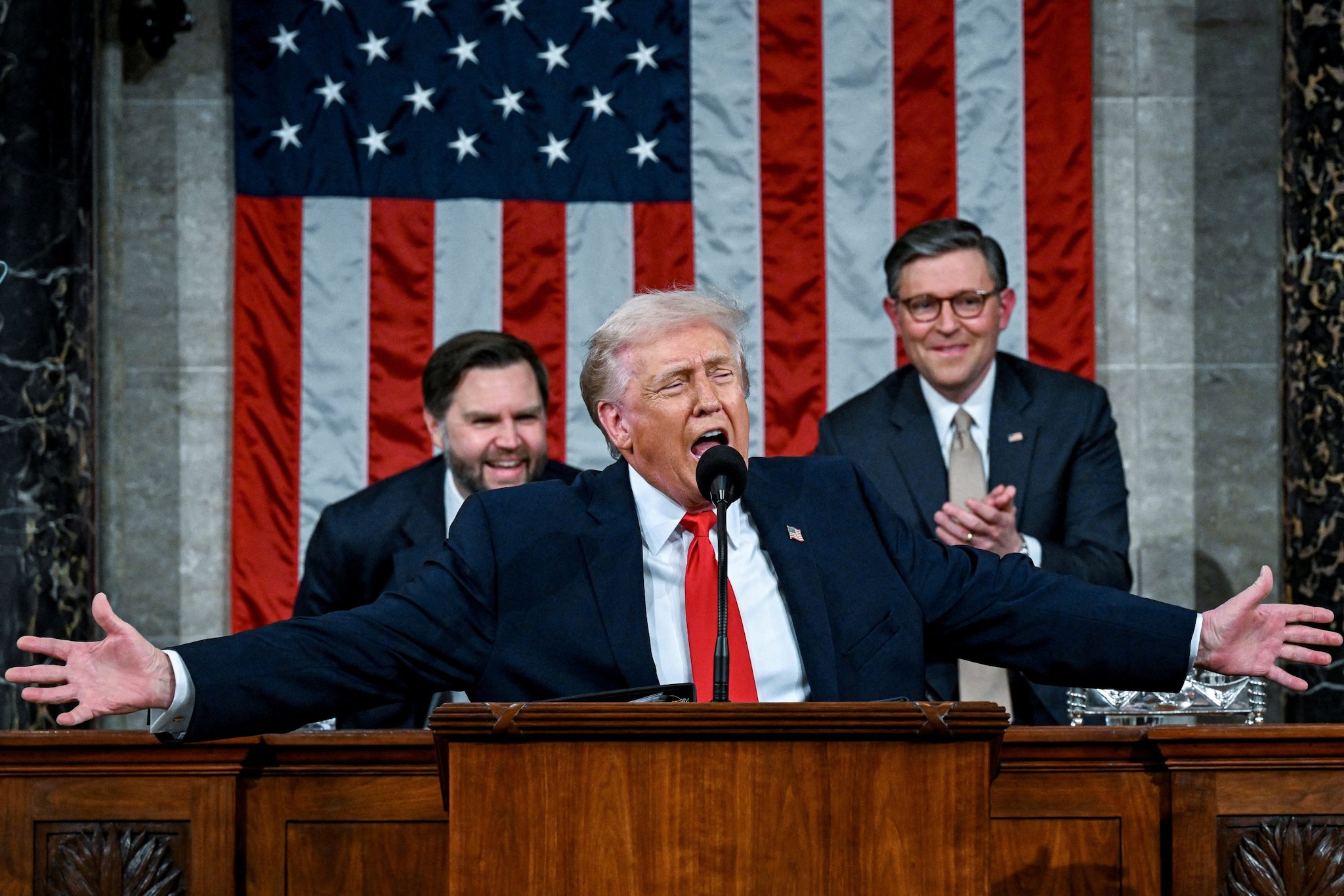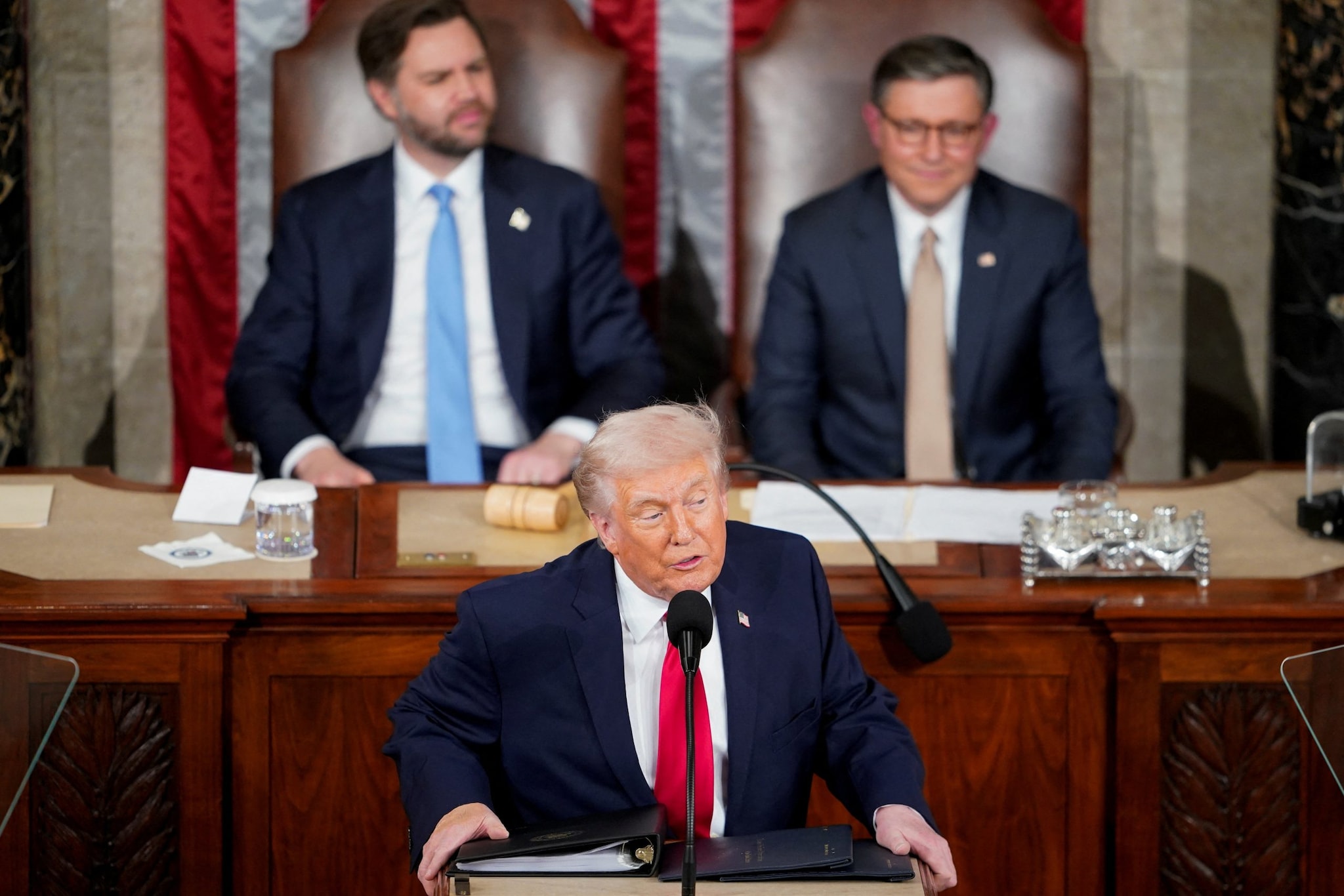
Donald Trump doesn’t do brief. If you tuned in expecting a standard sixty-minute policy outline, you quickly realized that wasn’t the plan. In a marathon session that pushed well past the hundred-minute mark, the 45th and now 47th President of the United States officially claimed the title for the longest State of the Union address in American history. It wasn't just a speech. It was an endurance test for the audience, the networks, and the history books.
Most presidents aim for the "sweet spot" of about an hour. They want to hit their talking points, get the applause lines in, and let everyone go home before the West Coast finishes dinner. Trump took a different path. By the time he reached his final remarks, he had eclipsed the previous record held by Bill Clinton, who was notoriously wordy himself.
The sheer length of this address tells us more about the current political climate than the actual policy proposals do. It’s about dominance of the airwaves. If you’re talking for 100 minutes, you’re the only thing on the screen. You’re the only voice in the room. In an era of ten-second soundbites, Trump decided to go for a feature-length film.
The Numbers Behind the Longest State of the Union
Let’s look at the data because the clock doesn't lie. Before this latest address, the record for the longest State of the Union (SOTU) belonged to Bill Clinton. In 2000, Clinton spoke for one hour and 28 minutes. At the time, people thought that was an eternity. Trump’s latest appearance blew past that with room to spare.
History shows a massive divide in how presidents handle this podium. Here is how the top of the list looks now:
- Donald Trump (2025/2026 era): 100+ minutes
- Bill Clinton (2000): 88 minutes
- Bill Clinton (1995): 84 minutes
- Lyndon B. Johnson (1967): 76 minutes
- Ronald Reagan (1982): 71 minutes
On the flip side, you have guys like Richard Nixon who could get in and out in 28 minutes. George Washington’s first annual message was barely over 1,000 words. You could read the whole thing in the time it takes to brew a pot of coffee. We’ve moved from concise constitutional requirements to televised spectacles.
The length of a SOTU isn't just about the words written on the teleprompter. It’s the "applause tax." In a divided chamber, every other sentence is met with a standing ovation from one side and stone-faced silence from the other. Those pauses add up. During Trump’s record-breaker, the frequent interruptions for cheers essentially added twenty minutes to the runtime.
Why Presidents Are Getting Wordier
The trend toward longer speeches isn't an accident. It’s a strategy. When Harry Truman delivered the first televised SOTU in 1947, everything changed. The audience was no longer just the people in the room; it was the entire nation.
Modern presidents feel the need to check every single box. They have to mention agriculture for the Midwest, tech for the coast, border security for the South, and a dozen different social programs to keep their base happy. If you miss a topic, someone feels slighted. This "laundry list" style of governing is what kills brevity.
Trump’s specific style leans into this. He’s known for ad-libbing. Even with a prepared script, he often departs from the text to tell a story or double down on a point. That’s how an 80-minute script turns into a 105-minute event. It feels less like a formal report and more like a rally held in the House Chamber.
There’s also the ego factor. Let’s be real. No president wants to be forgotten. Breaking a record—even one for length—is a way to signal stamina. In a political world where age and mental sharpness are constant talking points, standing at a podium for nearly two hours is a physical statement.
Comparing the Great Communicators
We often hear Reagan called the "Great Communicator," but he was actually a fan of brevity. He knew that the longer you talk, the more people tune out. Reagan’s longest speech was barely over an hour. He understood the power of the "exit."
Clinton was the opposite. He loved the policy weeds. He’d talk about the intricacies of the tax code until the cameras started to lose focus. But even Clinton had a certain rhythm. Trump’s length is different; it’s more about narrative and grievance. It’s about painting a picture of the country that requires a massive amount of rhetorical space.
The shift in length also reflects how we consume media. You might think shorter would be better for the TikTok generation. Actually, the opposite is happening. Everything is polarized. If you love the person speaking, you want them to talk forever. If you hate them, five minutes feels like a week. The presidency has leaned into the "super-fan" model of communication.
The Impact of the 100 Minute Marathon
What does this actually achieve? Honestly, not much in terms of legislation. The State of the Union rarely moves the needle on polling for more than a few days. It’s a performance.
By going over 100 minutes, Trump ensured that the late-night news cycles were entirely focused on him. He crowded out the opposition response. By the time the other party got their chance to speak, half the country had already gone to bed or switched to Netflix. That is a tactical win, regardless of what you think of the content.
It also sets a new, somewhat exhausting precedent. Will the next president feel the need to hit 110 minutes? I hope not. There is a point of diminishing returns where the message gets lost in the sheer volume of words.
How to Track Future SOTU Records
If you want to keep an eye on how these records fall, watch the presidency.ucsb.edu archives. They track every word count and duration dating back to the founding. You’ll notice that the move from written messages to spoken ones was the first big jump. The second jump was television. The third jump—the one we’re in now—is the era of the "unfiltered" president.
Keep a few things in mind for the next one:
- Watch the word count vs. the time. A high word count with a short time means a fast talker (think JFK).
- Watch the "applause breaks." They are the biggest variable in speech length.
- Look at the start time. Presidents who start late usually talk shorter to keep the networks happy. Trump ignored that rule.
The 100-minute barrier has been broken. We are officially in the era of the mega-speech. Whether that’s a good thing for democracy is up for debate, but for the record books, it’s a milestone that won't be easily topped.
If you're looking to analyze the speech yourself, don't just read the transcript. Watch the pacing. Notice where the ad-libs happen. That's where the real record-breaking time is found. Check the official archives to see how this stacks up against the historical average of 50 minutes. You'll see just how much of an outlier we just witnessed.