The headlines are weeping for the "victims" of the $100,000 H-1B fee. They are obsessed with the 11% drop in visa approvals and the 150% surge in revocations under the Trump 2.0 regime. They treat the decline of Indian and Chinese talent in the U.S. as a tragic loss for the applicants.
They are asking the wrong question.
The real story isn’t that these professionals are being "locked out." The story is that for the first time in fifty years, they are starting to realize that staying in the United States is a bad investment. The "American Dream" is currently a high-fee, low-yield asset, and the global market just found a better alternative.
The $100,000 Entry Fee is a Gift to Bangalore
By hiking the H-1B petition fee from a few thousand dollars to $100,000, the administration hasn't just "protected" American jobs; it has forcibly corrected a bloated labor market.
I have seen companies waste millions on mid-tier engineering talent simply because the H-1B was a cheap way to tether a worker to a desk. At $5,000, a visa is a rounding error. At $100,000, it’s a capital expenditure that requires a Board-level ROI.
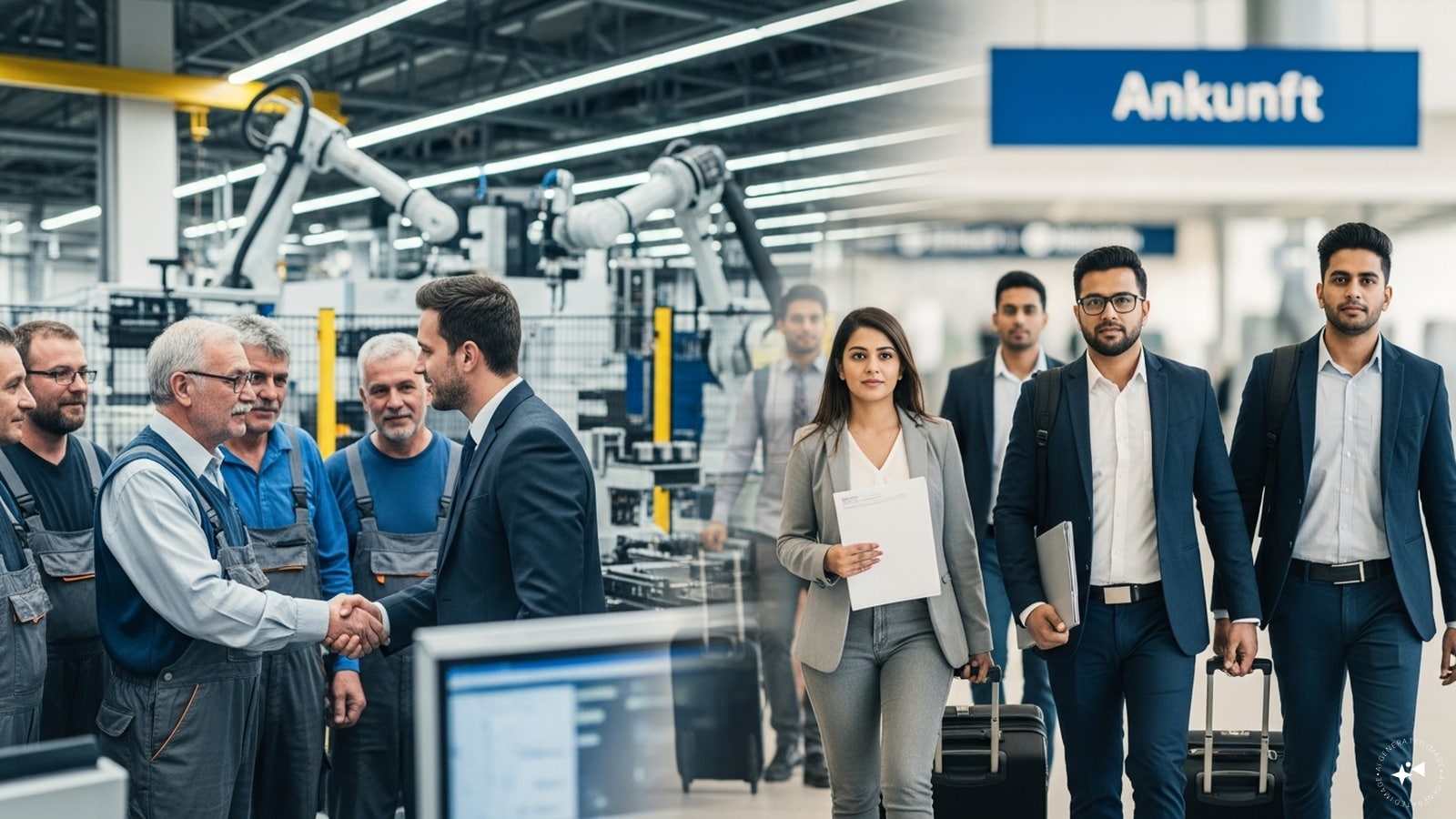
This fee is a filter. It doesn't stop the "best and brightest"—Amazon and Google are still paying it for senior AI architects. It stops the "mediocre and moderately-priced." And where do those thousands of rejected engineers go? They don't disappear. They go to Global Capability Centres (GCCs) in Hyderabad, Pune, and Shenzhen.
By making it economically unviable to import junior-to-mid-tier talent, the U.S. has effectively subsidized the infrastructure of its greatest competitors. We aren't keeping jobs in Ohio; we are forcing the world's most scalable industries to build their headquarters in the East.
The Myth of the "Indentured Servant"
The "lazy consensus" in the media is that H-1B workers are "indentured" to their employers. This was a convenient narrative for activists, but it’s a total misunderstanding of the 2026 talent market.
In reality, the H-1B was a golden ticket that allowed foreign nationals to arbitrage their skills for U.S. dollars. But the arbitrage is dying. With the 2025 "Modernization Rule" and the prioritizing of high-wage earners, the U.S. has signaled that it only wants the top 1% of the 1%.
The remaining 99%—the people who actually build the apps you use every day—are looking at China’s new "K Visa." Unlike the H-1B, the K Visa offers:
- Self-sponsorship: No need to beg a corporate overlord.
- Entrepreneurship Pathways: Start a company on day one.
- Zero Annual Quotas: If you have the skills, you get the stamp.
While Washington argues over whether an Egyptian national in Colorado should trigger a ban on 19 other countries, Beijing is quietly rolling out the red carpet for the exact STEM professionals we are turning away.
The "Reverse Brain Drain" is Not a Drill
For decades, the U.S. relied on a "brain drain" from India and China to fuel its R&D. We took it for granted. We assumed that a Green Card was the ultimate prize.
But look at the data from the first quarter of 2026. For the first time in modern history, more immigrants are leaving the U.S. than entering. This isn't just about deportations of the undocumented; it’s about "self-deportation" by the highly skilled.
Imagine a scenario where a 28-year-old IIT graduate with a Master’s from Stanford looks at the math. In the U.S., they face:
- A $100,000 fee that their employer will eventually claw back through stagnant wages.
- A Green Card backlog for Indians that literally exceeds a human lifespan.
- A political climate that treats their visa as a "privilege" to be revoked on a whim.
Now, look at the alternative: A high-level role in a Bangalore-based GCC or a startup in Singapore where they are the 1%, not the "vulnerability."
The U.S. is currently operating on a 1990s software architecture in a 2026 world. Our immigration system is "monolithic" and "brittle," while the global talent market has gone "serverless" and "distributed."
The Death of the Local Office
The administration’s "Hire American" push assumes that if you remove the foreign worker, a local worker takes the chair. This is a fundamental misunderstanding of the technology sector.
Software doesn't need a zip code.
When the Trump administration paused student visa interviews and jacked up vetting requirements, they didn't create a boom for American CS grads. They created a boom for Zoom, Slack, and remote engineering platforms.
If a company can’t bring a genius from Shanghai to Silicon Valley, they don't hire a B-minus student from a local state college. They open a R&D office in Shanghai. They keep the talent, they keep the IP, and they stop paying U.S. corporate taxes on that labor.
The Risk Nobody Admits
I’ll be candid: there is a downside to my contrarian view. The "American First" policy might actually succeed in raising the median wage for the few domestic workers left in the room. But it’s a Pyrrhic victory.
If the cost of labor in the U.S. becomes 3x the global average because of artificial scarcity and $100,000 entry fees, the U.S. ceases to be a hub of innovation and becomes a museum of legacy systems.
We are trading our status as the "World’s Lab" for the status of "World’s Most Expensive Guarded Gate."
The report says India and China are "bearing the brunt." I disagree. They are being forced to grow up. They are being forced to build their own ecosystems because the American one has become too expensive and too volatile to trust.
The real brunt will be felt by the U.S. consumer in 2028, when the next "game-changing" (if I were allowed to use that word) AI breakthrough isn't "Made in USA," but is instead licensed from a company in a country that didn't treat talent like a threat.
Would you like me to analyze the specific fiscal impact of the H-1B fee on mid-sized U.S. tech firms compared to their offshore competitors?