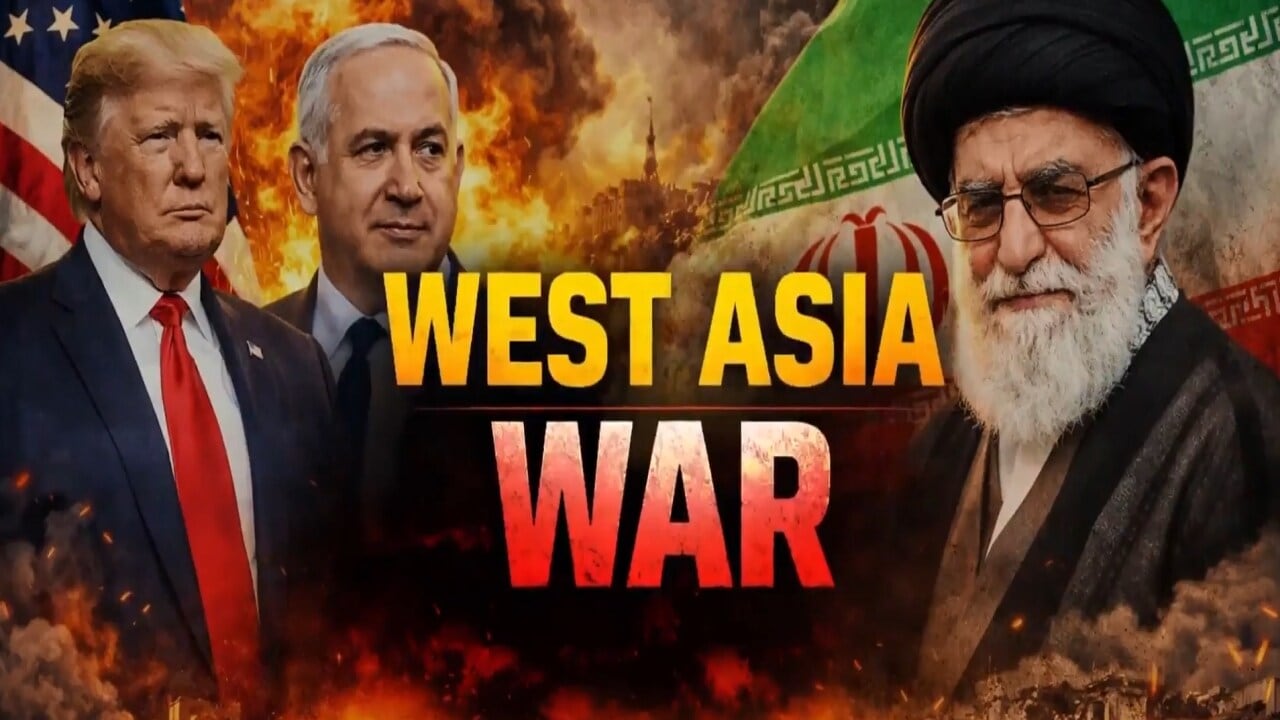
The war between the United States, Israel, and Iran has reached a point where reality is as fragmented as the rubble in downtown Tehran. President Donald Trump insists a deal is essentially done, claiming Iran has already agreed to permanent nuclear disarmament and offered a massive "energy gift" to the West. Yet, on the ground, the Iranian military is openly laughing at him. Lieutenant Colonel Ebrahim Zolfaghari, speaking for the joint command of Iran’s regular forces and the Revolutionary Guard, released a video statement on state television dismissing the American claims as a delusion. He suggested the White House is merely "negotiating with itself," while Tehran maintains that no direct talks have occurred in nearly a month.
This is not just a diplomatic disagreement. It is a fundamental collapse of shared reality in the middle of a conflict that has already claimed thousands of lives and upended the global energy market. While the White House touts a 15-point ceasefire plan sent through Pakistani intermediaries, the Iranian military leadership is using the very claim of negotiations to frame the U.S. as a failing superpower trying to "dress up defeat as an agreement." The core of the issue is whether the people Trump claims to be dealing with actually hold any power in a regime that has seen its supreme leadership decapitated and its military infrastructure ravaged by 24 days of non-stop strikes.
The Ghost of the 15 Point Plan
For the past 48 hours, Washington has been operating on the premise that an off-ramp is imminent. President Trump postponed a massive ultimatum to strike Iran's power grid, citing "productive conversations" that allegedly occurred over a weekend of back-channel diplomacy. According to the administration, Iran offered a "very significant prize" related to the flow of oil and gas through the Strait of Hormuz—a waterway that has been effectively closed to Western shipping since the war began on February 28.
But the Iranian response suggests that if someone is talking to the Americans, they are not doing so with the blessing of the military establishment. Lt. Col. Zolfaghari’s public mockery on state television was brutal. He didn't just deny the talks; he attacked the credibility of the American presidency. "Have your internal conflicts reached the point where you are negotiating with yourselves?" he asked. The implication is clear: the Iranian military, which still controls the missiles targeting Tel Aviv and the mines littering the Persian Gulf, has no intention of honoring a deal it claims does not exist.
The Pentagon is currently moving two Marine units, adding 5,000 troops and thousands of sailors to the region. This is being framed as giving the President "maximum flexibility," but it also serves as a hedge against the very real possibility that the "peace deal" is a mirage. If the Iranian military continues its strikes on Israeli cities and Gulf states while Trump is announcing a ceasefire, the credibility of the U.S. command structure will be at stake.
The Strategy of Disinformation and Regime Change
There is a growing theory among analysts that the U.S. administration is using "negotiation theater" as a tool of psychological warfare. By claiming that high-level Iranians are cutting deals and offering up "prizes" of national resources, Washington is seeding massive distrust within the remnants of the Iranian leadership. After the strike that killed Ayatollah Ali Khamenei at the start of the conflict, the power vacuum in Tehran has been filled by competing factions.
Trump’s insistence that "regime change has already happened" because the new leaders are "very different" suggests he is betting on a collapse from within. If the hardline military commanders believe their political counterparts are meeting with Jared Kushner or JD Vance in Islamabad, they are more likely to turn on those politicians as traitors. This is a high-stakes gamble. If the goal is to fracture the regime, it might be working, but it also makes a coordinated ceasefire nearly impossible. You cannot sign a peace treaty with a government that is busy hunting for "traitors" within its own ranks.
The Iranian military is fighting back against this narrative by doubling down on rhetoric. They have shifted their official doctrine from defensive to offensive, according to recent statements from the Revolutionary Guard. They aren't just denying the talks; they are trying to prove their continued relevance by hitting schools and hospitals in Israel and targeting desalination plants in the Gulf. For the military, a deal means irrelevance. For the people in the streets of Tehran, however, the "negotiations" are the only hope for keeping the lights on as the U.S. threatens to strike the power grid.
The Energy Weapon and the Strait of Hormuz
The primary focus of any supposed deal remains the Strait of Hormuz. Around 20% of the world's oil supply usually passes through this narrow passage. Currently, it is a graveyard of naval vessels and a minefield. Reports suggest that Iran has begun "monetizing" the closure, charging fees to Chinese-owned tankers and other "non-hostile" vessels to transit through their territorial waters.
Trump’s claim of an "energy gift" likely refers to an Iranian offer to allow Western-aligned ships to pass through in exchange for a lifting of specific sanctions. But the Iranian Parliament Speaker, Mohammad Bagher Ghalibaf, dismissed these reports as "fake news" designed to manipulate oil markets. The markets have indeed reacted, with oil prices dropping on the mere rumor of a peace plan. This creates a dangerous feedback loop where the White House is incentivized to keep the "talks" narrative alive to stabilize the global economy, even if no one is actually sitting at the table.
A War of Two Realities
The situation on the ground remains devastating despite the talk of peace. At least 3,200 people have been killed in Iran according to rights groups. The U.S. Central Command has flown over 9,000 combat flights and struck 140 Iranian naval vessels. This is a total war, even if the U.S. refuses to call it that.
The Iranian military’s mockery of Trump is a desperate attempt to show that they have not been defeated. They are pointing to the fact that the U.S. had to extend its own 48-hour ultimatum as a sign of weakness. From their perspective, Trump "retreated" out of fear of their response. This kind of rhetoric is necessary for internal morale, but it also locks the military into a position where they cannot accept a deal without looking like they have surrendered.
Concrete Reality Check:
- The U.S. Position: We are talking to "the right people," a deal is close, and Iran has agreed to give up nuclear weapons.
- The Iranian Military Position: We are not talking to anyone, the U.S. is losing, and we will continue to strike until the "invaders" leave.
- The Intermediaries: Pakistan, Egypt, and Turkey are passing messages, but no face-to-face meetings have been confirmed by both sides.
The next five days will be the most critical of the entire conflict. If the "productive conversations" Trump mentioned do not lead to a visible opening of the Strait of Hormuz or a cessation of missile fire, the U.S. will be forced to either admit the talks were a failure or follow through on the threat to "obliterate" Iran's power infrastructure. Either path leads to a massive escalation that the "invisible peace deal" was supposed to prevent.
Watch for any movement of high-level Iranian officials toward Islamabad. If a meeting occurs there, the military's rhetoric will be exposed as a cover. If no meeting occurs, the White House will have to explain why it was "negotiating with itself" while the region continued to burn.