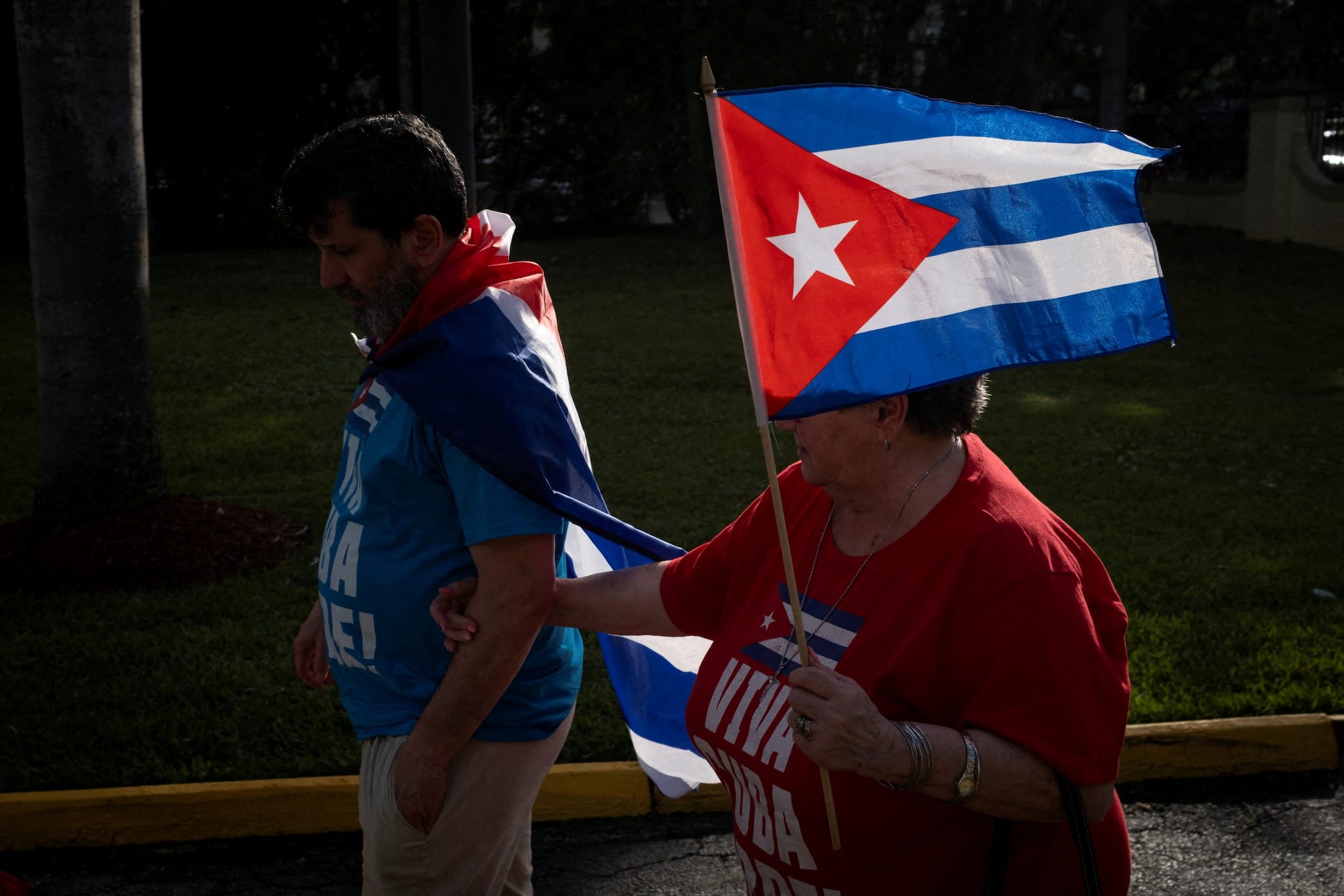
The persistent rumor of a Castro return to the pinnacle of Cuban formal power is not a sign of the revolution’s strength, but a frantic response to its impending bankruptcy. Washington’s tightening economic vise and a domestic economy in a state of absolute liquefaction have forced the hand of the ruling elite in Havana. The current figurehead, Miguel Díaz-Canel, has overseen the worst inflationary spiral in the island's history, leading the Communist Party to consider a "reset" that involves the very name they once tried to submerge in the background. Alejandro Castro Espín, the son of Raúl Castro, remains the shadowy architect of this transition, positioned to provide the familial "legitimacy" required to prevent a total military fracture while the state attempts a desperate pivot toward a Chinese-style hybrid economy.
This isn't about democratic progression. It is a calculated survival maneuver designed to preserve the military's grip on the island's most lucrative assets—tourism, remittances, and nickel—under the guise of a fresh start. Discover more on a related issue: this related article.
The Failure of the Proxy Presidency
When Raúl Castro stepped down from the presidency in 2018, the transition to Miguel Díaz-Canel was sold as the birth of a "continuity" government. It was supposed to show that the system could outlive its founders. Instead, the experiment has been a disaster for the average Cuban. Under Díaz-Canel, the "Tarea Ordenamiento"—a botched attempt to unify the island's dual currencies—sent prices for basic goods up by over 400%. The state failed to provide electricity, food, or medicine, leading to the historic protests of July 11, 2021.
The military elite, organized under the massive conglomerate GAESA, watched as the civilian government fumbled the response. GAESA controls roughly 60% of the Cuban economy, including almost every hotel and retail outlet that processes foreign currency. To the generals, Díaz-Canel is a liability. He lacks the historical weight of the Castro name to demand sacrifices from a starving population. If the regime is to survive the current exodus—which has seen more than 4% of the population flee to the United States in just two years—it needs a face that commands the loyalty of the armed forces and the old guard. More reporting by NPR explores related perspectives on the subject.
The Shadow Prince and the GAESA Grip
Alejandro Castro Espín is not a public figure by accident. As a colonel in the Ministry of the Interior, he headed the National Defense and Security Commission, a body that effectively sat above the law, coordinating intelligence and counter-intelligence. He was a key negotiator in the "Thaw" with the Obama administration, proving he could handle the Americans without surrendering the internal mechanisms of control.
While the world watches the titular president, the real power resides in the relationship between the Castro family and the military brass. The late General Luis Alberto Rodríguez López-Calleja, who ran GAESA and was once Raúl Castro’s son-in-law, established the blueprint for a "mafia state" model. With his passing, a power vacuum emerged. A Castro returning to the presidency would serve as the bridge between the aging generals of the Sierra Maestra and the younger, more technocratic officers who want to get rich rather than repeat slogans about socialism.
The strategy is simple. Use the Castro brand to maintain order while implementing "reforms" that look like capitalism but keep the capital in the hands of the elite. This involves the cautious licensing of small and medium-sized enterprises (SMEs), known locally as MSMEs. These businesses are often owned by the children of high-ranking officials or loyalists, creating a new class of "red capitalists" who depend on the regime for their licenses and supply chains.
Washington and the Leverage of Despair
The Biden-Harris administration, and any subsequent US government, faces a grim reality. The "maximum pressure" campaign started under the Trump era has contributed to the collapse of the Cuban electrical grid and the collapse of the peso. However, it has not unseated the Communist Party. Instead, it has created a migration crisis that the Cuban government uses as a pressure valve.
Havana knows that the US is terrified of another Mariel Boatlift or a total state collapse 90 miles from Florida. By signaling a potential leadership change—putting a Castro back in the big chair—the regime is signaling to Washington that there is a "stable" partner ready to negotiate. They are betting that the US will prefer a known entity, even a Castro, over the chaos of a failed state that becomes a playground for Russian and Chinese intelligence assets.
There is a deep irony in the fact that the US State Department’s focus on "human rights" and "leadership change" might actually usher in the very dynasty they spent sixty years trying to eradicate. The hardliners in Florida argue that any engagement fuels the dictatorship. The pragmatists in the State Department argue that without some economic breathing room, Cuba will turn into a permanent Caribbean outpost for Moscow. The Cuban elite plays both sides, using the threat of Russian warships in Havana harbor to keep the Americans interested in a deal.
The Myth of the Chinese Model in the Caribbean
Inside the halls of the University of Havana and the Ministry of Foreign Investment, there is a lot of talk about the "Vietnamese Model" or the "Chinese Model." These are euphemisms for keeping the one-party state while letting the markets run. But Cuba lacks the manufacturing base of Vietnam and the massive internal market of China.
The Cuban economy is a parasite that has hopped from one host to another. First, it was the Soviet Union's subsidies. Then, it was Venezuelan oil. Now, the regime is trying to make the Cuban diaspora the host. By allowing "private" businesses, they are tricking exiles in Miami into sending investment capital back to the island to help their relatives. This capital, however, eventually flows into the state-controlled infrastructure. The electricity these businesses use, the fuel they burn, and the wholesale goods they buy are all taxed or sold by the military.
If a Castro returns to the presidency, it will be to preside over this transition to a "market-Leninist" state. It would be an admission that the old Marxist-Leninist system is dead, replaced by a system where the Castro family name acts as a corporate brand for a military-run holding company.
The Fragmented Opposition
The greatest hurdle for this "Neo-Castroism" isn't the US embargo, but the Cuban people's total loss of faith. The protests of 2021 changed the psychology of the island. For the first time, the fear of the G2 (secret police) was overcome by the desperation of hunger.
The internal opposition is fragmented, with many leaders either in prison or in exile. However, the dissent is now decentralized. It lives in the lyrics of "Patria y Vida" and in the Telegram groups where Cubans coordinate to find milk for their children. A new Castro president might satisfy the generals, but it won't fix the power plants that are falling apart. It won't stop the blackouts that last 12 hours a day in the provinces.
The regime is betting that people will trade political freedom for a steady supply of chicken and electricity. This is the "Singapore Model" applied to a ruin. But without the massive foreign investment that Singapore or China attracted, the Cuban regime is just rearranging the deck chairs on the Titanic.
The Endgame for the Military Elite
We are witnessing the final stage of the Revolutionary era. The "Historic Generation" is mostly dead or incapacitated. Raúl Castro is in his 90s. The middle management of the Party is terrified of a Romanian-style collapse where the populace turns on the cadres.
Putting a Castro in the presidency—likely Alejandro, or perhaps a compromise figure under his direct influence—is a defensive crouch. It is meant to ensure that when the transition to a more open economy inevitably happens, the people in charge of the tanks are also the people in charge of the banks. They want to avoid the fate of the Soviet Union, where the old guard lost everything. They want the fate of the Russian oligarchs, where the old KGB officers became the new billionaires.
The tragedy for the Cuban people is that this leadership "change" is a diversion. Whether the name is Díaz-Canel or Castro, the mechanism of extraction remains the same. The state takes the foreign currency, and the people get the worthless pesos. The international community must look past the name and examine the ledger.
The next president of Cuba will inherit a country that has stopped producing almost everything except refugees. If that president is a Castro, it won't be a restoration of the revolution's glory. It will be the final act of a family firm trying to liquidate its assets before the building burns down.
The United States needs to decide if it will continue to play into this cycle or if it will demand structural changes to the way the Cuban military controls the economy. Without breaking the GAESA monopoly, a change in the presidency is nothing more than a change in the management of a prison.
Monitor the movements of the 14th Directorate and the internal shifts within the Ministry of the Revolutionary Armed Forces. That is where the real vote for the next president is happening, far away from any ballot box. Would you like me to analyze the specific economic holdings of GAESA to show where the regime’s true vulnerabilities lie?