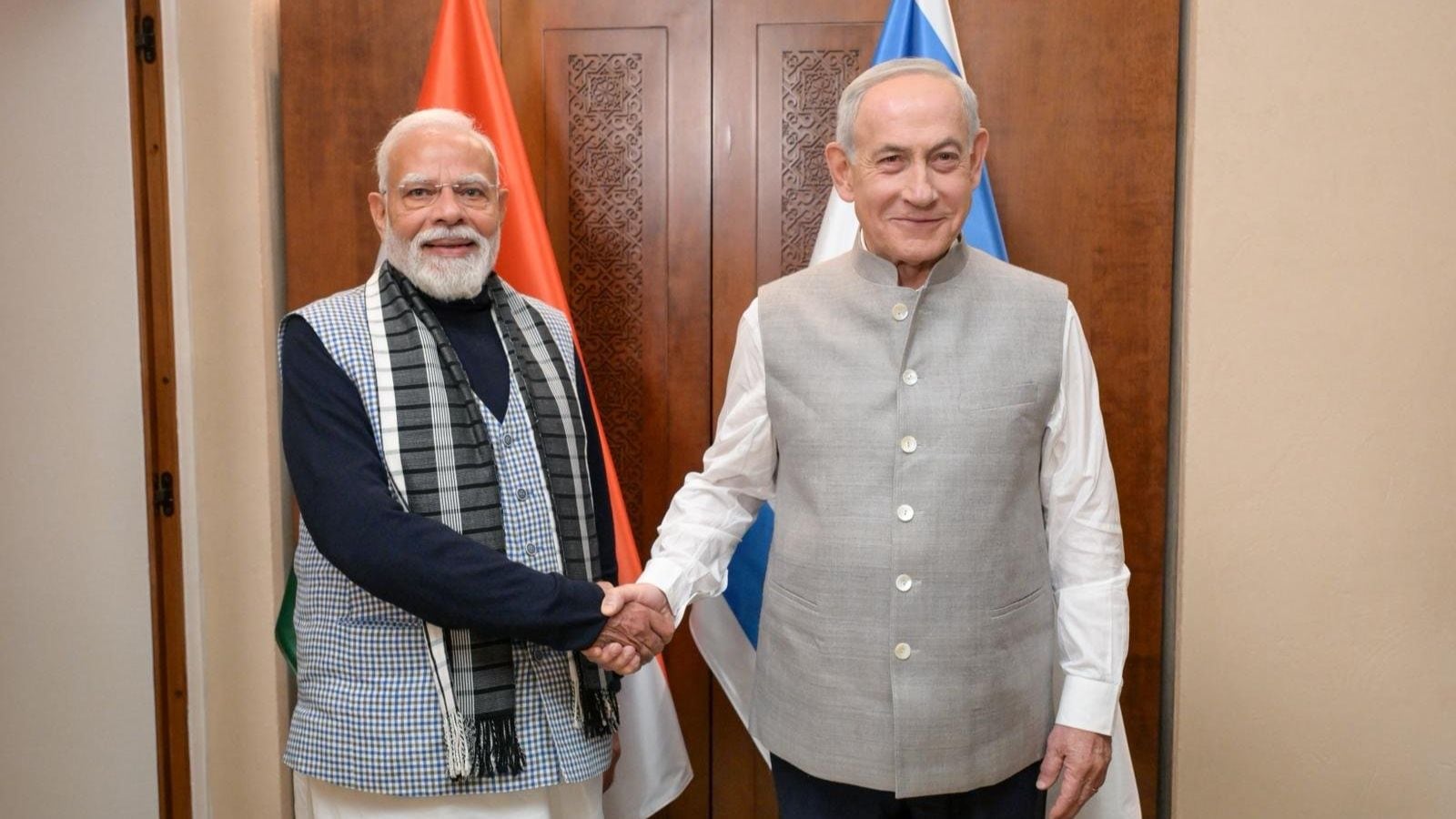
Narendra Modi’s 2026 visit to Jerusalem was not a victory lap for a decade of diplomacy, but a cold-eyed consolidation of a partnership that has fundamentally rewritten the rules of engagement in the Middle East. While the 2017 visit was defined by the optics of a beach stroll and a "warm hug" between two leaders, the 2026 summit shifted the weight from symbolism to structural integration. India and Israel have now elevated their ties to a Special Strategic Partnership for Peace, Innovation, and Prosperity, a move that signals New Delhi’s final departure from the era of diplomatic hesitation and its emergence as a primary architect of regional stability.
This evolution is rooted in a policy known as de-hyphenation. For decades, India’s relationship with Israel was held hostage by its stance on Palestine, a balancing act that kept cooperation "under the carpet." Today, that carpet has been pulled back. By treating the two relationships as entirely independent silos, Modi has managed to secure Israeli high-tech military hardware and agricultural expertise without surrendering India’s historic role as a voice for the Global South.
The Silicon Shield and the Laser Horizon
The most significant takeaway from the recent talks is not the rhetoric of friendship, but the hard-coded reality of the Critical and Emerging Technologies (CET) Partnership. This is where the partnership moves beyond a buyer-seller relationship. India is no longer just purchasing kits; it is co-developing the next generation of warfare and surveillance.
Reports indicate that discussions have moved into the realm of directed-energy weapons, specifically Israel’s Iron Beam laser system. Inducted into the Israeli Defense Forces in late 2025, the 100kW-class high-energy laser offers a glimpse into a future where the cost-per-intercept drops from thousands of dollars to the price of a household electricity bill. For an Indian military facing asymmetric threats on two fronts, the transfer of this technology—or the joint manufacturing of it under the "Atmanirbhar Bharat" (Self-Reliant India) initiative—is a strategic necessity.
Beyond the Iron Dome
While the Iron Dome has become a household name, the real substance of the 2026 agreements lies in the "software" of modern defense:
- AI-Driven Intelligence: A new MoU on geophysical exploration and maritime domain awareness uses Israeli AI to monitor the Indian Ocean.
- Cybersecurity Centers: The establishment of an Indo-Israel Cyber Centre of Excellence marks a shift toward defending critical civilian infrastructure, not just military networks.
- Quantum Computing: Shared research into quantum-resistant cryptography ensures that the bilateral communication lines remain impenetrable even as computing power leaps forward.
The IMEC Artery and the I2U2 Core
The geographic distance between New Delhi and Tel Aviv is being bridged by more than just flight paths. The India-Middle East-Europe Economic Corridor (IMEC), despite the regional volatility that has plagued its progress, remains the centerpiece of this alliance. This is a direct challenge to the old Silk Road narratives, proposing a multi-modal trade route that links Indian ports to Europe via the UAE, Saudi Arabia, Jordan, and Israel.
In this framework, Israel is not just a destination; it is the western gateway. The integration of India’s Unified Payments Interface (UPI) in Israel is a tactical move to facilitate this trade, making the financial friction of cross-border transactions as thin as a QR code scan. This isn't just for tourists. It's the plumbing for a deeper economic integration where Indian labor and Israeli capital flow with fewer barriers. The agreement to facilitate the employment of 50,000 Indian workers in Israel over the next five years is a testament to this human corridor.
The Palestinian Elephant in the Room
Critics argue that this "Special Strategic Partnership" comes at a steep moral and diplomatic cost. The 2026 visit occurred against a backdrop of intense international scrutiny over the civilian toll in Gaza. While Modi’s address to the Knesset included a condemnation of terrorism and a call for a two-state solution, the absence of a visit to Ramallah during this trip was a loud silence.
Historically, Indian leaders paired visits to Israel with a stop in Palestine. Modi’s break from this tradition in 2017 was a watershed; his 2026 itinerary confirms it is the new standard. This is the "de-hyphenation" gamble: the belief that India is now powerful enough to pursue its interests with Israel while maintaining its energy and diaspora interests in the Arab world.
However, the "Link West" policy is a high-wire act. India's recent abstentions and subsequent calibrated votes at the UN suggest that while the strategic needle has moved toward Israel, the diplomatic anchors are still firmly buried in the principle of regional balance. The challenge is no longer about choosing a side, but about managing the friction between being a "Vishwa Mitra" (Friend of the World) and a hardline strategic partner to a nation increasingly isolated on the global stage.
From Desert Bloom to National Maritime Heritage
While defense makes the headlines, the "quiet" cooperation in agriculture and water management provides the structural durability of the relationship. The expansion of Centres of Excellence to 100 locations across India is transforming rural productivity. By applying Israeli drip-irrigation and precision farming at the scale of the Indian subcontinent, the partnership is addressing the most fundamental security threat of the 21st century: food and water scarcity.
The development of the National Maritime Heritage Complex in Lothal—a joint project discussed during the summit—serves as a symbolic anchor. It links India’s ancient maritime history with Israel’s modern naval expertise, suggesting that the two nations are not just finding common ground in the present, but are reclaiming a shared historical arc of trade and influence.
The relationship has matured from the "warm hug" of 2017 into a complex, multi-layered machine. It is a partnership defined by the brutal realism of the 2020s—one where shared technology, intelligence, and economic corridors outweigh traditional ideological stances. The 2026 summit didn't just celebrate a decade of progress; it locked in a roadmap for a future where India is no longer an observer of Middle Eastern geopolitics, but one of its most influential stakeholders.
Would you like me to analyze the specific impact of the UPI integration on India-Israel trade volumes forecasted for 2027?