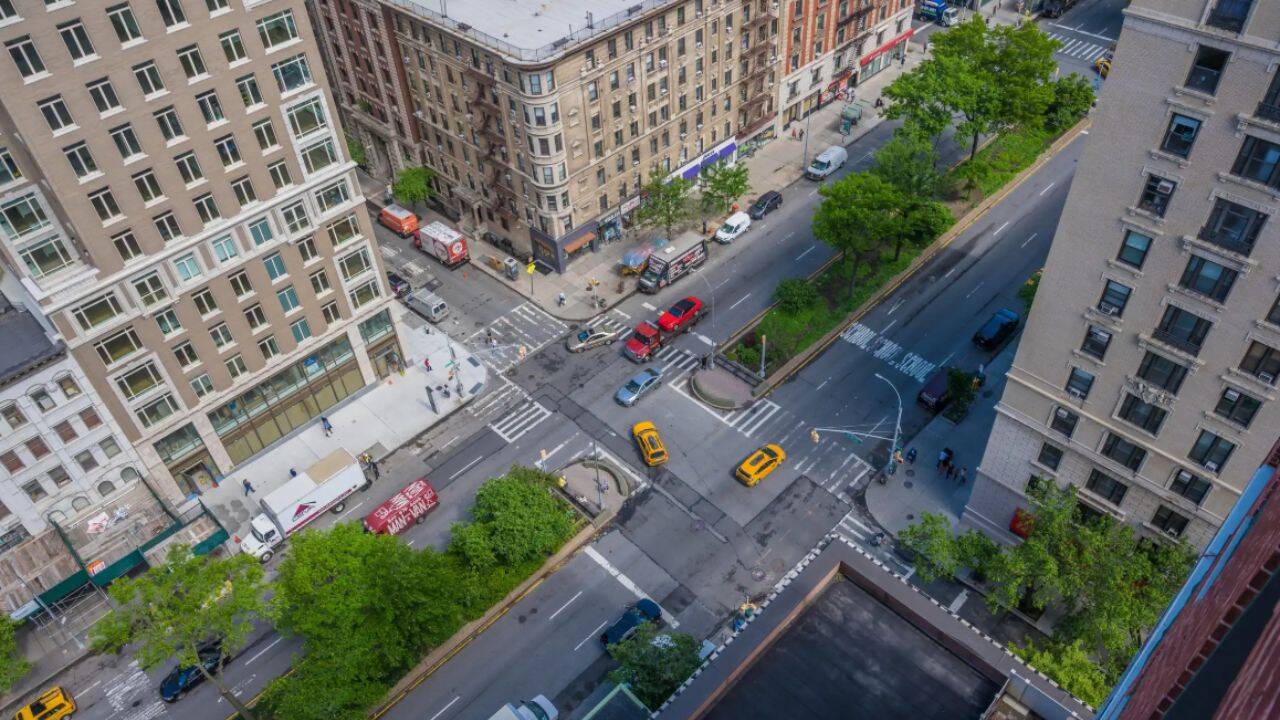
Every urban planner with a LinkedIn account and a penchant for magical thinking is currently hyperventilating over a stretch of asphalt on the Upper West Side. The narrative making the rounds is seductive, soothing, and entirely divorced from physical reality: Manhattan is supposedly growing a five-mile wildlife corridor right down the middle of Broadway. We are told that native goldenrod and decorative asters tucked into twenty-foot-wide concrete medians are transforming six lanes of belching yellow cabs and diesel-choking buses into an urban Serengeti.
Let us stop the applause right there.
I have watched cities blow millions of dollars on ecological vanity projects that soothe human anxieties while completely failing the very species they claim to protect. Calling a string of traffic-island flowerbeds a wildlife corridor is not just scientifically illiterate; it is an ecological death trap wrapped in green marketing.
The Architectural Illusion of the Broadway Malls
To understand why this five-mile fairy tale falls apart, you have to look at the geometry. The Broadway Malls are a historic series of median strips running from Columbus Circle up through Washington Heights. They measure roughly twenty feet wide. On either side roar opposing rivers of heavy vehicular traffic moving at speeds that routinely test the limits of municipal blood pressure.
Proponents point to early biodiversity counts showing migratory birds and localized bees making use of the newly planted native species. Yes, urban naturalists have documented more than a hundred species of insects and dozens of bird species utilizing these isolated patches. But recording a tired warbler or a stray bumblebee stopping for a snack on a concrete island does not mean you have built a functional corridor.
Imagine a scenario where you drop a exhausted endurance runner into the middle of a multi-lane highway, hand them a protein bar, and call the freeway an athletic training camp. That is essentially what we are doing to migratory wildlife.
A true ecological corridor requires three distinct components: continuous habitat, low-mortality transition zones, and viable breeding populations that can sustain genetic diversity over generations. The Broadway Malls offer none of these. They are high-stress, high-noise, heavy-metal islands separated by high-velocity asphalt moats.
The Ecological Trap
Let us talk about the concept of an ecological trap because this is where the mainstream enthusiasm turns reckless. In conservation biology, an ecological trap occurs when human intervention creates an environment that organisms perceive as safe and resource-rich, but which actually carries an exorbitant mortality cost.
When you plant dense, native vegetation loaded with nectar and seeds right in the middle of Manhattan traffic, you send a siren song to passing migratory birds along the Atlantic Flyway. These birds drop down into the narrow medians to forage. What happens next? They are immediately exposed to terrifying noise pollution, intense artificial night lighting, high-velocity wind turbulence generated by passing buses, and the catastrophic hazard of window collisions from surrounding high-rises.
Furthermore, ground-level predators like urban rats—which thrive in the subterranean infrastructure directly beneath these medians—have a field day. We are essentially baiting vulnerable urban wildlife into a high-density gauntlet of exhaust fumes and apex urban scavengers.
Calling this a wildlife corridor ignores the baseline data on avian mortality in dense metropolitan grids. Window strikes and vehicle collisions kill hundreds of millions of birds annually in North America. Luring them closer to the center of Manhattan's busiest thoroughfares with gourmet native perennials is an invitation to a slaughterhouse.
The Real Value of Urban Greenery
Does this mean we should rip out the plantings and pave over the Broadway medians with asphalt? Absolutely not. This is where nuance matters, and where the cheerleaders of the green movement miss the forest for the weeds.
The Broadway Malls provide immense, undeniable value to human beings. They reduce the urban heat island effect, absorb stormwater runoff, capture particulate air pollution, and provide vital psychological relief for millions of stressed city residents who need a patch of green within walking distance. That is a massive triumph for urban design.
We do not need to invent a fake biological narrative about a five-mile wildlife migration superhighway to justify planting trees in New York City. Aesthetic pleasure, microclimate cooling, and stormwater management are more than enough reasons to invest in urban horticulture.
The downside of my contrarian approach is plain: it strips away the comforting, romantic illusion that humans can easily patch up fractured ecosystems simply by swapping non-native ivy for goldenrod between two lanes of traffic. It forces us to accept that true wildlife preservation requires large-scale habitat protection, significant vehicle reduction, and systemic infrastructural changes—not just clever landscaping on a traffic island.
Stop pretending that a narrow strip of dirt surrounded by diesel exhaust is a sanctuary for nature. Accept these spaces for what they truly are: brilliant, life-saving aesthetic amenities for people, and a hazardous pitstop for wildlife that deserves our clear-eyed protection rather than our romanticized delusions.
Stop designing cities for Instagram captions. Design them for reality.