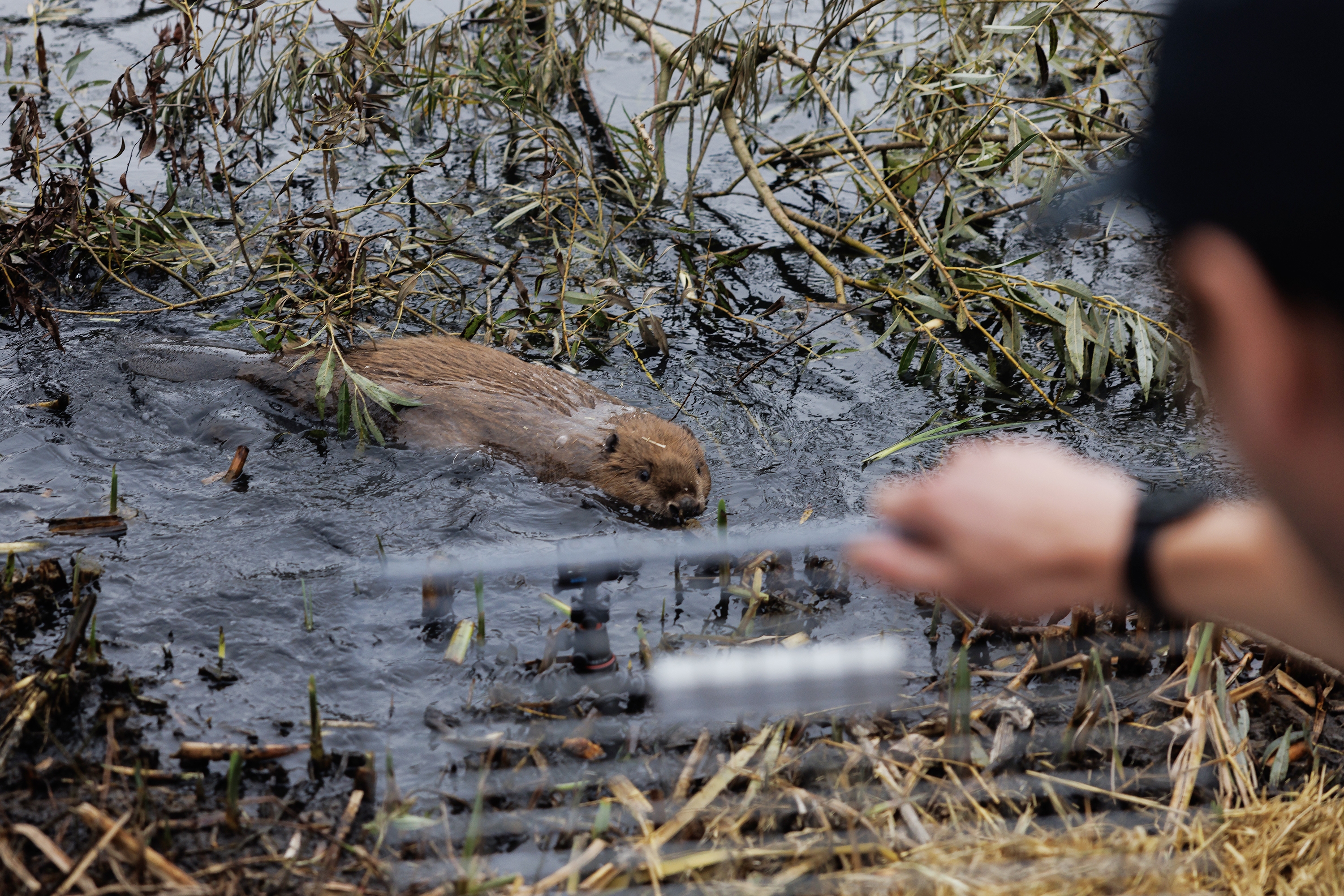
West London’s Greenford Tube station used to flood every single time the sky opened up. The train tracks sit safely aboveground, but the ticket office downstairs regularly turned into an indoor swimming pool. Staff stacked sandbags along the corridors. They watched the weather radar with a sense of dread. Millions of pounds of engineering upgrades were discussed, budgeted, and delayed.
Then a family of five moved into the neighborhood and solved the problem for free. For an alternative perspective, see: this related article.
They didn't use concrete, steel, or hydraulic pumps. They built a home out of local sticks, worked strictly at dawn and dusk, and dragged their kids into the family business. They were European beavers. Released into the 20-acre Paradise Fields nature reserve in October 2023 as part of the Ealing Beaver Project, these rodents did what centuries of civil engineering couldn't. They rewrote the local hydrology. The persistent flooding at Greenford station stopped.
As climate change turns Britain’s legendary drizzle into intense, unpredictable downpours, the traditional approach of building taller concrete walls is failing. It's too expensive, it's ugly, and it just pushes the water further downstream to ruin someone else's living room. Giving 20-kilogram rodents structural control of the nation's waterways sounds like a joke. Honestly, it sounds crazy. But the data shows it's working better than anyone expected. Similar reporting on this matter has been provided by NBC News.
The Madness of Fighting Water with Concrete
Britain spent £1.6 billion cleaning up after the winter floods of 2015. Hard engineering—the industry term for concrete river walls, metal sluice gates, and artificial channels—is a financial black hole. When you constrain a river with concrete walls, you speed the water up. You convert a natural, meandering stream into a high-speed liquid highway. That water rushes downhill until it hits a bottleneck, bursts the banks, and guts a village.
Beavers do the exact opposite. They slow the water down.
When a beaver family establishes a territory, they build a series of leaky dams. These aren't solid concrete barriers like human dams. Water still flows through them, but at a heavily choked pace. A decade-long study led by Dr. Alan Puttock and the University of Exeter analyzed over 1,000 storm events across beaver-modified landscapes in Devon. The results aren't vague environmental theories; they're hard numbers.
Beaver wetlands reduce peak storm flows by an average of 30%, and up to 60% during massive downpours. By holding the water back in the headwaters, they increase the "lag time"—the period between when the rain falls and when the river peaks downstream. It's the difference between a sudden, catastrophic flash flood and a manageable, slow-rising stream.
Ten Olympic Swimming Pools of Free Storage
If you look at the River Otter Beaver Trial in Devon, the sheer scale of water management is staggering. Just four wild beaver territories managed to trap and store more than 24 million litres of water across their wetlands. That's roughly 10 Olympic-sized swimming pools of water held safely in the uplands, far away from carpeted living rooms and electrical substations.
[Rainfall] -> Hits Beaver Dam -> 30% Peak Flow Reduction -> 10+ Hour Lag Time -> Safe Downstream Towns
What's even wilder is what happens when the rain stops. Britain now swings wildly between winter floods and intense summer droughts. In the scorching summer of 2022, when British grass turned to tinder and rivers dried to trickles, beaver-managed zones remained lush, green oases. The millions of litres of water trapped behind their dams seeped out slowly, keeping the local streams flowing and keeping wildlife alive.
They also act as giant, furry water treatment plants. During heavy storms, water flowing out of beaver wetlands contains three times less sediment than the water flowing in. Thirteen small dams on a tiny two-hectare site in Devon trapped over 100 tons of sediment, filtering out agricultural fertilizer, nitrogen, and phosphorus before it could ruin the broader ecosystem.
The Real Friction Points Nobody Wants to Talk About
It's easy to romanticize this. It makes a great feel-good story. But if you talk to the farmers whose fields border these territories, you get a completely different perspective. Beavers don't respect property lines, and they don't care about agricultural subsidies.
When a beaver floods a woodland to create a safe swimming area for its kits, that water can easily spill sideways into a field of valuable winter wheat. According to the Beaver Management Report by NatureScot, which tracks thousands of wild beavers in Scotland's Tayside catchment, infrastructure compromise and crop loss account for a massive chunk of human-beaver conflicts. Dams block drainage ditches. Foraging paths can cause riverbanks to collapse under the weight of heavy tractors.
Pretending beavers are flawless eco-angels is a mistake. They're chaotic landscape architects.
Managing them takes actual effort. Organizations like the Devon Wildlife Trust and NatureScot spend a lot of time installing "beaver deceivers"—hidden pipes passed through the center of a beaver dam that allow humans to regulate the water height without the beavers realizing their dam is leaking. If a dam causes critical flooding on a farm, volunteers have to physically lower the structure or trap and relocate the animals.
How to Get Involved in the Beaver Revolution
We're past the point of treating nature-based solutions like a niche science experiment. Governments are realizing that letting animals do the heavy lifting is a fraction of the cost of pouring concrete. If you want to move past reading about this and actually see how it works, you don't have to wait for a state-sponsored program.
- Track the local progress: Check out the published data from the Devon Wildlife Trust to see real-time updates on how wild populations are spreading and affecting UK water tables.
- Support urban rewilding: Look at groups like the Ealing Beaver Project in London. They regularly need volunteers for site monitoring, water quality testing, and public education to help city dwellers understand their new neighbors.
- Install mitigation tech: If you're a landowner dealing with localized flooding from unauthorized beaver activity, don't reach for a shovel to destroy the dam. Contact groups like NatureScot or Natural England to get a licensed flow-management pipe installed, which keeps the wetland intact while protecting your property.
Stop thinking about flood defense as a battle against nature. The most effective tool we have right now doesn't require a diesel engine or a government contract—it just needs a steady supply of willow branches and some room to work.
This video breaks down the exact hydrological data behind the Devon reintroduction projects: Beavers Reduce Flood Peaks by 30% — Here's the Data.