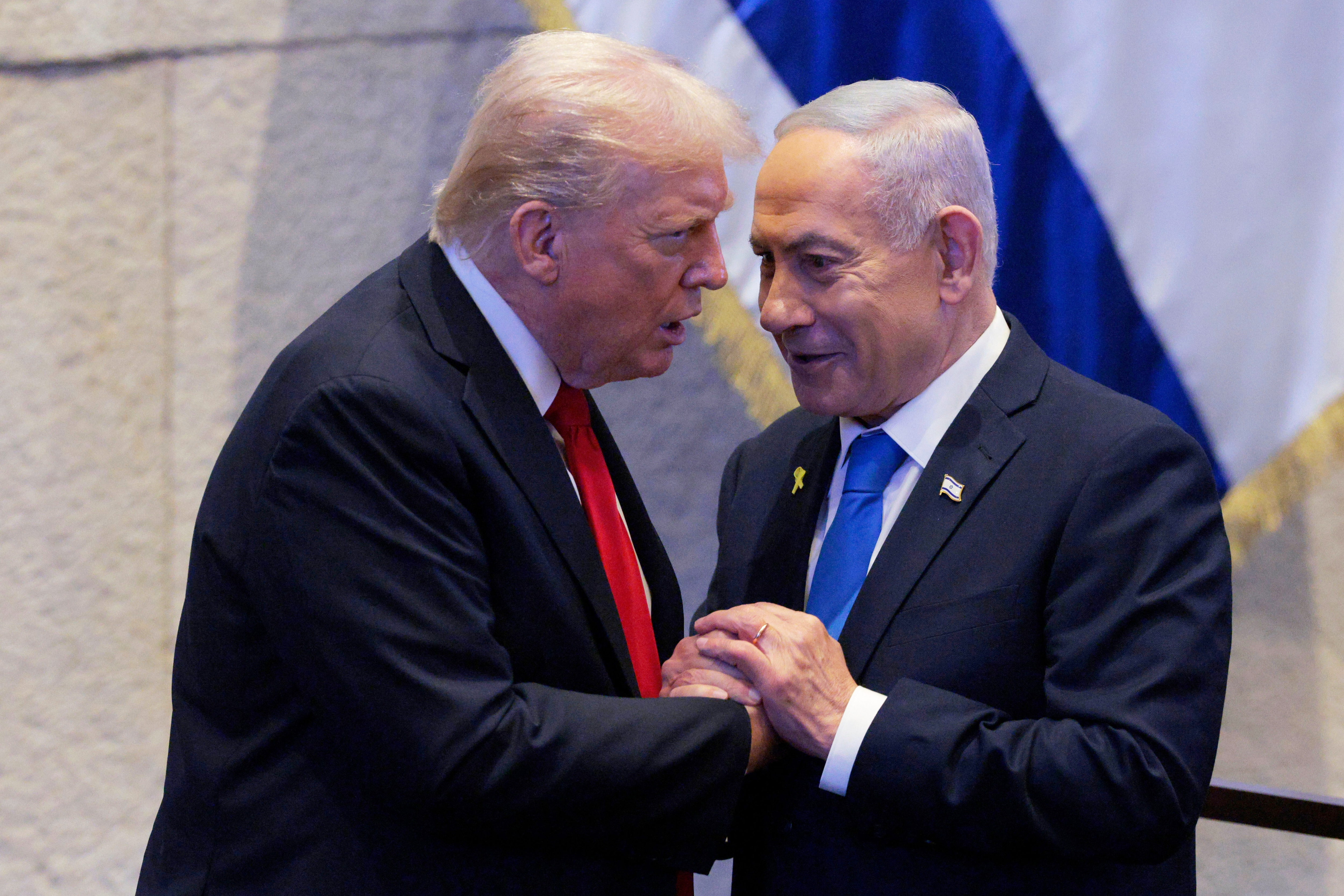
The mainstream media loves a narrative about a fractured alliance. When reports surfaced of a "heated clash" between Donald Trump and Benjamin Netanyahu, commentators rushed to declare the end of an era. They painted a picture of two ego-driven leaders locked in an irreconcilable feud, suggesting Trump’s boast that he "could run for prime minister" of Israel was nothing more than delusional, late-night hyperbole.
They completely missed the point.
The establishment press views international diplomacy through the sanitized lens of state dinners, polite press releases, and traditional bureaucratic channels. They assume that a personal grievance between two politicians disrupts the underlying geopolitical calculus. It does not. Trump’s assertion that he possesses unprecedented popularity in Israel is not just bombastic rhetoric; it is a structural reality of modern Middle Eastern politics that defies conventional diplomatic analysis.
The Lazy Consensus of the Personal Feud
The standard analysis of US-Israel relations relies on a flawed premise: that institutional alignment matters more than raw political branding. Analysts look at the friction following the 2020 US presidential election—where Netanyahu congratulated Joe Biden, drawing Trump's public ire—and conclude that the conservative alliance between the two nations has fundamentally fractured.
This is a surface-level reading of a deep-seated structural shift. The relationship between Trump and the Israeli public is not transactional, nor is it dependent on Netanyahu’s personal approval. By focusing entirely on the interpersonal drama between Mar-a-Lago and Jerusalem, the commentary class ignores the ideological realignment of the Israeli electorate.
I have spent years analyzing how populist movements bypass traditional diplomatic structures. The institutionalists always make the same mistake. They believe voters care about diplomatic protocol. They do not. Israeli voters, particularly the dominant right-of-center coalition, do not view Trump through the prism of American partisan politics. They view him through the prism of tangible, paradigm-shifting outcomes.
Realism Over Rhetoric: The Tangible Capital
To understand why Trump’s "prime minister" claim holds psychological weight in Israel, you have to look at the historical data of American foreign policy. For decades, successive US administrations—both Democratic and Republican—offered Israel a steady diet of strategic ambiguity and rhetorical support. They promised to move the American embassy to Jerusalem; they never did. They promised to confront Iranian regional hegemony; they signed accords that funded it.
Trump ignored the playbook.
- The Jerusalem Embassy Move (2018): A move delayed for decades by previous presidents citing security risks. Trump executed it, fundamentally altering the baseline of international negotiations.
- The Golan Heights Recognition (2019): A formal acknowledgement of Israeli sovereignty over a critical strategic buffer zone, shattering a decades-long international taboo.
- The Abraham Accords (2020): The most significant diplomatic breakthrough in the region in a generation, bypassing the veto power traditionally held by the Palestinian leadership to establish normalization with the UAE, Bahrain, Sudan, and Morocco.
Imagine a scenario where a foreign leader delivers more core national security objectives for your country than your own domestic politicians can manage without endless coalition infighting. That is how a massive segment of the Israeli population views the situation. When Trump says he could run for office there, he is tapping into a genuine sentiment of political gratitude that transcends his current relationship with Netanyahu.
The Flawed Premise of "People Also Ask"
When people ask, "Did Trump and Netanyahu fall out?" or "Is Trump still popular in Israel?" they are asking the wrong questions. They are looking for a soap opera narrative. The real question is: Can the Israeli right afford to care about a personal fallout?
The brutal truth is that Netanyahu needs the political energy of the Trump movement far more than Trump needs Netanyahu. Netanyahu's domestic survival relies on maintaining his image as the ultimate diplomat who can manage Washington. If the Israeli public believes Netanyahu has permanently poisoned the well with the leader of the American populist movement, it weakens Netanyahu domestically, not Trump.
Data from the Israel Democracy Institute has consistently shown that the Israeli public holds a highly favorable view of Trump's policy legacy. Even during periods of high tension between the individual leaders, the structural appreciation for the 2017-2021 policy shifts remained ironclad. The press mistake a temporary tactical disagreement for a permanent strategic divorce.
The Downside of the Populist Alliance
An objective analysis requires admitting the inherent risks of this dynamic. The danger for Israel is not that Trump dislikes Netanyahu; the danger is that Israeli security has become a deeply partisan issue in the United States.
By aligning so completely with one political movement, Israel has jeopardized its historical, bipartisan support base in Washington. I have watched foreign policy establishments make this gamble before. It works spectacularly when your preferred faction is in power, but it leaves you dangerously exposed during political transitions.
When the underlying machinery of American foreign policy becomes tribal, long-term strategic planning becomes impossible. Israel’s security apparatus prefers predictability. The current populist alignment offers massive, immediate victories at the expense of long-term, institutional stability.
Dismantling the Institutional Bias
The commentary surrounding Trump’s comments reveals a profound institutional bias. The foreign policy elite believes that diplomacy should only be conducted by career bureaucrats writing white papers in gray buildings. They recoil at the idea that a politician can build a direct, emotional, and ideological connection with a foreign electorate over the heads of their elected government.
Trump’s rhetoric is deliberately provocative, but it reflects a deeper truth about the nature of modern political influence. Influence is no longer just about statecraft; it is about brand dominance. In the minds of millions of Israelis, the Trump brand represents a period of unprecedented security gains and diplomatic breakthroughs.
A heated conversation or a skipped phone call between two politicians does not erase the physical relocation of an embassy or the signing of historic peace treaties on the White House lawn. The pundits can continue to analyze the body language of press conferences and dissect the transcripts of leaked calls. They are tracking the noise, not the signal. The geopolitical alignment has already shifted, and no amount of personal friction between the elites can reverse the reality on the ground.