The coffee at the cart on Broadway and Morris is always a little too burnt, but it is hot, and when the wind cuts off the Upper New York Bay in the sharp hours of the morning, heat is the only currency that matters.
Lower Manhattan at 6:00 AM does not belong to the suits. It belongs to the street sweepers, the delivery drivers unloading crates of artisanal avocados, and the early-shift security guards who watch the city wake up through the blue glow of a dozen monitors. It is a quiet place then. The canyons of granite and glass trap the sound of a lone footsteps on concrete. You can actually hear the pigeons.
Then came the flash.
It wasn't the cinematic, slow-motion fireball of a Hollywood thriller. It was a sudden, violent tear in the morning grey, followed by a sound that felt less like a noise and more like a physical blow to the chest.
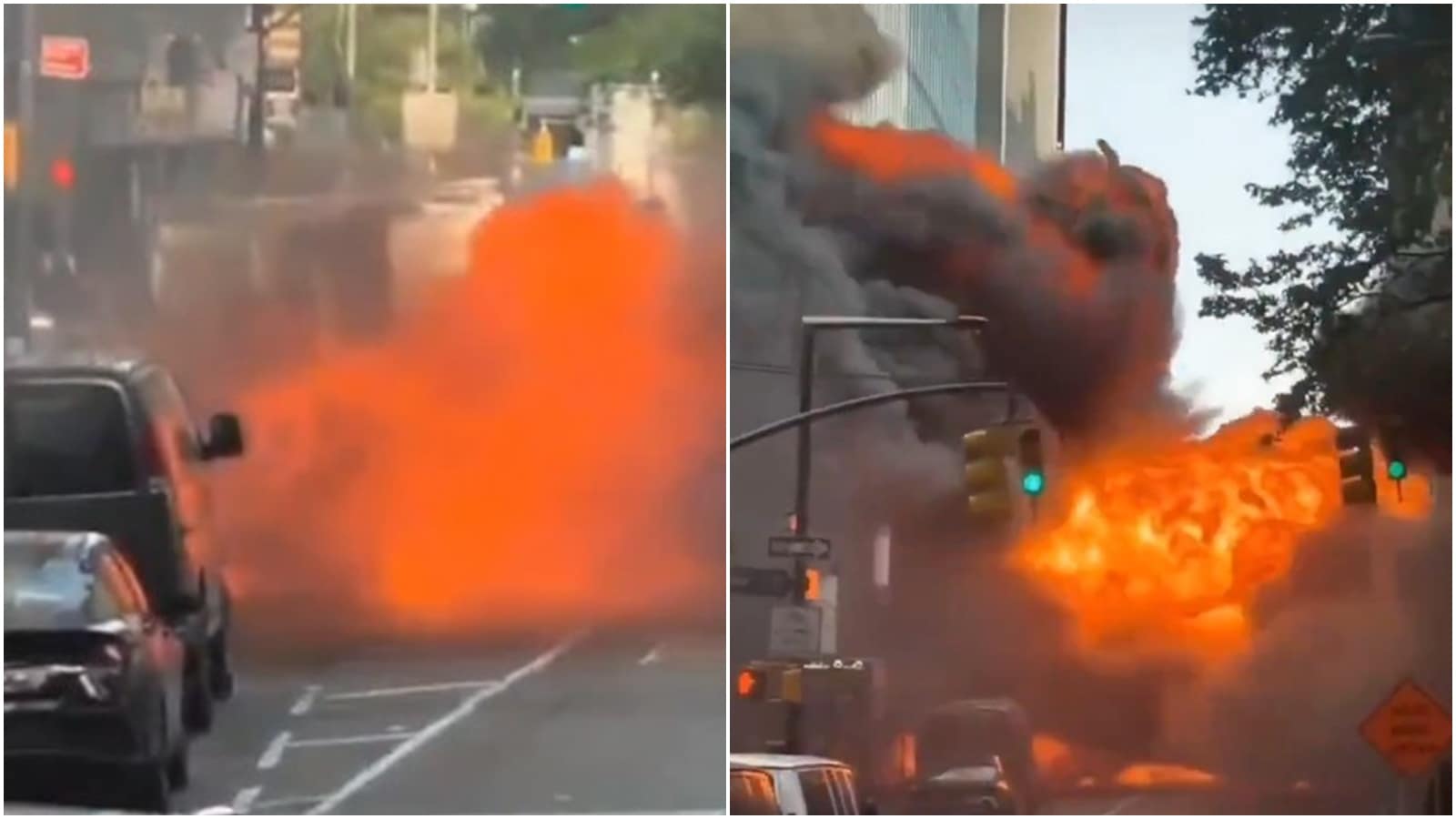
A silver sedan, parked just a stone's throw from the iconic Charging Bull statue, had ceased to be a car and had become a furnace.
Within seconds, the silence of the financial district was shredded. Acrid black smoke, smelling of scorched rubber, vaporized synthetic leather, and ancient fluids, boiled upward into the narrow strip of sky between the skyscrapers. Sirens began their frantic, overlapping wail from blocks away, but for the first sixty seconds, there was only the roar of the fire and the scattering of a handful of terrified pedestrians.
We live in a world where the first instinct in the face of potential mortality is not to run, but to record. Within minutes, the footage was online. By noon, it had been viewed millions of times. A sterile headline flashed across the wires: "Car explodes near Wall Street Charging Bull statue in US, video viral."
But a headline is a corpse of an event. It tells you the what, but it completely ignores the shudder in the knees of the stockbroker who had passed that exact bumper thirty seconds earlier. It misses the way the bronze nostrils of Arturo Di Modica’s famous bull seemed to flare in the reflection of the dancing orange flames.
The Anatomy of a Panic
To understand what happens to the human psyche when a vehicle detonates in the heart of global capital, you have to understand the geography of fear.
Lower Manhattan is not just a neighborhood. It is a symbol. Every square inch of its pavement is weighted with memory, some of it triumphant, much of it deeply scarred. When a car catches fire outside a suburban strip mall, it is an automotive mishap. When it happens at the intersection of Broadway and Whitehall, the brain immediately leaps down the darkest rabbit holes available.
Consider a hypothetical commuter named Marcus. He doesn't work for Goldman Sachs; he manages facilities for a commercial real estate firm. When the blast echoed, Marcus was emerging from the Bowling Green subway station.
His body didn't wait for an official press release from the New York Police Department. His adrenaline spiked instantly. His mind, trained by decades of cultural trauma and 24-hour news cycles, automatically mapped the event onto the worst-case scenarios. Is this a coordinated attack? Are there more? Should I run toward the water or try to crowd back into the tunnel?
This is the invisible tax of modern urban life. We walk through these historic corridors with a subconscious awareness of their vulnerability. The explosion of a car—even if caused by a mundane mechanical failure—acts as a sudden, brutal reminder of how fragile the veneer of daily routine truly is.
For twenty minutes, while the New York City Fire Department battled the blaze with foaming hoses, Wall Street held its breath. The stock tickers upstairs kept spinning, but the humans operating them were looking out the windows.
The Boring Truth Behind the Spectacular Terror
The crowd that gathered behind the police tape was a mix of tourists with cameras still dangling from their necks and locals clutching their phones. The rumors traveled faster than the smoke. Word of mouth transformed a burning engine block into a geopolitical incident before the firemen had even hooked up to the hydrant.
But the truth, as it almost always does, arrived with a badge and a remarkably calm demeanor.
The preliminary investigations quickly began to cool the hot narrative of terror. Cars, it turns out, are complex assemblies of highly flammable liquids and intense electrical currents. While Hollywood suggests that a single spark can cause a vehicle to instantly vaporize into a neat mushroom cloud, real automotive fires are usually the result of neglect, a failed fuel line, or a catastrophic short circuit in the electrical system.
The vehicle in question was not a weapon. It was a casualty of its own internal mechanics. A faulty component, a buildup of pressure, an unfortunate spark in the wrong chamber—and suddenly, a routine morning commute becomes a viral sensation.
Yet, there is a strange dissonance in learning that a terrifying event was just an accident. In a weird, twisted way, the human mind almost prefers a villain. A villain represents a problem with a face, something that can be fought, hated, or legislated against. An accidental car fire near one of the most heavily guarded financial landmarks on earth is something far more unsettling: it is proof of random chaos. It means that sometimes, things just break.
The Idol in the Smoke
Throughout the entire ordeal, the Charging Bull remained entirely indifferent.
Designed by Arturo Di Modica and dropped illegally in front of the New York Stock Exchange in 1989 as a symbol of the can-do spirit of America, the three and a half tons of bronze have survived financial crashes, Occupy Wall Street protests, and endless lines of tourists waiting to photograph its anatomy. On this particular Tuesday, it stood framed by emergency lights, its metallic hide gleaming under the wash of NYPD flashes.
There is a profound irony here. The bull is meant to represent aggressive financial optimism, the relentless forward march of the markets. It is an image of power. Yet, it spent its morning shrouded in the smoke of a burning sedan, looking very much like a relic in an apocalyptic landscape.
The tourists who returned to the site a few hours later, once the flatbed tow truck had hauled away the charred, skeletal remains of the car, found the pavement still wet and smelling faintly of detergent and oil. The black scorch marks on the asphalt were the only remaining evidence of the drama that had transfixed the internet just hours prior.
They lined up again. They took their selfies. They touched the bronze.
The Algorithm of Our Fears
Why did this video go viral? Why did millions of people across the globe stop their scrolling to watch a silver car burn in New York?
It wasn't because car fires are rare. They happen thousands of times a year across every country on Earth. It went viral because of the juxtaposition. The algorithm thrives on contrast. It feeds on the image of everyday chaos intruding upon the temples of global power. We watch because we are waiting to see if the world we have built is as solid as we hope it is, or as fragile as we fear it might be.
When the video played on screens in London, Tokyo, and Mumbai, viewers didn't see a mechanical failure. They saw a symbol. They saw the vulnerability of the city.
But by mid-afternoon, the financial district had done what it does best: it forgot. The suits filled the sidewalks, their heels clicking purposefully against the stone. The burnt coffee cart had sold out of pastries. The traffic on Broadway hummed with its usual, frustrating density, a river of yellow cabs and delivery trucks, each one a tiny, self-contained ecosystem of combustible fluids and electrical wires, moving slowly past the bull, entirely unaware of the fire next time.