The steam rises in ghostly wisps, curling over water so intensely blue it hurts the eyes. To stand at the edge of a Yellowstone hot spring is to witness earth breathing. Beneath that surface lies a delicate, boiling alchemy born of deep volcanic fires, mineral-rich stone, and fragile microbial mats that paint the margins in vibrant strokes of orange, gold, and green. It is an ancient world existing right here in the American West, untouched by time, sovereign and fierce.
Until you see the neon glint of plastic beneath the surface.
A baby pacifier. Waterlogged, chewed on the edge, resting silently among petrified silica deposits that took centuries to grow.
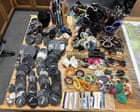
Beside it sits a baseball cap, bleached white by sulfur and heat. Further down, wedged into the throat of a thermal vent, rests a handful of loose pencils, a pair of polarized sunglasses, and hundreds of tarnished coins flung with careless optimism or idle curiosity.
Every year, visitors flood into Yellowstone National Park by the millions. They come seeking silence, grandeur, and an encounter with something larger than themselves. Yet, with them, they bring the clutter of modern life—and an inexplicable compulsion to cast that clutter into waters that demand absolute reverence. Recently, park staffers pulled a record-shattering amount of debris out of these thermal features. It is a statistic that sounds almost comical until you understand what is actually happening beneath the steam.
Consider the thermal feature known as Morning Glory Pool. Decades ago, it was a brilliant, uniform sapphire blue. Today, its edges are stained a sickly green-yellow, altered not by nature, but by the relentless accumulation of trash thrown into its depths over generations. Coins block underwater vents, changing water temperature and chemistry. Foreign objects smother delicate bacterial colonies that cannot exist anywhere else on planet Earth.
Why do we do it?
Human psychology in the wild is a strange, paradoxical thing. We travel thousands of miles to escape civilization, yet we leave our trash behind as if signing our names on a guestbook. We toss a coin into a fountain for luck, transferring that urban habit into a natural wonder that operates on geological time scales. A wishing well in a mall courtyard is concrete and recirculated water. A Yellowstone hot spring is a living, breathing hydrothermal system with plumbing that extends miles into the earth's crust. When you throw a coin or a pacifier into a thermal vent, you are not making
What We Leave Behind in the Boiling Waters
travel
The steam rises in ghostly plumes, curling against the crisp morning air of Wyoming. Beneath that opaque, turquoise veil lies a delicate, ancient machinery of earth and heat. Tourists stand behind wooden railings, murmuring in awe at the neon ribbons of bacteria painting the edges of Grand Prismatic Spring. They clutch their coffee cups, adjust their baseball caps, and marvel at the raw, untamed fury of Yellowstone National Park.
Then, someone drops a hat.
Or a pencil. Or, bafflingly, a baby pacifier.
In that split second, a momentary lapse in mindfulness transforms into a permanent scar on a fragile ecosystem. Most visitors see a vast, indestructible wilderness. They see a stage built on a grand geological scale, where human footprints vanish under the weight of centuries. But the truth tells a different story. Deep inside the thermal basins, park rangers and resource management crews are waging a quiet, relentless war against an unexpected invader: our everyday debris.
Consider what happens next.
A gust of wind catches a wool cap. It drifts over the barrier, tumbling down the mineral-encrusted slope, and vanishes into the scalding, mineral-rich soup of a hot spring. To the casual observer, it is just a hat lost to the abyss. To the park's thermal biologists, it is a chemical disruptor.
Hot springs are not swimming pools. They are extreme geochemical laboratories. The brilliant hues—vibrant oranges, deep greens, dazzling yellows—are alive. They are thermophiles, microscopic organisms that thrive in punishing temperatures that would kill most other life forms. When foreign objects like plastics, metal coins, clothing, and electronics fall into these waters, they don't just sit there. They leach toxins. They alter the delicate pH balance. They choke the thermal vents, disrupting the subterranean plumbing that feeds the geysers and springs.
Last year, the numbers told a staggering story. Yellowstone staffers retrieved a record amount of trash from these sacred thermal features. Not a few stray wrappers or an occasional plastic bottle, but an avalanche of misplaced items that defied common sense. Hats, pencils, baby pacifiers, smart phones, sunglasses, and thousands of coins thrown in for good luck, as if the earth were a subterranean wishing well.
Imagine standing on the boardwalk, looking down at a pool so clear it feels like looking into the sky itself. The water shimmers at nearly 200 degrees Fahrenheit. It looks pristine, untouched by human hands. Yet, beneath the surface, metal frame glasses rust away, shedding polymers and glass shards into the thermal channels. Plastic toys break down into microplastics, ingested by microscopic life or swept into the fragile runoff channels where unique ecosystems depend on absolute purity.
Why do we do it?
Anthropologists and park historians point to a profound disconnect. When people enter a national park, they step outside their normal lives. They enter a domain of myth and majesty. In that psychological shift, reality bends. A designated wilderness trail can suddenly feel like a theme park ride, where the rules of consequence are suspended. The trash isn't trash anymore; it's a momentary inconvenience, an accidental drop, or an offering to a giant natural wonder.
But Yellowstone does not need our offerings. It needs our restraint.
Walk with a resource crew on a quiet Tuesday morning. The air smells of sulfur and damp earth. Armed with long retrieval poles, specialized nets, and protective gear, these workers patrol the boardwalks. They aren't picking up candy wrappers from a paved parking lot. They are operating in environments where a misstep means severe thermal burns, where the ground beneath their feet is a thin crust over boiling mud.
They fish out a soggy baseball cap, bleached white by the mineral-heavy water. They lift a tangled mass of wire from a discarded electronic device. Each item represents a failure of human stewardship, recovered only through painstaking human effort.
The volume of debris is rising alongside visitor numbers. Millions of people flock to Yellowstone every year, seeking a glimpse of America's wild heart. With that influx comes an invisible tide of human footprint. Every dropped item requires a delicate extraction operation, risking damage to the fragile microbial mats that took thousands of years to form. One heavy boot misplaced on a bacterial mat can wipe out centuries of slow, microscopic growth.
We forget that we are guests in a house built long before humans walked the earth.
The heat beneath Yellowstone is ancient. It is powered by a supervolcano lying dormant miles beneath the surface, a reminder of the immense forces that shape our planet. That such colossal power can be choked, stained, or disrupted by something as trivial as a plastic baby pacifier or a wooden pencil is a humbling paradox. It highlights our fragility, and our capacity for carelessness.
Think about the sheer logistics of recovery. When an object slips beneath the surface of a boiling spring, it does not simply rest on a flat floor. It settles into intricate vent systems, wedging between silica sinter formations that take millennia to deposit. Divers cannot go in; the temperatures are lethal, and the acidic water would dissolve standard protective gear in minutes. Instead, rangers must use specialized mechanical grabbers, operating from the safety of boardwalks, blindly fishing for foreign objects while trying not to scrape the delicate living walls of the spring.
Every recovered item tells a silent story of human distraction. The pencil belonged to a sketching tourist who looked away for a second too long. The baby pacifier slipped from a tired parent's hand while soothing a crying infant against a backdrop of steaming vents. The sunglasses slid off a forehead during a hasty selfie. These are not malicious acts of littering; they are the quiet, cascading casualties of modern tourism colliding with untamed nature.
Yet, intent matters little to the ecosystem. Whether dropped by malice or carelessness, a foreign object alters the chemistry of a pool. It shifts temperatures, blocks microscopic flow, and introduces synthetic compounds that nature never evolved to handle. The pools are living entities, breathing through vents and pulsing with geothermal pressure. When we clog them, we disrupt a system that has functioned independently for eons.
Change does not begin with heavier fines or more aggressive signage. It begins with a shift in perspective. When we look at a hot spring, we are looking into a mirror. We see our own relationship with the natural world—whether we treat it as a dumping ground for our clumsy accidents, or as a sanctuary deserving of our deepest respect.
The next time you stand at the edge of a steaming pool, feel the warmth on your face. Notice the wind tugging at your clothes. Secure your belongings. Hold tight to your caps, your glasses, your pencils. Leave nothing behind except your footsteps, and take away only the quiet, enduring memory of a world that existed long before us, and depends entirely on us to survive.