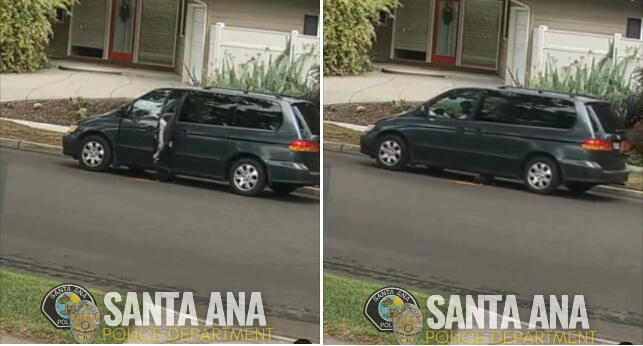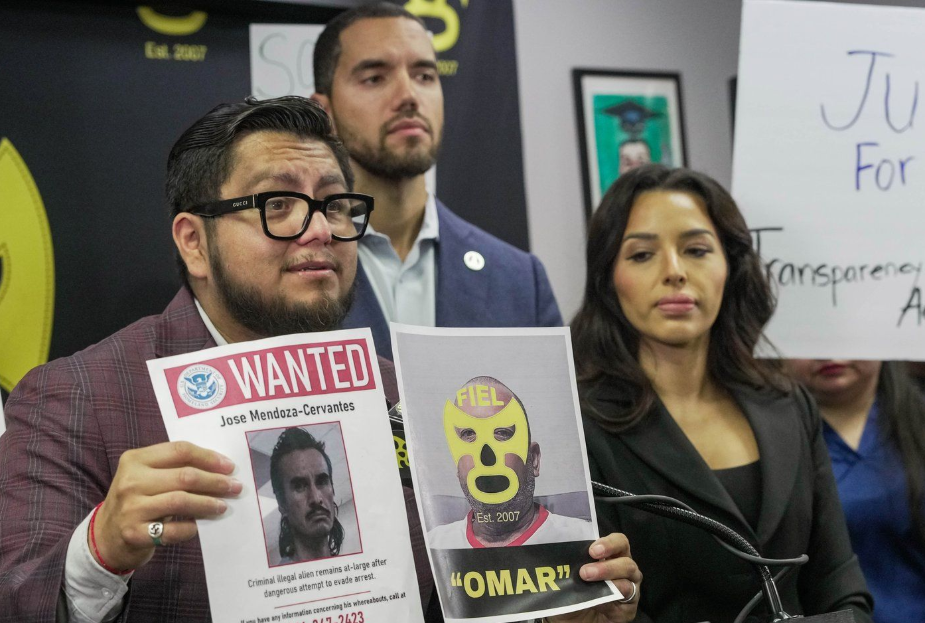
When a federal Immigration and Customs Enforcement (ICE) officer is criminally charged with assault for striking a civilian with a vehicle in Houston, the event represents far more than an isolated operational failure; it exposes a structural collision between administrative enforcement mandates, municipal criminal jurisdiction, and the kinetic realities of vehicular intervention. Standard news coverage treats such incidents as binary moral narratives or isolated personnel anomalies. An operational analysis reveals a different reality: the indictment is the predictable output of conflicting use-of-force doctrines, unclear perimeter protocols during field apprehensions, and the legal friction inherent when federal agents operate outside statutory immunity boundaries.
To evaluate the mechanics of this prosecution and its operational consequences for federal law enforcement agencies, the incident must be deconstructed across four distinct analytical vectors: the legal threshold of federal supremacy versus state criminal liability, the physics and policy of vehicular force, the operational breakdown in urban field arrests, and the institutional risk transfer from agency to individual officer.
The Jurisdictional Friction of Supremacy Clause Immunity
The foundational legal mechanism governing any state or local criminal charge against a federal officer is the Supremacy Clause of the United States Constitution (Article VI, Clause 2). In standard municipal policing, an officer who strikes a pedestrian or suspect with a patrol vehicle faces immediate evaluation under state penal codes—specifically statutes governing aggravated assault with a deadly weapon or vehicular assault. When the operator is a federal agent employed by the Department of Homeland Security (DHS), the initial legal battleground shifts from the facts of the collision to the question of jurisdiction and immunity.
Supremacy Clause immunity shields federal officers from state prosecution only when two strict conditions are met simultaneously:
- Scope of Authority: The officer was performing an act that they were authorized to do by the law of the United States.
- Necessary and Proper Execution: In performing that authorized act, the officer did no more than what was necessary and proper to discharge their official duties.
A local district attorney in Harris County filing an assault charge against an ICE officer signals an explicit prosecutorial determination that the second prong failed. While the underlying immigration enforcement operation may fall squarely within federal statutory authority under Title 8 of the U.S. Code, utilizing a motor vehicle to strike an individual crosses the threshold from authorized execution into unlawful, unnecessary force—unless an immediate, articulable threat of death or serious bodily injury existed at the exact millisecond of impact.
This creates a severe procedural bottleneck for the defense. The federal officer will inevitably petition to remove the case from state court to a federal district court under 28 U.S.C. § 1442 (the federal officer removal statute). Removal does not equate to exoneration; it merely changes the venue and the presiding judiciary while applying Texas state substantive criminal law. The prosecution must prove beyond a reasonable doubt that the officer’s belief that force was necessary was objectively unreasonable, or that the vehicular contact was intentional and punitive rather than accidental or defensive.
The Kinetic and Policy Reality of Vehicular Force
Law enforcement use-of-force continuums categorize a moving motor vehicle as a deadly weapon. Unlike a Conducted Energy Weapon (CEW) or oleoresin capsicum spray, which are engineered to induce temporary physiological incapacitation with minimal risk of permanent trauma, a multi-ton passenger vehicle transfers massive kinetic energy ($E_k = \frac{1}{2}mv^2$) upon impact. Even at low urban operational speeds of 10 to 15 miles per hour, the force exerted on human tissue and skeletal structures frequently results in catastrophic injury or fatality.
DHS policy—specifically the Department of Homeland Security Policy on the Use of Force—aligns with the constitutional standard established in Tennessee v. Garner and Graham v. Connor. Under these directives, officers are explicitly prohibited from using vehicles to intentionally strike, block, or ram individuals unless deadly force is legally justified. Furthermore, modern tactical doctrine dictates that officers must not position themselves or their vehicles in the path of a fleeing suspect in a manner that manufactures the necessity for deadly force—a concept known in policing jurisprudence as "officer-created jeopardy."
When an ICE officer strikes a man with a car during a Houston enforcement action, the evidentiary inquiry narrows to three variables:
- Vector and Velocity: Telemetry from the vehicle's Event Data Recorder (EDR)—commonly referred to as the black box—captures throttle position, brake application, steering angle, and speed in the five seconds preceding an impact. If the EDR indicates acceleration toward the subject without braking input, any defense predicated on accidental contact collapses.
- Spatial Geometry: Surveillance footage from surrounding commercial infrastructure, residential cameras, or dashcams establishes whether the pedestrian moved into the vehicle's established path or the operator altered the vehicle's trajectory to intercept the pedestrian.
- Tactical Objective: Administrative immigration arrests are civil enforcement actions, not high-risk violent felony apprehensions. In the calculus of objective reasonableness under Graham v. Connor, the severity of the underlying offense is the primary weight. Using deadly force infrastructure (a vehicle) to effectuate a civil administrative detention creates an immediate, indefensible proportionality gap.
Operational Breakdowns in Urban Field Apprehensions
To understand how a routine enforcement detail escalates into a felony assault indictment, one must examine the operational mechanics of ICE Enforcement and Removal Operations (ERO) in dense metropolitan environments like Houston. Unlike uniformed municipal police officers who operate in marked cruisers with overhead emergency lighting, sirens, and standardized de-escalation protocols, ERO fugitive operations teams routinely utilize unmarked vehicles and plainclothes tactics to preserve the element of surprise.
This operational posture introduces specific systemic vulnerabilities during dynamic street encounters:
- Cognitive Ambiguity: When an unmarked vehicle accelerates toward a pedestrian without clear visual or auditory identifiers of law enforcement authority, the target frequently interprets the event as a criminal assault, kidnapping, or vehicular accident. Their instinctive physical reaction—darting unpredictably or attempting to evade—destabilizes the spatial geometry of the encounter.
- Communication Deficits: Unlike municipal patrol units integrated into centralized Computer-Aided Dispatch (CAD) networks with strict pursuit and vehicular intervention supervision, small federal tactical teams often operate with high autonomy in the field. Real-time supervisory intervention is structurally absent during split-second vehicle maneuvers.
- Containment Failure: Standard tactical doctrine for vehicle-assisted pedestrian stops requires establishing a static perimeter before officers exit vehicles to make physical contact. Attempting to use the vehicle itself as a dynamic blocking tool to herd or pin a fleeing subject violates fundamental spatial control principles, converting a foot pursuit into a vehicular collision.
The Houston incident demonstrates the exact failure mode of dynamic vehicular containment. When an agent substitutes the mass of a vehicle for foot-pursuit containment or strategic retreat, the margin for human error drops to zero. Reaction times in human drivers average 1.5 seconds from visual perception to mechanical braking. At 20 miles per hour, a vehicle travels 44 feet before the brake pads even engage the rotors. In tight urban corridors, driveways, or parking lots, initiating movement toward a human target within that 44-foot envelope guarantees impact.
The Institutional Risk Transfer Mechanism
A critical dimension missed in surface-level reporting is the divergence between internal federal administrative discipline and external criminal prosecution. Historically, when federal agents violated internal use-of-force policies, accountability was mediated internally through the DHS Office of Inspector General (OIG) or the ICE Office of Professional Responsibility (OPR). These mechanisms result in administrative sanctions—suspension, demotion, or termination—while insulating the agency from public scrutiny and preserving sovereign immunity against civil tort claims under the Federal Tort Claims Act (FTCA).
The filing of a state criminal assault charge disrupts this insulation entirely. It executes an immediate transfer of institutional risk onto the individual operator:
- Severance of Representation: While the Department of Justice (DOJ) typically provides legal representation to federal employees sued in their official capacity, DOJ representation in state criminal proceedings is discretionary under 28 C.F.R. § 50.15. If internal investigators determine the officer acted outside the scope of employment or violated clear agency directives regarding vehicular force, the government can decline representation, forcing the officer to fund a private criminal defense.
- Garrity Protections and Parallel Investigations: An administrative investigation runs parallel to the criminal prosecution. Under Garrity v. New Jersey, statements compelled from the officer by internal affairs under threat of termination cannot be used in the criminal trial. However, physical evidence, third-party witness testimony, and digital telemetry remain fully accessible to the local district attorney, creating a dual-front legal exposure that frequently results in both career termination and criminal conviction.
- Civil Liability Exposure: A criminal indictment—and any subsequent conviction or plea—strips away the qualified immunity shield in parallel federal civil rights lawsuits brought under Bivens v. Six Unknown Named Agents or state tort claims. While Bivens remedies have been severely narrowed by the Supreme Court in recent terms, egregious physical force during domestic street operations remains one of the few viable avenues for personal financial liability against federal agents.
Limitations of Current Accountability Frameworks
Analyzing this case purely through the lens of individual criminal liability obscures the structural limitations of current oversight mechanisms. Prosecuting an individual officer addresses the immediate kinetic violation, yet it leaves the underlying operational architecture intact.
First, criminal prosecutions are lagging indicators. They occur months or years after the trauma is inflicted and require overcoming high evidentiary burdens, particularly when unmarked federal vehicles lack mandatory dashcam and body-worn camera (BWC) synchronization. While DHS has expanded BWC deployment across ICE ERO field offices, activation protocols during rapid, vehicle-based mobile operations remain inconsistent compared to municipal police departments.
Second, local prosecutors face severe discovery friction when investigating federal agencies. Obtaining internal training records, specific operational operational plans, and unredacted communications from DHS requires navigating the Touhy regulations (28 C.F.R. § 16.21 et seq.), which govern how federal agencies respond to state subpoenas. Federal agencies routinely delay or narrow compliance, starving local prosecutions of systemic context and forcing prosecutors to rely strictly on civilian witness accounts and external physical evidence.
Third, removing an individual agent via criminal conviction does not alter the performance metrics driving field operations. When federal enforcement divisions are evaluated primarily on quantitative arrest targets—specifically fugitive apprehension quotas—field teams are structurally incentivized to take aggressive tactical risks to prevent a subject from escaping on foot. Without recalibrating the risk-reward calculus at the supervisory level, vehicular aggression remains an ever-present operational hazard.
Strategic Mandates for Federal Operational Governance
To eliminate the recurrence of unauthorized vehicular force and neutralize the institutional exposure demonstrated in the Houston indictment, DHS and ICE leadership must execute three structural interventions immediately:
- Enforce Hard-Coded Telemetry and Camera Synchronization: Mandate that all ICE ERO operational vehicles—marked and unmarked—be equipped with continuous-loop dashcams hardwired to the vehicle's ignition and accelerometer. Any sudden deceleration, impact event, or emergency maneuver must automatically trigger video preservation and lock Event Data Recorder telemetry, eliminating evidentiary blind spots and deterring aggressive driving behaviors.
- Institute an Absolute Prohibition on Vehicular Blocking of Pedestrians: Revise the DHS Use of Force Policy to explicitly classify using a moving vehicle to cut off, corner, or herd a pedestrian as a per se unauthorized use of deadly force, entirely distinct from high-risk felony vehicle-to-vehicle PIT (Precision Immobilization Technique) maneuvers. Training academies must replace dynamic vehicular containment drills with mandatory disengage-and-surveil protocols for fleeing administrative targets.
- Require Pre-Operation Supervisory Risk Sign-Off for Plainclothes Street Intercepts: Prohibit unmarked, plainclothes teams from initiating dynamic street-level vehicle intercepts for non-violent civil immigration violations without documented supervisory approval verifying that static perimeter containment is impossible and that the target poses a documented, articulable threat to public safety.