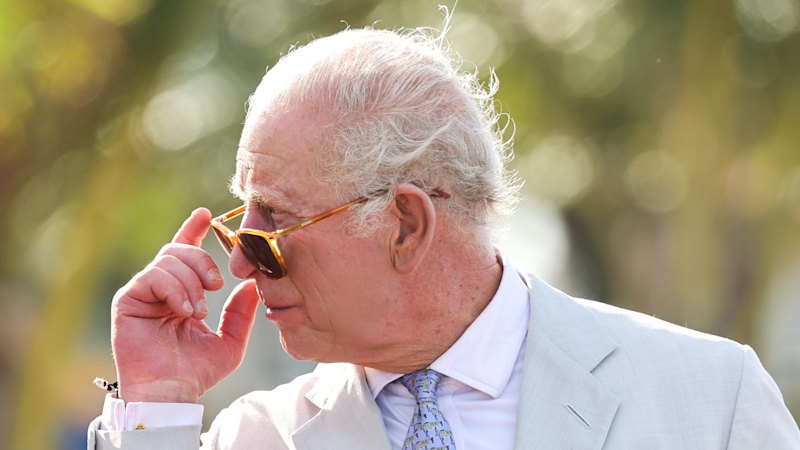
Every royal correspondent in London is running the exact same script right now. They look at King Charles III, they look at the Commonwealth, and they declare that the monarch must finally confront the British Empire’s role in the transatlantic slave trade.
They think an apology is the ultimate test of his reign. They think a tearful speech in Barbados or Jamaica will save the Crown.
They are completely wrong.
Demanding that a hereditary monarch issue a formal apology for chattel slavery isn't just bad PR strategy—it is a constitutional trap, a historical distraction, and a massive gift to the very institutions that actually profited from human bondage. I have spent two decades advising institutions on crisis reputation and post-colonial asset restructuring, and I have watched billion-dollar organizations light their credibility on fire by chasing symbolic absolution instead of structural accountability.
The lazy consensus says Charles must own the sins of his ancestors to keep the Commonwealth intact. The reality is that forcing the King to play chief mourner for the British Empire actively shields the British state, the Treasury, and private corporate dynasties from the real ledger of history.
The Constitutional Fiction of Royal Guilt
To understand why the "Charles must apologize" narrative fails, you have to understand how the British constitution actually works. Most commentators treat the British monarch like an absolute medieval king who just happens to wear a modern suit.
He isn't. Under the constitutional settlement established after the Glorious Revolution of 1688, the Sovereign acts exclusively on the advice of ministers. In plain English, the King does not have a personal foreign policy, a personal legal liability, or a personal treasury separate from the Crown Estate's statutory framework.
When critics point to the Royal African Company—founded in 1660 by King Charles II and his brother James, Duke of York—they treat it like a family trust fund that Charles III inherited last Tuesday. That is sloppy history.
By the time the transatlantic slave trade hit its industrial peak in the 18th century, the monopoly had already been broken by Parliament. The trade was regulated, taxed, and protected by acts of Westminster, backed by the Royal Navy under the direction of elected prime ministers, and financed by the Bank of England and private merchant houses in Bristol, Liverpool, and London.
If King Charles steps up to a podium and says, "I am sorry for slavery," what does that legally mean? Nothing. It is a private citizen wearing a crown expressing personal regret. Because he cannot bind His Majesty’s Government, his apology carries zero legal weight, zero financial obligation, and zero policy consequence.
Worse, if he does apologize without the explicit instruction of the Prime Minister, he triggers a constitutional crisis by violating political neutrality. And if he apologizes on the instruction of the Prime Minister, he is simply acting as a human shield for 10 Downing Street.
Why Governments Love a Royal Scapegoat
Follow the money. Follow the liability.
In 2023, King Charles signaled support for academic research into the monarchy’s historical links to slavery, granting researchers access to the Royal Archives. Predictably, the press treated this as a timid half-measure. They demanded more. They demanded the word sorry.
Think about who benefits from that demand.
When the global media focuses on whether Charles will shed a tear at a Commonwealth Heads of Government Meeting (CHOGM), nobody is asking the British Treasury about the Slave Compensation Act of 1833.
Let’s look at the actual numbers from the Legacies of British Slavery database at University College London, led by historians like Nick Draper and Catherine Hall. In 1833, Britain abolished slavery across most of its empire. To pass the bill, the British government borrowed £20 million—roughly 40 percent of the nation’s annual budget at the time—to compensate the slave owners for their lost "property."
Not a single penny went to the enslaved people.
That debt was so massive that British taxpayers didn't finish paying it off until 2015. That means the descendants of enslaved people living in the United Kingdom were paying taxes into the 21st century to pay off the loans used to enrich the families of their ancestors' enslavers.
Where did that £20 million go? It didn't sit in Buckingham Palace. It went into the balance sheets of British banking, insurance, railways, and aristocratic estates whose descendants still sit in the House of Lords and run FTSE 100 companies.
When activists and pundits demand a royal apology, they let the British Parliament and corporate Britain off the hook. They turn a systemic, state-sponsored economic engine into a soap opera about one man’s conscience. A royal apology is the cheapest PR buyout in history. It costs the British state zero pounds while generating three days of glowing headlines about how "progressive" and "self-aware" the modern monarchy has become.
The Trap of Performative Contrition
I have seen major corporations and legacy institutions make this exact mistake when confronted with historical wrongdoing. They bring in crisis consultants, draft a painfully sensitive statement, hold a solemn press conference, and wait for the applause.
It never comes.
Instead, performative contrition creates an immediate credibility vacuum. If you admit moral guilt for a massive historical crime, the logical next question from the injured party is simple: What are you going to do to make it whole?
If you are a constitutional monarch, your answer is: Nothing. I legally cannot.
That gap between symbolic guilt and actual power is toxic. Imagine a scenario where Charles delivers a sweeping, heartfelt apology in Kingston or Bridgetown. The cameras flash. The headlines celebrate a historic turning point. The very next morning, Caribbean leaders turn to Downing Street and say, "Your Head of State just admitted guilt on behalf of the Crown. Now let's talk about the CARICOM Ten-Point Plan for Reparatory Justice."
Downing Street immediately shuts the door, reiterating the standard British government line that they will not pay reparations or engage in financial restitution.
What happens then? The King looks like a hypocrite. The Commonwealth looks like a sham. And the Caribbean nations realize they were handed a worthless piece of theatrical sympathy while the actual checkbook remained locked in Whitehall. You don't heal a centuries-old wound by offering a hollow promise you lack the legal authority to fulfill.
Did the British Monarchy Actually Profit From Slavery?
People ask this question constantly, usually looking for a simple yes or no. The real answer is messier, and far more indicting of the broader British establishment than of the Windsors alone.
Yes, the Stuart and Hanoverian monarchs profited directly and indirectly. Charles II and James II held stock in the Royal African Company. William III received shares in the company as a gift. Queen Anne was a major beneficiary of the Asiento—the lucrative contract secured in the 1713 Treaty of Utrecht that gave Britain the monopoly on supplying enslaved Africans to Spanish colonies.
Later, King George III and his sons actively opposed the abolition of the slave trade. The future King William IV even gave speeches in the House of Lords defending West Indian planters and attacking abolitionists as fanatics.
However, by the Victorian era, the monarchy’s direct financial ties to plantation slavery had largely been superseded by the broader industrial and imperial economy. Queen Victoria’s wealth was tied to British industrial dominance, landholdings, and the wider empire, rather than direct ownership of enslaved people in the Caribbean.
To pretend that the modern House of Windsor is sitting on a pile of gold bullion stamped with the Royal African Company crest is historically illiterate. The Crown Estate—the vast portfolio of land and property that generates revenue for the British government and funds the Sovereign Grant—is largely rooted in medieval Norman land grabs, centuries of domestic real estate development, and modern offshore wind leases.
Focusing obsessively on the Windsor family fortune misses the forest for a single tree. The real wealth extracted from the Caribbean sugar plantations built the financial architecture of the City of London. It capitalized banks that merged into Barclays, Lloyds, and the Royal Bank of Scotland. It underwrote Lloyd’s of London, which insured slave ships as routine maritime cargo.
If you want to trace the blood money, don't look at the Crown Jewels. Look at the corporate registries in London.
What the Commonwealth Actually Wants (And Why the Media Misses It)
The Western press loves framing the Commonwealth as a fragile club of former colonies waiting for Charles to validate their pain. That is pure colonial condescension disguised as progressive journalism.
Countries like Jamaica, Barbados, and Belize aren't moving toward republicanism because Charles hasn't said the magic words. They are removing the British monarch as Head of State because having a white aristocrat living in a palace 4,500 miles away as your constitutional sovereign in the 2020s is absurd on its face.
No apology will stop Jamaica from becoming a republic. Nor should it. Political independence is the natural completion of sovereignty, not a punishment for bad royal PR.
When Caribbean leaders—like Barbados Prime Minister Mia Mottley or the chair of the CARICOM Reparations Commission, Sir Hilary Beckles—speak on this issue, they aren't begging for Charles to feel bad. They are demanding structural economic justice. They are talking about:
- Debt cancellation for nations crippled by post-colonial economic structures and climate vulnerability.
- Technology transfer and development funding to build modern healthcare and educational infrastructure that was systematically neglected during centuries of extraction.
- Institutional accountability from the specific banks, universities, and families that built endowments on enslaved labor.
Notice what isn't at the top of their serious policy list? A pathetic, non-binding "I'm sorry" from a monarch who can't even pass a tax bill.
The Brutal Alternative: What Charles Should Actually Do
If a royal apology is a trap, what is the right move? If Charles wants to demonstrate genuine leadership rather than cheap public relations, he has to abandon the script of royal victimhood and royal contrition altogether.
There is a better, harder path available to him, though it carries massive political risk for the monarchy.
1. Open Every Single Vault Without Redaction
In 2023, Charles backed a PhD research project examining the monarchy's ties to slavery. That is a start, not a finish. Academic studies take years, get buried in university presses, and rarely touch the live nerve of public accountability.
The Royal Archives and the Royal Collection Trust remain exempt from the Freedom of Information Act. If Charles wants to break the cycle of suspicion, he shouldn't offer an apology; he should offer total, unvarnished transparency. Strip the secrecy exemptions on all historical records regarding the Crown's financial and diplomatic dealings with the slave trade, the East India Company, and colonial administration. Put the raw ledgers online for the world to audit.
2. Audit the Duchies and Repurpose the Windfalls
The Duchy of Lancaster and the Duchy of Cornwall are private estates that generate tens of millions of pounds annually for the King and the Prince of Wales. While their origins are medieval, their portfolios have absorbed centuries of capital, property, and bona vacantia (assets of people who die without a will or next of kin, which automatically revert to the Crown in those regions).
Instead of issuing empty words, the Crown could commission an independent, forensic financial audit of both Duchies to identify any historical capital infusions linked to colonial extraction or slave-trade compensation. Any identified capital—adjusted for inflation—should be spun off into an independent, Caribbean-led development endowment with zero royal governance.
3. Force Downing Street Into the Arena
The greatest service Charles could render is to refuse to act as the British government's emotional decoy. When pressed on slavery and reparations, the Palace should state clearly and bluntly that historical state liability, restitution, and diplomatic settlements are matters for His Majesty’s Government and the British Parliament, not the Sovereign.
Push the spotlight directly onto 10 Downing Street. Force the Prime Minister to stand in front of the cameras and explain to the world why Britain refuses to engage with CARICOM’s framework, rather than letting politicians hide behind the skirts of royal diplomacy.
The Downside of Refusing to Apologize
Let’s be brutally honest about the cost of this approach. Refusing to apologize is a high-wire act without a net.
If Charles rejects the performative apology and pivots to structural transparency, he will get pulverized in the short term. The tabloid press will call him cold. Progressive commentators will label him out of touch, arrogant, and stubbornly clinging to imperial nostalgia. Protesters will follow his motorcade from London to Sydney to Port of Spain, waving signs demanding the exact words he refuses to say.
Furthermore, pushing the political liability onto Downing Street will enrage senior cabinet ministers. British prime ministers hate having their foreign policy headaches dumped back on their own desks, especially when it involves trillions of dollars in theoretical historical claims. Charles would burn massive political capital inside Westminster.
There is also the real risk that by the time forensic audits and archival disclosures are complete, half the remaining Commonwealth realms will have already voted to remove him as Head of State. You cannot outrun the clock of republicanism with a transparency initiative.
Stop Confusing Penance With Justice
The obsession with getting King Charles to apologize for slavery reveals a deep sickness in modern political culture. We have become addicted to public humiliation and theatrical remorse as substitutes for actual power shifts.
We want to see the powerful person look sad on television. We want the viral clip of the contrite leader lowering his head. We mistake the performance of guilt for the dismantling of the system that produced the crime.
Slavery was not a royal family drama. It was a ruthless, state-backed capitalist enterprise that built the modern Western financial system, funded the Industrial Revolution, and left an entire region of the world structurally impoverished while insulating Britain from the consequences.
Asking King Charles to apologize for it is like asking the hood ornament to apologize for a car crash. Focus on the engine, look at who owns the vehicle, and demand the title deed.