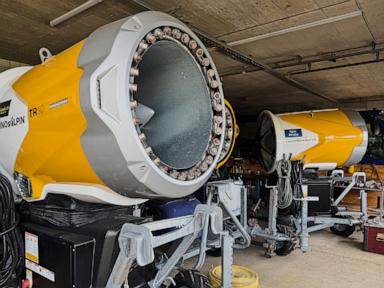
Every summer, when the smoke rolls over the Rockies and the resort marketing departments run out of ways to sell mountain biking, a familiar fantasy resurfaces. Someone points a finger at the dormant snowmaking infrastructure sitting idle under the blazing July sun, blinks past basic physics, and pitches a brilliant headline. Let us hook up the snow cannons to high-pressure water mains, string up some hoses, and turn multimillion-dollar ski resorts into frontline fortress firefighters.
It sounds pragmatic. It sounds clever. It is also an operational disaster waiting to happen.
I have watched public officials and corporate boardrooms chase this shiny object for over a decade, blowing millions on pilot programs that solve a problem that does not exist while ignoring the infrastructure realities right in front of them. The lazy consensus says we have hundreds of high-pressure hydrants and massive pump stations just waiting for a spark. The reality is that using ski resort snowmaking for wildfire defense is a triumph of wishful thinking over engineering.
Here is why the entire concept falls apart the moment a real fire actually hits the ridge.
The Plumbing Lie Nobody Wants to Talk About
To understand why snow guns make terrible fire monitors, you have to look at what happens beneath the turf when the snow melts. Snowmaking is not a municipal water utility. It is a closed-loop system designed for a very specific, highly controlled environment.
Ski resort piping networks are engineered to move water uphill during sub-freezing nights under extreme pressure, feeding fixed hydrants spaced out along specific ski runs. These pipes are buried just deep enough to avoid the worst of the winter frost, but they are entirely dependent on the resort’s primary power grid and centralized pump houses.
When a wildfire tears through a drainage, the grid goes down first. Power lines snap in the high winds that always accompany an advancing front. Without commercial electricity, those multi-megawatt pumps stop spinning instantly.
"Just bring in backup diesel generators," the armchair tacticians argue.
I have stood in the pumphouse of a major Colorado resort during a simulated grid failure. To run three primary booster pumps simultaneously at peak psi, you need industrial-grade generation capacity that rivals a small municipality. You are not hauling that generator up a rocky access road on the back of a flatbed while embers are raining down. Even if you manage to drop a megawatt generator on site, the fuel consumption alone makes it a logistical nightmare. You would need tanker trucks running a continuous gauntlet through evacuation zones just to keep the pumps primed for an hour of operation.
Water Rights Are Not Made of Rubber
Let us assume for a moment that the power is on, the generators are humming, and the pipes are intact. You still have to answer to the most ruthless entity in the American West: the water commissioner.
Water rights are specific, strictly adjudicated legal doctrines. A resort’s snowmaking water rights are typically tied to winter storage decrees or high-flow spring runoff diversion schedules. Pumping millions of gallons of water out of a creek or a reservoir in August to spray into a crown fire often violates state water law, interstate compacts, and senior agricultural rights down-valley.
You cannot simply turn the valve because the mountain is smoking. Doing so can trigger multi-million-dollar fines and protracted litigation before the smoke even clears. Municipalities and agricultural users hold the paper on those drops. When a fire breaks out, the priority goes to human life and structural protection in the valleys, not dampening a stand of beetle-killed lodgepole pine three miles up the canyon.
Fixed Positions Die in Fast-Moving Fronts
Wildfires do not march politely down groomed intermediate runs. They crown, spot, and jump.
Snow guns are fixed infrastructure. Even modern automated fan guns mounted on towers have a limited rotation arc and a fixed throw distance. They are engineered to lay down a blanket of heavy, dense artificial snow over a targeted trail, not track an erratic, wind-driven wall of flames racing through timber at thirty miles per hour.
Imagine a scenario where a resort manager manages to rig a dozen fan guns along the edge of a timberline trail to create a wet perimeter. The wind shifts. The fire drops into the gully fifty yards to the left, well out of the throw radius of the fixed guns. Now your high-priced, high-pressure equipment is sitting in the path of a super-heated blowtorch, melting its own plastic housing harnesses, electrical cables, and rubber gaskets.
Firefighting requires mobility, adaptability, and rapid deployment. Ski infrastructure is the exact opposite: heavy, immobile, and brittle under extreme thermal stress.
What We Should Be Doing Instead
If we stop pretending that resort infrastructure can double as a municipal fire department, we can focus on what actually works.
The real vulnerability of ski resorts during fire season isn't a lack of water guns; it is decades of accumulated fuel loading directly adjacent to billion-dollar base villages and lift terminals. Resorts are sitting on dense tracts of overgrown timber choked with deadfall, a direct result of historical fire suppression policies and decades of minimal forest thinning.
Instead of spending capital trying to retrofit snowmaking systems into makeshift sprinkler networks, resort operators and the U.S. Forest Service need to invest in aggressive, unglamorous landscape-level mitigation.
- Continuous defensible space: Clear timber out for a minimum of five hundred yards around all terminal buildings, maintenance sheds, and mid-mountain lodges.
- Buried utilities: Transition all critical power and communications lines underground so the resort doesn't blind itself the moment a dry lightning strike hits the ridge.
- Dedicated mobile caching: Invest in portable, high-volume trailer pumps designed to draft out of retention ponds and deliver water independently of the resort's primary snowmaking grid.
Stop looking at the snow guns on a sunny July afternoon and wishing they could save the forest. They were built to make ice for tourists, not to stare down a climate-driven megafire. Clear the timber, harden the base areas, and leave the firefighting to the professionals who actually know how to move when the wind changes.
Stop waiting for a technical gimmick to bail out a broken landscape.