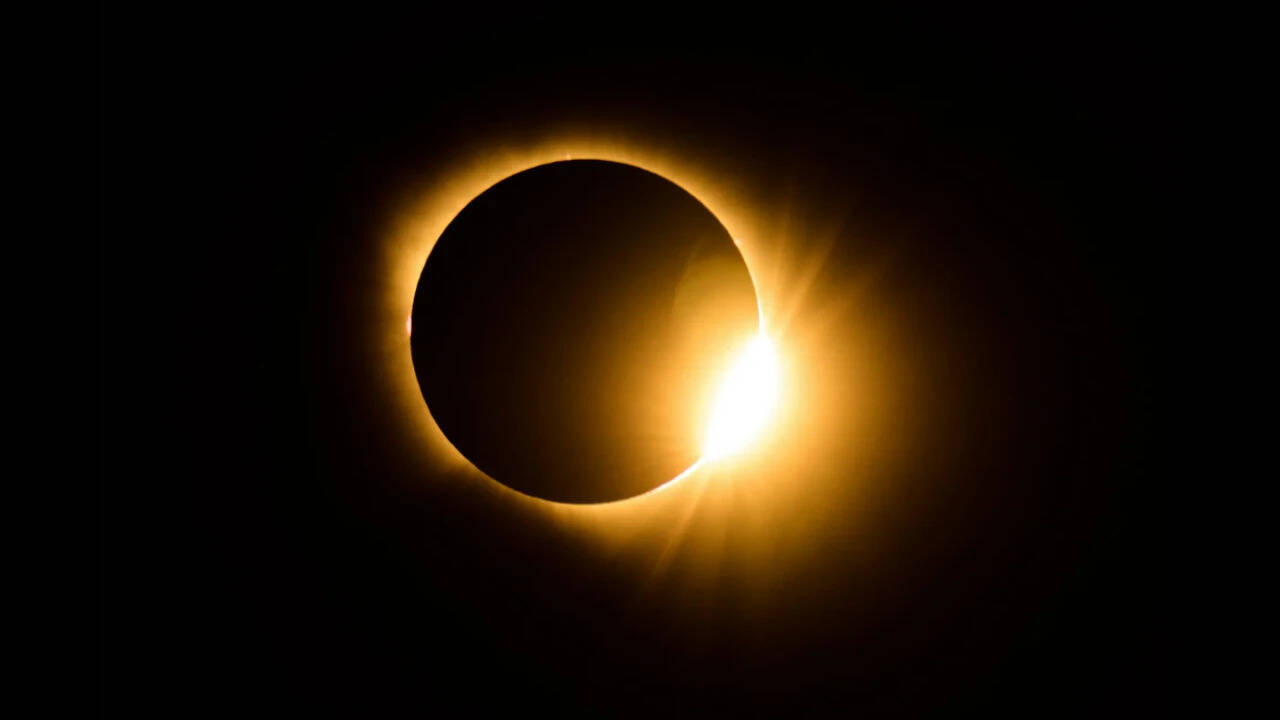
The Structural Mechanics of a Rare Celestial Alignment
When a total solar eclipse traces its path across a densely populated landmass, it triggers a localized, high-velocity demand shock unlike any traditional tourism event. The upcoming total solar eclipses in Spain—specifically the events of August 12, 2026, August 2, 2027, and January 26, 2028—represent a compressed stress test for national infrastructure, municipal logistics, and regional economic capacity. Unlike dispersed holiday travel, eclipse tourism concentrates millions of transient actors into narrow geographical corridors for a window measured in mere minutes.
Understanding the operational reality of these events requires stripping away romanticized travel writing and examining the mechanics of temporal compression, spatial bottlenecks, and resource allocation failures. The return of totality to the Iberian Peninsula for the first time since 1912 is not merely an astronomical milestone; it is an exercise in extreme capacity management.
Temporal Compression and the Bottleneck Equation
The primary operational constraint of a total solar eclipse is its absolute intolerance for delay. A standard tourism event, such as a music festival or a regional holiday, distributes arrivals and departures across days or weeks. Totality operates on a strict, unyielding timeline.
The path of totality in 2026 sweeps across northern and eastern Spain during the late afternoon hours, grazing major urban centers and popular coastal regions during peak tourist season. The duration of totality ranges from less than a minute to nearly two minutes depending on the observer's exact coordinates. This creates a severe operational paradox:
- Inelastic Demand: Millions of individuals attempt to position themselves within a narrow band of optimal viewing simultaneously.
- Fixed Supply: Road networks, hotel inventories, rental cars, and public parking capacity cannot scale vertically to meet a one-day demand spike.
- Synchronous Exodus: The moment totality ends, the entire influx attempts to egress simultaneously, creating catastrophic gridlock on arterial highways.
Urban planners and regional authorities face a distinct spatial distribution problem. The density of infrastructure in northern Spain handles baseline summer tourism efficiently, but baseline capacity is calibrated for distributed flows along coastal resorts and historical city centers. A sudden influx into rural interiors or secondary roads bypasses established logistical buffers.
The Economic Impact Calculus
Economic evaluations of major astronomical events frequently suffer from inflated multiplier assumptions. To model the true economic impact on Spain, analysts must separate gross expenditure from net regional value capture.
The revenue generation concentrates within specific vectors:
- Short-Term Lodging Inflation: Hotels, rural houses, and private rentals within the path of totality command exponential pricing premiums.
- F&B and Ancillary Retail: Local hospitality operators experience a localized surge in consumption, though supply chain bottlenecks often limit total volume capture.
- Transportation Revenue: Car rental agencies and domestic rail operators optimize yield management systems well in advance, extracting maximum margin from constrained supply.
However, the hidden cost function offsets these gains. Municipalities incur unbudgeted expenses related to traffic control, emergency services deployment, waste management, and temporary infrastructure deployment. Rural municipalities with minimal structural reserves bear the brunt of these front-loaded costs, while tax revenues often disperse to national entities or remote corporate parent companies of hospitality chains.
Infrastructure Vulnerabilities Across the 2026 to 2028 Sequence
Spain faces a rare sequence of three consecutive eclipse events:
[August 2026: Northern Spain] ---> [August 2027: Southern Spain] ---> [January 2028: Southeastern Spain]
Each event targets distinct geographical topography and climatic profiles, exposing varied infrastructural vulnerabilities.
The 2026 Northern Corridor
Traversing regions like Cantabria, Castilla y León, Aragon, and Catalonia, the 2026 event occurs in late afternoon. Weather volatility in northern Spain during August introduces a significant cloud-cover risk. Travelers and operators must build redundancy into their positioning strategies, leading to speculative movement across multiple provinces in the days preceding the event. This nomadic repositioning strains regional secondary roads that were never engineered to absorb volatile, multi-directional traffic surges.
The 2027 Andalusian Corridor
The August 2, 2027 eclipse crosses southern Spain, including Cádiz, Málaga, and parts of the Strait of Gibraltar. This event occurs at the height of the Mediterranean summer, where ambient temperatures frequently exceed 40 degrees Celsius. The intersection of extreme thermal stress and dense crowds creates severe public health risks. Dehydration, heat exhaustion, and medical evacuation gridlock present operational hazards that dwarf logistical concerns from northern latitudes. Water supply networks, emergency cooling stations, and traffic flow management around vulnerable coastal infrastructure dictate the success or failure of regional response protocols.
The 2028 Morning Alignment
The January 26, 2028 event tracks across southeastern Spain during the early morning hours. Low sun angles and winter weather patterns alter visibility dynamics entirely. Infrastructure challenges shift from summer coastal congestion to winter mountain pass management and early-morning commuter intersection conflicts.
Meteorological Risk Management and Spatial Hedging
A critical variable in eclipse logistics is cloud cover probability. Unlike fixed-site events, the utility of an eclipse viewing location is entirely binary: clear skies yield full data capture and visual experience; complete cloud cover destroys the primary value proposition.
Sophisticated observers and commercial tour operators apply financial and logistical hedging strategies:
- Dynamic Mobility: Renting high-clearance or high-capacity vehicles to enable last-minute relocation based on real-time satellite telemetry.
- Distributed Storing: Establishing decentralized supply caches rather than relying on single-point accommodations.
- Contingency Corridors: Pre-mapping alternative arterial routes that bypass primary highway choke points when localized weather fronts force mass repositioning.
Municipalities fail when they plan for a static population. The modern eclipse tourist behaves as a mobile, data-informed agent who will alter location parameters within hours of the event based on meteorological forecasts. Infrastructure must account for fluid, high-speed micro-migrations rather than fixed campground or hotel occupancy metrics.
Strategic Resource Allocation for Regional Authorities
To mitigate systemic failure during the Spanish eclipse sequence, regional governments must transition from passive permitting to active traffic and resource orchestration.
First, public transit authorities must mandate and subsidize high-capacity rail augmentation. Private automobile usage during a narrow-window event guarantees gridlock; rail networks possess the linear throughput required to move large volumes of people without expanding asphalt footprints.
Second, emergency services require prepositioned tactical units rather than centralized reserves. Ambulances and fire response teams trapped in general eclipse traffic fail to meet baseline response time SLAs. Establishing decentralized medical and logistical outposts directly inside the path of totality prior to the event window is mandatory.
Finally, public communication strategies must shift from promotional tourism boards to operational risk mitigation. Clear, data-driven advisories regarding road closures, mandatory arrival windows, and water availability prevent panic and reduce the incidence of preventable logistical failures.
Deploy mobile command units equipped with real-time telemetry at provincial bottlenecks forty-eight hours prior to first contact, while simultaneously restricting non-essential commercial freight traffic on regional arteries throughout the forty-eight-hour window surrounding totality