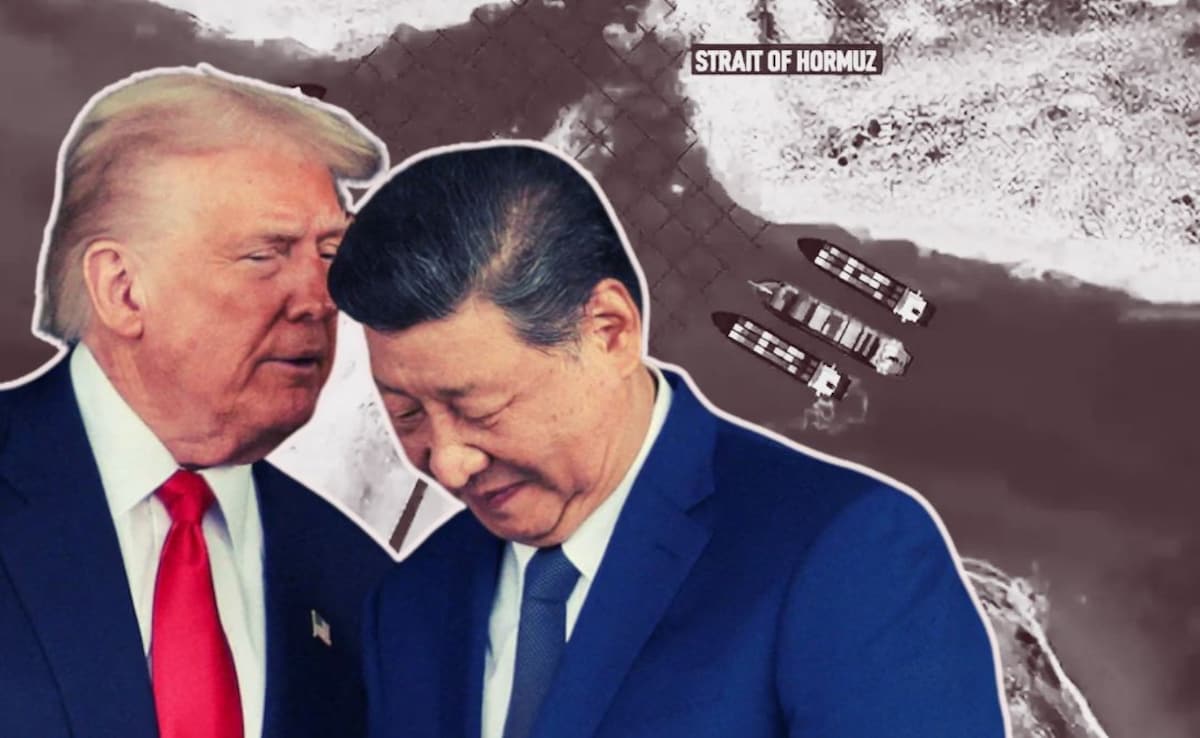
Donald Trump just touched down in Beijing for the first time in nearly a decade, and the vibe couldn't be more different from 2017. Back then, Xi Jinping rolled out the "state visit plus" treatment, serving dinner in the Forbidden City and parading through Tiananmen. It was all about the optics of two titans finding common ground. Today? The red carpet is still there, but the air is thick with a reality Trump hasn't quite admitted yet. He's walking into the Great Hall of the People with a remarkably weak hand.
The world has changed. Trump is currently bogged down by a messy, unpopular war in Iran that has drained his political capital and tanked his approval ratings just months before the midterms. Meanwhile, Xi has spent the last few years quietly building a fortress around the Chinese economy. If Trump thinks he can just show up and demand "fairness and reciprocity" like it’s 2017, he’s in for a rude awakening.
The Tehran trap and the energy crisis
The most immediate weight around Trump’s neck is the conflict in Iran. The U.S. and Israeli strikes on Tehran didn't just ignite a regional war; they created a global energy nightmare. With the Strait of Hormuz effectively closed, oil prices are screaming.
You’d think this would give Trump leverage, but it’s actually the opposite. China is Iran's biggest oil buyer. They have a direct line to Tehran that Washington lost decades ago. Trump needs Xi to help reopen the Strait and stabilize the energy markets, but Xi knows that every day the war drags on, Trump looks more desperate.
Beijing isn't going to hand over a diplomatic win for free. They’ve already signaled that any help with Iran comes with a price tag. They want relief from the tech export controls that have been choking their AI and semiconductor industries. Honestly, Trump is stuck between a rock and a hard place: continue the war and face an economic meltdown at home, or give Xi the keys to the future of AI.
Taiwan is the non-negotiable core
While Trump wants to talk about soybeans and Boeing planes, Xi has one word on his mind: Taiwan. The rhetoric from the Chinese Foreign Ministry lately has been unusually sharp. They aren't just asking for the "One China" policy anymore; they’re pushing for a total shift.
Beijing wants Trump to explicitly state he opposes Taiwan independence. They’re also gunning for a freeze on arms sales. The Trump administration approved a record $11 billion package last year, and there’s another $14 billion deal currently gathering dust on a desk in Washington. Rumor is, Trump delayed notifying Congress about that new package specifically to keep this summit from imploding before it started.
Xi sees the U.S. preoccupation with the Middle East as a golden window. He knows the U.S. Navy is spread thin, blockading tankers in the Persian Gulf while trying to maintain a presence in the South China Sea. It’s a classic overextension, and China is leaning into it.
The myth of the tariff hammer
Trump still talks about tariffs like they’re his magic wand. He loves to post about how he’s "beating" China, but the data says otherwise. Since the trade truce in Busan last October, China hasn't backed down. Instead, they found the "break glass" tool: critical minerals.
China controls the supply chains for rare earth minerals and magnets that are essential for everything from your iPhone to the F-35 fighter jet. When Trump cranked tariffs past 140 percent, Beijing didn't just blink—they threatened to cut off the supply of the very materials the U.S. military needs to function.
Why the trade truce is fragile
- The Rare Earth Trap: China’s 2025 legal framework allows them to deny dual-use components to any country "on a whim."
- Legal Blows: The U.S. Supreme Court has recently restricted several of Trump’s key tariffs, calling them illegal or overreaching.
- Mineral Dominance: The U.S. is still years away from having its own processing capacity for critical minerals.
Basically, the "tariff war" is a stalemate where China has more endurance. They’re playing the long game while Trump is looking at the 24-hour news cycle and his falling poll numbers.
AI and the race for the next century
This summit is also the first time both leaders will sit down to discuss the "safety" of artificial intelligence. It sounds boring, but it’s the most important room in the building. Trump wants a communication channel to avoid accidental conflict sparked by AI models, but the underlying fight is about hardware.
China is desperate for the advanced U.S. chips and chip-making equipment that have been blacklisted. They’re using the Iran situation as a bargaining chip to get those restrictions lifted. If Trump trades AI tech for a temporary ceasefire in the Middle East, he might get a short-term boost in the polls, but he’ll be handing China the lead in the most important technological race in history.
What happens next
Don't expect a grand bargain. The most likely outcome is a "fragile truce" that keeps the markets from panicking for another six months. Trump will get his photo op and maybe a few billion dollars in agricultural "buys" to show the farmers back in Iowa. Xi will get the optics of a stable, dominant leader who can manage a distracted American president.
If you’re watching the news for a breakthrough, look at the Strait of Hormuz and the Taiwan arms sales. If that $14 billion package for Taipei gets "indefinitely delayed" after this trip, you’ll know exactly what Trump traded away to get Xi's help with Tehran.
Keep an eye on the following:
- Watch for any movement on the "Board of Trade" or "Board of Investment" ideas—these are Beijing’s way of trying to institutionalize their influence.
- Check the status of the five Chinese oil refiners recently sanctioned by the U.S. Treasury. If those sanctions are quietly walked back, it’s a sign of a deal.
- Monitor the rhetoric around "Taiwan independence." Any softening of the U.S. stance is a major win for Xi.


