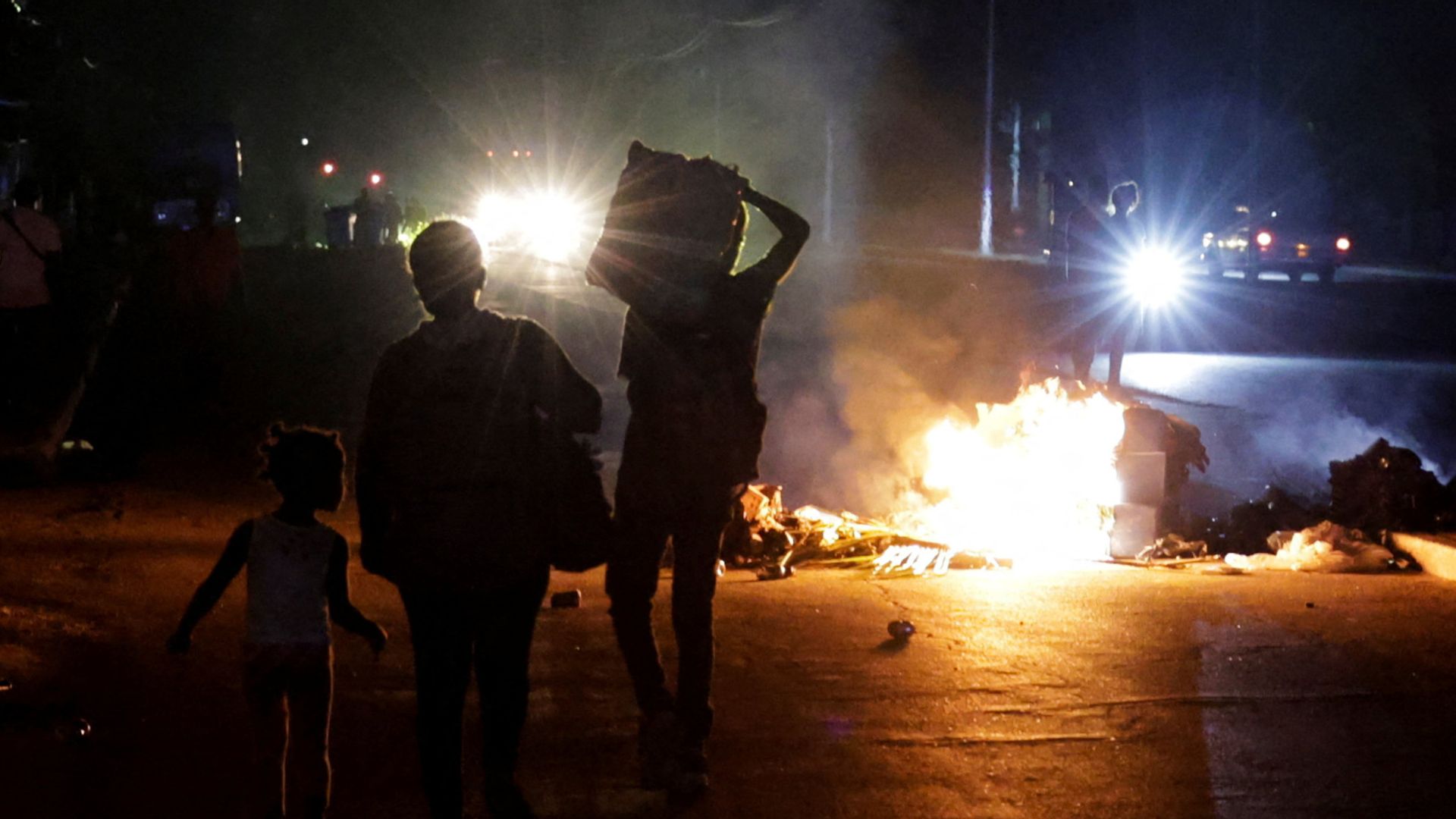
The panic over Pacific Palisades Charter High School—better known as Pali High—rebuilding after the Los Angeles wildfires is predictable, loud, and entirely misplaced. While anxious parents flood community forums asking if their daughters will be "safe" on a scorched ridge, they are ignoring the cold reality of urban planning and fire ecology. The question isn't whether the school can be made safe. The question is why we are still obsessed with the illusion of "fortress-style" security in a geographical zone that is designed, by nature, to burn.
Most local reporting focuses on the emotional weight of rebuilding. They interview crying students and stressed administrators. They talk about "resilience." I’ve spent fifteen years analyzing risk assessment in high-stakes environments, and I can tell you that "resilience" is often just a polite word for "expensive denial." Also making news lately: The Night the Sky Turned Copper.
If you want your child to be safe, stop looking at the fire marshals. Start looking at the physics of the Santa Monica Mountains.
The Fireproof Myth
The competitor media likes to focus on the "new and improved" fire suppression systems. They talk about upgraded sprinklers and flame-retardant materials. This is a classic distraction. You can wrap a building in tinfoil and bury it in concrete, but if the egress routes are choked with the SUVs of two thousand panicked parents, your "safety" is a statistical fiction. More insights regarding the matter are detailed by Associated Press.
Wildfire safety at Pali High isn't about the school building catching fire. Modern building codes are actually quite good at preventing a structure from spontaneously combusting. The real threat—the one nobody wants to talk about because it’s "rude"—is the logistics of human panic in a dead-end canyon.
When the next blaze hits—and it will hit, because chaparral thrives on a cycle of destruction—the school’s structure will likely survive. The students, however, will be trapped in a bottleneck created by the very people trying to "save" them. We saw this in the Camp Fire in Northern California. People didn't die because their buildings weren't "fireproof." They died in their cars because the infrastructure of the escape route couldn't handle the volume.
Stop Asking About Sprinklers
The "People Also Ask" sections of Google are littered with queries like "What is the fire rating of Pali High's new wing?" or "Are there enough fire shelters?"
These are the wrong questions.
A fire shelter is a last resort that suggests a failure of leadership. If your child is in a fire shelter, the battle is already lost. Instead, parents should be asking:
- What is the hard cap on student enrollment relative to the Temescal Canyon exit capacity?
- Why is the school still allowing individual car drop-offs that clog the arteries of the neighborhood?
- Has the LAPD run a live-action evacuation drill that accounts for a 50 mph Santa Ana wind event?
The current "lazy consensus" is that if we spend enough millions on specialized glass and "defensible space," we can ignore the fact that we’ve put thousands of teenagers on a high-risk ridge with limited exit points. It is a geographical gamble masked as an educational necessity.
The High Cost of Aesthetic Safety
I’ve seen school boards blow through budgets on "visible safety"—things like high fences and bright LED emergency signs—because it makes parents feel like something is being done. It’s security theater.
Real safety is invisible and ugly. It looks like aggressive brush clearance that makes the hills look "bald" and ruins the "rustic charm" the Palisades elite crave. It looks like banning student parking to keep the roads clear for emergency vehicles. But the moment you suggest removing the beautiful, highly flammable eucalyptus trees or restricting Land Rover access, the "safety" conversation suddenly becomes a "property value" conversation.
You cannot have it both ways. You cannot live in a Mediterranean climate zone and demand a lush, forest-like campus while simultaneously demanding absolute fire safety. One is the fuel; the other is the casualty.
The Psychological Toll of the "Safe" Bubble
There is a deeper, more cynical layer to this. By obsessing over physical safety, we are neglecting the psychological fragility we are baking into these students. We are teaching them that safety is something provided by an institution, rather than a state of situational awareness.
Imagine a scenario where the power goes out, the cell towers melt—which happened in the 2018 Woolsey Fire—and the "automated" safety systems fail. Is your daughter prepared to move on foot? Does she know the trail bypasses? Or has she been conditioned to sit and wait for a notification on an app that won't load?
The "safe" rebuild is creating a generation of students who are physically protected by walls but mentally defenseless against chaos. True safety is found in competence, not infrastructure.
The Hard Truth About Rebuilding
We shouldn't be rebuilding Pali High to look like it did before. We should be rebuilding it to look like a bunker. If that sounds unappealing, it’s because it is. If you want a "beautiful" campus with "nature integration," you are accepting a higher risk profile. Period.
The "nuance" the competitors miss is that safety is a zero-sum game with environment. Every tree planted for "well-being" is a thermal unit waiting to ignite. Every winding, scenic road is a potential coffin.
If I were a parent at Pali High, I wouldn't be looking at the blueprints for the new library. I would be looking at the wind charts. I would be looking at the city's refusal to widen the access points because it might "change the character of the neighborhood."
Demand Competence, Not Comfort
Stop letting the school board soothe you with talk of "state-of-the-art facilities."
- Demand a total ban on private vehicle access during Red Flag Warning days.
- Demand that the school maintain its own fleet of high-clearance transport vehicles.
- Demand that every student be trained in basic wildland survival, not just "stop, drop, and roll."
The "status quo" is a death trap wrapped in a luxury zip code. You can believe the glossy brochures about the "New Pali High," or you can accept that safety in the Palisades is a fragile, temporary truce with a landscape that wants to reset to zero.
If you want her to be safe, teach her that the mountain doesn't care about the school's insurance policy. Teach her that the biggest threat isn't the fire—it's the two thousand other people trying to leave the parking lot at the same time.
Stop buying the lie of the "safe" rebuild. Start preparing for the inevitable failure of the system.