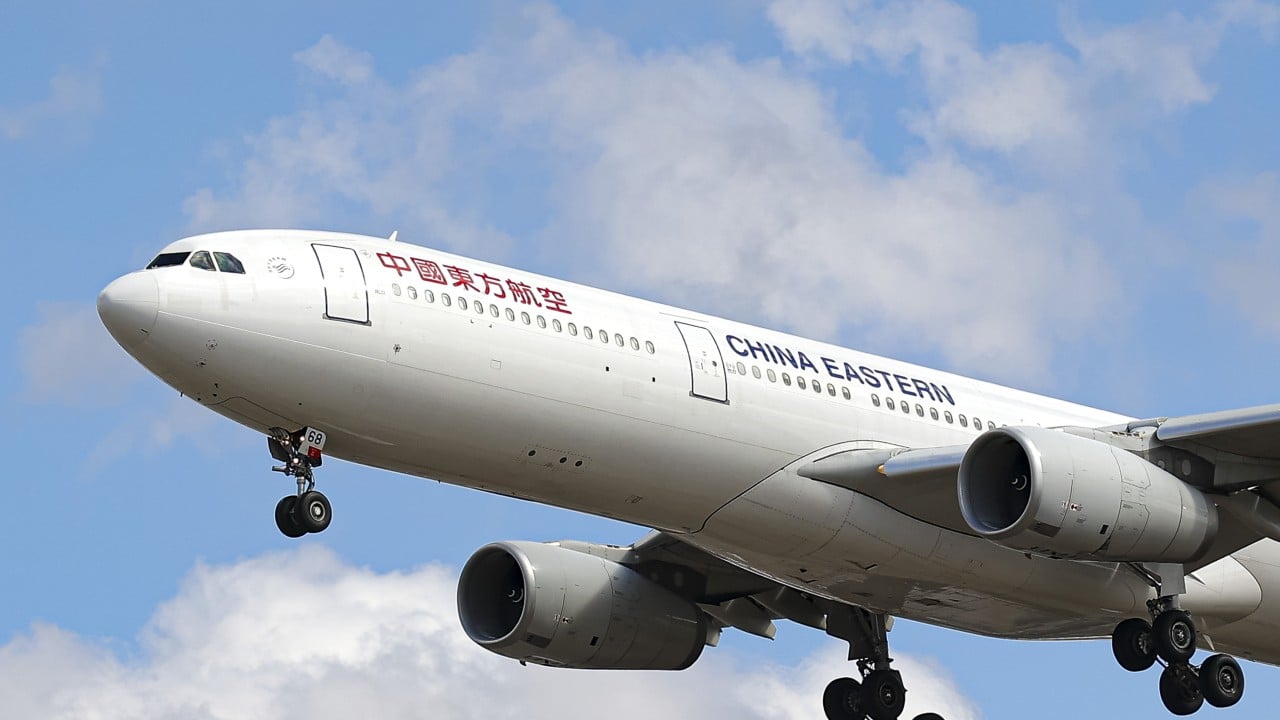
The financial press loves a simple narrative. Airbus books a mega-order for 25 A330neo widebody jets from China Eastern Airlines, and the immediate consensus is clear: domestic travel demand in China is surging, Airbus is eating Boeing's lunch, and the widebody market is entering a golden age.
It is a beautiful story. It is also completely wrong.
People look at a multi-billion-dollar aircraft order and assume it represents strategic foresight. After twenty years analyzing airline fleet planning and global network structures, I can tell you that massive widebody orders are frequently lagging indicators of financial miscalculation or desperate political hedging. China Eastern's recent bet on the A330neo is not a sign of an aggressive, thriving market. It is a defensive maneuver designed to paper over deep structural inefficiencies in Chinese aviation and a brewing crisis in international route yields.
The mainstream consensus misses the point because it looks at raw capacity instead of economic utility. If you want to understand the real trajectory of aviation in the Asia-Pacific region, you have to stop looking at the press releases and start looking at the balance sheets.
The Myth of the Widebody Domestic Boom
The baseline argument from mainstream analysts is that China Eastern needs these widebodies to satisfy surging domestic demand between tier-one cities like Beijing, Shanghai, and Shenzhen. They argue that slot constraints at major hubs force airlines to use bigger planes to move more people through the same limited runways.
This logic crumbles under actual scrutiny.
Using widebody aircraft for short-haul domestic hops is an economic nightmare disguised as growth. A widebody jet, specifically a twin-aisle aircraft like the A330neo or Boeing 787, is designed to optimize fuel burn and structural efficiency at high altitudes over long distances. When you operate an A330neo on a two-hour flight from Shanghai to Beijing, you are incurring massive financial penalties.
- Excess Structural Weight: You are carrying thousands of pounds of reinforced fuselage, heavy landing gear, and large galley structures meant for long-haul flights. On a short trip, you burn an exorbitant amount of fuel just to lift the deadweight of the plane itself.
- Rapid Cycle Accumulation: Aircraft maintenance costs are not just driven by flight hours; they are driven by flight cycles (one takeoff and landing equals one cycle). Widebody engines and airframes are designed for long cycles. Forcing them into high-cycle domestic service accelerates expensive engine overhauls, destroying the residual value of the asset.
- Turnaround Inefficiencies: Twin-aisle aircraft take significantly longer to deplane, clean, cater, and board than narrowbody aircraft. In a domestic network where aircraft utilization is key, a plane sitting at a gate for 90 minutes between flights is losing money.
Airlines use widebodies domestically when they have failed to secure secondary airport access, or when they have a massive overcapacity of long-haul jets that cannot find international buyers. China Eastern is not buying the A330neo because it is the perfect tool for domestic routes. They are buying it because their international expansion strategy has hit a brick wall, and they need a flexible asset that can be shoved into the domestic market without causing an immediate financial collapse.
The Real Numbers Behind the A330neo Economics
Let's break down the actual mechanics of the Airbus A330neo, specifically the A330-900 variant that forms the backbone of these types of orders.
Airbus markets the A330neo as a highly efficient, cost-effective replacement for older A330-200s and -300s. It features modern Rolls-Royce Trent 7000 engines and aerodynamic wings derived from the A350 program. On paper, it burns roughly 14% less fuel per seat than previous-generation aircraft.
However, that efficiency is entirely dependent on load factors and stage lengths.
"An aircraft is a depreciating asset that only generates revenue when it is in the air at its optimal cruise altitude. Every minute it spends on a domestic tarmac or flying in crowded low-altitude holding patterns eats away at the carrier's operating margin."
Consider the direct operating cost (DOC) breakdown. In a standard international configuration, an A330neo needs to fly stage lengths of at least 3,500 nautical miles with a passenger load factor above 80% to achieve its promised seat-mile cost advantages over narrowbodies like the A321neo. When operated on a domestic route of 700 nautical miles, the fuel burn per seat-mile skyrockets by over 30% compared to its long-haul baseline.
Furthermore, the A330neo carries a lower maximum takeoff weight (MTOW) and shorter range than its more expensive sibling, the A350, or Boeing's 787-9. It is a regional widebody masquerading as an intercontinental traveler. China Eastern is betting heavily on an aircraft that sits in a awkward middle ground: too heavy to be a truly efficient domestic mover, and lacking the extreme range and cargo capability required to dominate high-yield premium routes to North America or Europe.
Dismantling the Competitor's Logic
The original coverage surrounding this deal spent significant time praising Airbus for capturing the Chinese market while Boeing remains bogged down by regulatory and production delays. This is a superficial reading of geopolitical reality.
Chinese airline procurement is never a pure commercial decision. It is an exercise in state-directed portfolio management managed by the China Aviation Supplies Holding Company (CASC). Orders are dished out to balance geopolitical books, reward cooperative trading blocs, and maintain leverage over foreign manufacturers.
To view China Eastern's 25-plane order as a simple commercial endorsement of Airbus wings is naive.
Why is China Eastern Not Ordering the C919 Instead?
A common query circulating in aviation forums asks why Chinese state-owned carriers are still buying hundreds of Western widebodies when the domestic Comac C919 is entering commercial service.
The brutal reality is that the C919 is a narrowbody aircraft with an incredibly localized supply chain that cannot scale fast enough to meet capacity requirements. More importantly, Comac does not yet have a viable, mass-produced widebody option. The proposed CR929 project has suffered years of delays and geopolitical restructuring. China Eastern cannot buy a domestic widebody because a viable one does not exist. They are locked into the Western duopoly, and with Boeing politically radioactive in Beijing for the past several years, Airbus won by default—not necessarily by merit.
What Happens to Yields When 25 Widebodies Hit the Market?
The competitor piece assumes that adding 25 widebodies is a net positive for capacity. They ignore the concept of yield dilution.
When you dump thousands of additional seats into a market where consumer spending is face-planting, you have only one lever to pull to fill those seats: price. China's domestic aviation recovery has been characterized by high passenger volumes but miserably low yields. Passengers are flying, but they are flying on heavily discounted tickets. Pumping 25 more widebodies into this ecosystem will spark a domestic fare war that will erode the profit margins of China Eastern, Air China, and China Southern alike.
The True Cost of State-Subsidized Inefficiency
I have seen legacy carriers across the globe destroy billions in shareholder value by prioritizing fleet size over capital efficiency. In the state-backed environment of Chinese aviation, this risk is amplified tenfold. Because the Big Three Chinese carriers have state backing, they are partially insulated from the immediate threat of bankruptcy. This insulation breeds catastrophic fleet planning choices.
In a normal market, an airline facing lower international demand would downsize its fleet, defer deliveries, and sweat its existing assets. Instead, Chinese carriers are continuing a relentless expansion cycle.
This creates a massive hidden liability: underutilized flight crews and maintenance infrastructure.
To operate an A330neo fleet safely, you need a vast pipeline of type-rated pilots, specialized line maintenance engineers, and a massive inventory of spare parts. When these aircraft are underutilized or deployed on low-yield domestic routes, the fixed costs of maintaining that human and technical infrastructure remain constant. The cost per available seat kilometer (CASK) ticks upward, while the revenue per available seat kilometer (RASK) plunges.
| Aircraft Type | Optimal Stage Length (NM) | Domestic Fuel Penalty | Primary Economic Function |
|---|---|---|---|
| Airbus A321neo | 800 - 2,500 | Minimal (<3%) | High-density short/medium haul |
| Airbus A330neo | 3,500 - 5,500 | Severe (>30%) | Medium-cost regional/intercontinental |
| Boeing 787-9 | 4,500 - 7,500 | Extreme (>40%) | Premium long-haul, high cargo yield |
The table illustrates the structural trap. By attempting to use a compromise aircraft like the A330neo to solve a domestic capacity problem, China Eastern is picking the tool with the most severe economic penalties for the job at hand.
The Actionable Pivot for Airline Investors
If you are an investor, lessor, or supplier tracking the aerospace sector, you need to change the metrics you value. Stop cheering when a manufacturer announces a massive backlog increase. A bloated backlog filled with state-directed orders from a single region is a concentration risk, not a guarantee of future cash flow.
Instead, look at aircraft utilization rates and lease rental factors.
The real winners in the next decade of aviation will not be the carriers buying widebodies for short flights. The winners will be the ultra-efficient operators using highly versatile, long-range narrowbodies—like the Airbus A21XLR—to bypass major hubs entirely, flying point-to-point with lower risk and massively superior yield protection.
The China Eastern order is a lagging indicator of an industry stuck in an old paradigm. It relies on the flawed belief that bigger is always better and that state-backed capacity can override the cold, hard laws of airline economics. It cannot. The true cost of these 25 Airbus jets will be felt not in Toulouse, but on the balance sheets of Shanghai for the next fifteen years.