The tide recedes with a greasy sigh, leaving behind a shoreline that looks suspiciously like an invading army has set up camp.
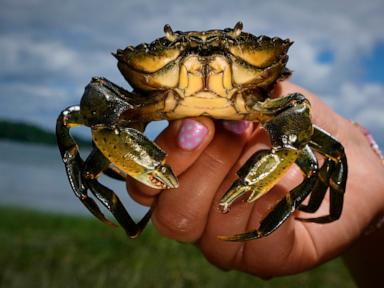
Turn over a fist-sized rock in the intertidal zone of Ipswich, Massachusetts, and you will find them. Dozens of them. Olive-green carapaces, serrated armor plates along the brow, and legs tipped in a bright, predatory orange. They scuttle sideways with frantic, jagged energy. They peer out from the rotting bladderwrack with black, bead-like eyes that radiate pure malice.
European green crabs. Carcinus maenas.
To call them guests is a linguistic failure of magnificent proportions. They are squatters. They are mobsters in a shell. And for the past thirty years, they have been staging a slow-motion blitzkrieg across the cold waters of the North Atlantic, chewing their way through the ecological foundations of the eastern seaboard.
Ask any old-timer down at the docks about the soft-shell clam flats, and watch their expression sour like milk left out in July. The mud used to yield buckets of sweet, plump bivalves with minimal effort. Now? The flats are littered with the crushed, calcified skeletons of juveniles—bleached white monuments to a quiet massacre. One green crab can decimate up to forty juvenile clams a day. They do not merely eat; they devastate. They dig up eelgrass meadows, shredging the nurseries where cod, flounder, and lobster hide during their most vulnerable days. They outcompete native species with casual efficiency, leaving biological deserts in their wake.
Scientists have wrung their hands for decades. Governments have funded studies. Environmental agencies have published white papers filled with grim projections and polite suggestions.
None of it worked. The crabs kept coming.
Until someone figured out the oldest, most reliable method of population control known to humanity.
We decided to eat them.
Consider what happens when a village faces a dragon. For generations, the villagers try appeasement, running away, or hiding behind stone walls. None of it stops the smoke on the horizon. Then, a cook steps forward with a sharp cleaver, a heavy iron skillet, and a gallon of peanut oil.
The green crab is an unlikely villain for the dinner table. Left to nature, they are fiercely armored and largely unimpressive in terms of meat volume. An adult green crab is small—rarely exceeding three inches across the shell. Compared to the massive, buttery thigh meat of a Dungeness or the sweet heft of a Jonah crab, the green variety looks like an industrial rivet with legs.
Yet herein lies the paradox of predation.
When harvested at the right moment—specifically during their fragile, fleeting molting phase—they transform. Shedding their hard shells to grow, these aggressive little tyrants become soft-shell delicacies. Fry them whole, flash-crisped in a blazing hot pan until the edges shatter like glass, and you are holding a flavor profile that makes seasoned chefs lose their composure.
It tastes like the ocean concentrated down to its absolute essence. Rich, briny, intensely sweet, with a savory mineral finish that lingers on the back of the palate long after the last bite.
Fishermen and culinary entrepreneurs along the New England coast are capitalizing on this realization. It is a brilliant, viciously simple pivot. Instead of viewing the green crab as an unstoppable plague, coastal communities are beginning to treat them as an under-fished delicacy.
The strategy requires precision. You cannot simply scoop up green crabs in January and toss them into a bouillabaisse. They are too hard, too bitter, and too full of shell fragments. But during the summer migration and molting cycles, trapping operations spike. Restaurants in Boston, Portland, and Portsmouth are quietly adding them to menus, offering crispy fried preparations that disappear faster than oysters at a raw bar.
It is poetic justice served on a bed of microgreens.
To understand why this culinary counter-offensive matters so deeply, you have to look beyond the kitchen window and out toward the marshes.
The Gulf of Maine is warming faster than ninety-nine percent of the global ocean. This thermal shift acts as rocket fuel for invasive species. While native species struggle to adapt to the rising mercury and shifting chemistry of their ancestral waters, the green crab thrives in chaos. They are thermal generalists. They tolerate wildly fluctuating salinity levels, low oxygen, and harsh winters without breaking a sweat.
When the European green crab first arrived in the United States—likely hitching a ride in the ballast water of wooden cargo ships during the early nineteenth century—it established a foothold in New York before marching methodically north. For a long time, researchers tracked their progress with mounting dread. As the waters warmed, their range expanded into Nova Scotia, Newfoundland, and beyond.
Every square foot of marshland lost to a green crab is a piece of the shoreline's structural integrity vanishing into the ether. Salt marshes are the shock absorbers of the coast. They buffer storm surges, filter agricultural runoff, and sequester carbon at rates that make terrestrial forests look lazy. When green crabs burrow into the peat and destroy the root systems of marsh grass, the soil erodes. The banks collapse. The coastline retreats.
This is the invisible stake in the ground. We are not just fighting over seafood platters or commercial clam harvests. We are fighting for the physical geography of the Atlantic margin.
And for a long time, our primary weapon was resignation.
Enter the innovators, the foragers, and the brazen restaurateurs who refuse to watch their home turn into a mud-slicked wasteland without a fight.
Picture a dock in Maine at five o'clock on a foggy Tuesday morning. The air smells of damp kelp, diesel exhaust, and salt spray. A small wooden skiff bumps rhythmically against the tires acting as bumpers along the piling. The captain hauls up a wire mesh trap, the water dripping from its sides in silver ropes.
Inside, a writhing, clicking mass of green carapaces climbs over one another in a frantic bid to escape the light.
Five years ago, those crabs would have been counted, cursed at, and dumped back into the harbor—or worse, buried in a landfill because nobody wanted them. Today, they are sorted into aerated tanks. Some are bound for experimental processors turning the shells into chitosan for biomedical uses or natural fertilizers for organic farms. But an increasing share are destined for local stockpots.
There is an undeniable satisfaction in this loop. You protect the clam flats by reducing the predator population. You reduce the predator population by catching them by the thousands. You catch them by the thousands because people are willing to pay good money to eat them. Economics and ecology lock hands in a rare, harmonious dance.
Of course, nobody is under the illusion that we will eat our way to complete eradication. The scale of the infestation is simply too vast. There are millions, perhaps billions, of green crabs scuttling beneath the surface of the North Atlantic estuaries.
Eradication is a fairy tale told to children. Control, adaptation, and mitigation are the gritty realities of the twenty-first century.
If you cannot beat them, you batter them, fry them, and serve them with a squeeze of fresh lemon and a dash of remoulade.
The sun dips below the jagged treeline of the salt marsh, painting the water in bruised shades of violet and amber. A great blue heron stands motionless in the shallows, a sentinel carved from patience and shadow.
A few yards away, beneath the surface of the murky tide, a green crab scurries across the mud, its claws raised in permanent defiance, completely unaware that the menu at the local tavern has changed.
The water laps against the hull of an anchored skiff. Somewhere down the coast, a kitchen ventilator hums into the evening air, carrying the unmistakable, mouth-watering aroma of hot oil and fried seafood out over the dark and waiting sea.