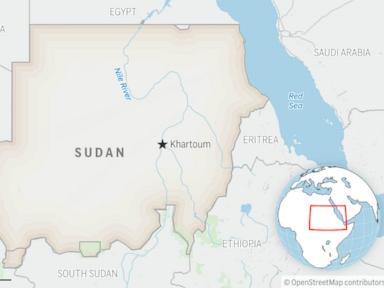
When an airstrike hits a crowded marketplace in Darfur, the immediate casualty count rarely tells the whole story. The dead are frequently local vendors, farmers, and displaced families caught in the crossfire simply because they were selling food, fuel, or basic goods to armed fighters passing through. In Sudan's ongoing civil war, the collapse of formal supply chains has turned rural markets into essential logistics hubs for combatants, eroding the legal and physical boundary between civilian commerce and military targets.
To understand why a vegetable stall or a makeshift tea stand ends up in the crosshairs of a fighter jet or drone, you have to look at how modern irregular warfare sustains itself. Neither the Sudanese Armed Forces (SAF) nor the Rapid Support Forces (RSF) maintains the kind of rigid, industrialized logistics tail seen in conventional Western militaries. Instead, forces operating across Darfur rely heavily on local procurement. Fighters need calories, water, phone credit, and vehicle repairs. They get them where everyone else does—at the local souk.
The Economics of Survival in a Collapsed State
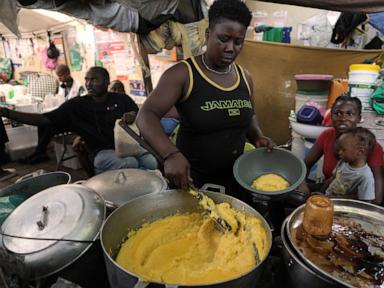
War destroys traditional employment long before it destroys human appetite. Across Darfur, banking systems have failed, agricultural cycles have been disrupted by violence, and international humanitarian aid is routinely blocked or looted before it reaches those in need. For a displaced mother or an impoverished farmer, setting up a small table to sell millet, flatbread, or tea is not a political statement. It is the only way to keep a family from starving.
When armed men with cash—or the implied threat of violence—walk up to buy that food, the vendor has no real choice. Refusing a sale to a heavily armed fighter in a lawless zone is an invitation to beatings, looting, or worse. Accepting their money puts food on the vendor's own table at the end of the day.
Yet, from five miles up in the air, an intelligence analyst or a drone operator looking at satellite imagery or real-time video feeds sees something entirely different. They see technical trucks parked near stalls. They see concentrations of uniformed or armed men gathering at predictable hours. To a military planner focused on degrading an enemy's operational capacity, that gathering looks like a logistics node. The distinction between a fighter buying lunch and a military supply depot disappears on a targeting screen.
International Humanitarian Law and the Gray Zone
Under the Geneva Conventions and customary international humanitarian law, civilians lose their protection from direct attack only if—and for such time as—they take a direct part in hostilities. Selling food, water, or general merchandise to soldiers does not meet that legal threshold. Even if a vendor sells rations to an armed group every single day, international law views that person as a civilian engaging in war-sustaining economic activity, not a combatant.
Military commanders know these rules, at least on paper. However, the law also includes the principle of proportionality. A strike on a legitimate military objective—such as a group of enemy fighters or a command vehicle—is not automatically illegal just because civilians are nearby. It becomes a war crime when the expected incidental loss of civilian life is excessive in relation to the concrete and direct military advantage anticipated.
This is where the reality on the ground in Darfur breaks down entirely.
- Intelligence deficits: Aerial reconnaissance in Sudan often lacks the granular, human intelligence needed to distinguish between a permanent military base and a temporary gathering of hungry troops at a public market.
- Weapons selection: The munitions used in these strikes—often unguided dumb bombs dropped from high altitudes or heavy artillery shells—lack the precision required to hit a single pickup truck without flattening the surrounding stalls.
- Timing: Striking a market at midday maximizes the chance of catching fighters on their break, while simultaneously ensuring maximum civilian foot traffic.
When a bomb drops on a market at noon, the resulting carnage is entirely predictable. Claiming that the target was the fighters buying soup does not absolve a military force of its obligation to take all feasible precautions to minimize civilian harm.
The Anatomy of a Market Strike
Consider a hypothetical scenario based on recurring patterns documented across North and South Darfur. A convoy of RSF vehicles rolls into a small town around 11:00 AM. The fighters disperse into the central market to buy tea, roasted meat, and phone cards. They park their vehicles along the main dirt road, right next to women selling tomatoes and sacks of sorghum.
Twenty minutes later, the hum of a reconnaissance drone is followed by the scream of an incoming munition. The blast tears through the corrugated metal roofs and wooden poles of the stalls. Shrapnel shreds the dense crowd. Because the market has no concrete bunkers and the town's single clinic lacks surgical supplies, dozens of vendors bleed out in the dust before they can be transported to a regional hospital.
By the time news of the strike reaches international monitors, the narrative is already fractured. One side claims it successfully neutralized an enemy staging area and destroyed military vehicles. Witnesses on the ground point to the bodies of bakers, butchers, and children. Both statements can be factually true at the same time, which is precisely what makes these incidents so difficult to prosecute and so easy for warring parties to spin.
Why Markets Keep Drawing Fire
If markets are death traps, why do civilians keep going to them? The answer is simple. The alternative is a slower, quieter death by starvation.
In a region experiencing acute food insecurity and localized famine conditions, a functioning market is the beating heart of community survival. It is where scarce calories are redistributed. When an airstrike destroys a market, the damage extends far beyond the immediate death toll. Surviving merchants flee, supply routes from neighboring areas dry up out of fear, and food prices skyrocket overnight.
| Impact Factor | Immediate Effect | Long-Term Consequence |
|---|---|---|
| Physical Destruction | Loss of stalls, scales, and stored grain | Total collapse of local food distribution |
| Merchant Casualties | Death or injury of experienced traders | Loss of credit networks and trade connections |
| Security Vacuum | Panic and mass displacement of residents | Abandonment of surrounding agricultural land |
| Logistics Shift | Fighters move to adjacent, untouched towns | Exportation of airstrike risk to new civilian centers |
Destroying a market does not stop an armed group from eating. Fighters have vehicles, fuel, and weapons; they simply drive to the next village and take what they need there. The civilians left behind are the ones who cannot leave, trapped in an economic dead zone with no food and no way to earn a living.
The Accountability Vacuum in Sudan
Decades of conflict in Darfur have taught armed actors a bitter lesson: there is rarely a tangible price to pay for killing civilians. Despite United Nations arms embargoes, International Criminal Court investigations, and endless diplomatic condemnations, weapons continue to flow into the region and air campaigns continue unchecked.
Without credible monitoring on the ground, warring parties operate with near-total impunity. Journalists are barred from entering active conflict zones, telecommunications blackouts frequently cut off entire states from the outside world for weeks at a time, and local human rights defenders face systematic targeting. When witnesses finally manage to get word out via satellite internet connections or after fleeing across the border into Chad, the news cycle has often moved on to another crisis.
Investigators trying to verify these strikes rely heavily on open-source intelligence—analyzing burn scars on satellite imagery, matching architectural features in survivor videos, and cross-referencing flight tracking data. While this forensic work builds an undeniable historical record, it cannot intercept a bomb in mid-air or force a commander to call off a strike when civilian density is too high.
Shifting the Calculus on Civilian Harm
Preventing the slaughter of market vendors requires more than just reminding generals about the Geneva Conventions. It demands changing the operational and diplomatic costs of indiscriminate warfare.
First, international bodies and regional mediators must push for explicit, verifiable protections for critical civilian infrastructure—specifically markets, water points, and agricultural hubs—as a non-negotiable baseline in any ceasefire or humanitarian access talks. Treating markets with the same protected status as hospitals is a practical necessity in an economy where formal aid cannot reach the population.
Second, arms suppliers and foreign backers fueling the conflict in Sudan must face direct secondary sanctions when their munitions are documented in strikes on civilian gatherings. Serial numbers recovered from bomb fragments in the rubble of a Darfur souk provide a direct paper trail back to the factories and brokers that enabled the strike. Cutting off the supply of replacement parts, aviation fuel, and drone components is far more effective than issuing strongly worded statements after the bodies are buried.
Until the forces fighting over Sudan face real material consequences for treating every crowded street corner as a free-fire zone, the people trying to survive the war will continue to pay the ultimate price simply for trying to earn a day's wage.