Half the country is going to bed hungry. That isn't hyperbole or a dramatic fundraising pitch—it's the baseline reality documented by the Integrated Food Security Phase Classification (IPC) across Haiti.
When you read standard news reports about hunger in Haiti, they usually treat it like a sudden natural disaster or a simple lack of charity. They're wrong. What's happening right now is a deliberate, man-made choke hold on food supply lines, supercharged by brutal weather patterns and a collapsing economy. Armed gangs control the roads, inflation has turned basic staples like rice and cooking oil into luxury goods, and erratic rainfall driven by El Niño has wrecked local harvests.
If you want to understand why millions of Haitians are facing emergency levels of food insecurity—and why traditional aid models are struggling to keep up—you have to look at how violence, economics, and climate interact on the ground.
Why Hunger in Haiti Is a Logistics Crisis First
People hear "famine" or "food crisis" and picture barren dirt where nothing grows. Haiti has plenty of agricultural land, especially in regions like the Artibonite Valley, which traditionally serves as the country's breadbasket. The food exists. The problem is moving it from farms to plates without getting shot or extorted.
Armed coalitions—most notably the Viv Ansanm alliance—now control roughly 80% to 90% of the capital city, Port-au-Prince, along with the major highways connecting the capital to the northern and southern peninsulas. Every time a truck carrying rice, beans, or plantains tries to reach an urban market, it has to pass through illegal gang checkpoints. Drivers pay steep "taxes" at gunpoint. Sometimes the cargo is simply stolen. Often, the drivers are kidnapped for ransom.
This changes everything for local farmers. Why spend money on seeds and fertilizer if you can't get your harvest to a buyer before it rots? Many farmers in the Artibonite Valley have abandoned their fields entirely after gangs raided rural communities, stole livestock, and destroyed irrigation systems. When domestic production drops, Haiti becomes even more reliant on imported food, which enters through ports that have themselves been repeatedly shut down or looted during spikes in gang violence.
The Brutal Math of Haitian Food Prices
Even when food makes it to market stalls in Port-au-Prince or Cap-Haïtien, ordinary families can't afford it. Haiti has been hammered by years of double-digit inflation, and food inflation consistently outpaces everything else.
Let's look at the actual mechanics of a household budget in Haiti. Most urban residents survive in the informal economy—selling goods on the street, driving moto-taxis, or doing day labor. When gang violence shuts down neighborhoods for days or weeks at a time, those daily wages drop to zero. Meanwhile, the cost of a basic food basket keeps climbing because merchants have to pass those highway extortion fees directly onto consumers.
The World Food Programme (WFP) has repeatedly warned that the cost of a basic food basket in Haiti has skyrocketed well beyond what the average family earns. Rice, maize, beans, and vegetable oil—the core staples of the Haitian diet—consume the vast majority of a household's income. People aren't skipping dessert. They're cutting back to one meal a day, pulling kids out of school to save on fees, and selling off tools or household items just to buy a bag of rice.
How Import Dependency Backfired
Haiti didn't always rely so heavily on foreign food. Decades ago, the country produced most of the rice it consumed. Trade liberalization policies in the 1980s and 1990s slashed tariffs on imported agricultural goods, flooding Haitian markets with subsidized American rice. Local farmers couldn't compete on price, so domestic agriculture withered.
Today, Haiti imports roughly half of its food supply, including over 80% of its rice. That leaves the entire population exposed to global supply chain shocks and currency fluctuations. When the Haitian gourde loses value against the US dollar, the price of imported rice jumps immediately at the port. Add gang blockades on top of currency depreciation, and you get a price spiral that crushes working families.
El Niño Turned a Bad Harvest Into a Catastrophe
As if gang warfare and economic collapse weren't enough, the weather turned hostile. A supercharged El Niño event disrupted rainfall patterns across the Caribbean, bringing prolonged dry spells followed by destructive, unseasonal downpours.
Haitian agriculture is overwhelmingly rain-fed. Fewer than 10% of farms have reliable irrigation infrastructure. When rains arrive late or fail completely during critical planting windows, crops wither in the ground. Then, when torrential rain finally hits, degraded topsoil—stripped of trees over decades of charcoal production and deforestation—washes away in flash floods.
This isn't just an environmental footnote. Poor harvests in rural departments like Grand'Anse, Nippes, and the North-West push desperate rural families to migrate into Port-au-Prince in search of work. Instead of finding jobs, they walk straight into active war zones, swelling the ranks of the internally displaced. According to the International Organization for Migration (IOM), hundreds of thousands of Haitians have been forced from their homes by violence, many living in makeshift camps inside schools and public buildings with zero access to steady income or cooking facilities.
What the IPC Data Actually Means
Humanitarian agencies measure hunger using the Integrated Food Security Phase Classification (IPC), a five-phase scale ranging from Phase 1 (Minimal) to Phase 5 (Catastrophe/Famine). You'll see these numbers thrown around in news briefs, so it helps to understand what they look like in real life.
- IPC Phase 3 (Crisis): Households either have food consumption gaps reflected by high acute malnutrition, or they are only able to meet minimum food needs by depleting essential livelihood assets—like selling their last goat or pulling children out of school.
- IPC Phase 4 (Emergency): Households face large food consumption gaps resulting in very high acute malnutrition and excess mortality, or they are forced into extreme emergency livelihood strategies.
- IPC Phase 5 (Catastrophe): An extreme lack of food and basic needs where starvation, death, and destitution are evident.
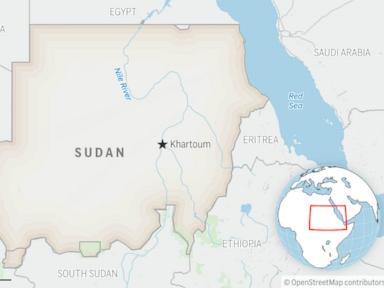
In recent IPC assessments for Haiti, nearly 5 million people—roughly half the population—have been classified in Phase 3 or worse. Over 1.6 million of those people sit in Phase 4 (Emergency), and pockets of displaced populations in Port-au-Prince have actually hit Phase 5 (Catastrophe). That puts Haiti on the same severity tier as active war zones like Sudan and Gaza.
Why Traditional Food Aid Hits a Wall
You might wonder why international charities don't just flood the country with food trucks. I've seen how people assume humanitarian aid is simply a matter of writing a check and shipping crates of grain. In Haiti, getting food into the country is only step one, and it's the easiest part.
When gangs control the ports, shipping containers sit stranded on the docks for months. WFP and partner organizations have had warehouses looted in Port-au-Prince, losing hundreds of metric tons of food meant for school feeding programs and emergency distributions. Even when aid agencies negotiate humanitarian access, gang boundaries shift overnight. A route that was safe on Tuesday might be a firefight on Wednesday.
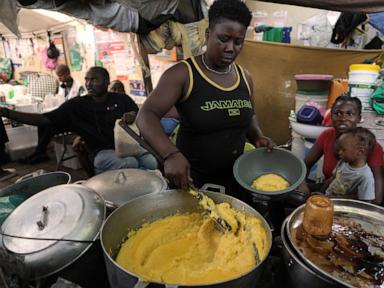
Aid groups have had to adapt aggressively. Instead of relying solely on massive shipments through Port-au-Prince, organizations like WFP have increasingly turned to local procurement—buying produce directly from Haitian farmers in safer rural areas to supply local school meals—and mobile cash transfers. Cash transfers allow families to buy food from local vendors when markets are open, injecting money into the local economy rather than undercutting local farmers with free imported grain. Still, cash only works if there's food on the shelves to buy.
Common Misconceptions About Haiti's Food Crisis
A lot of public commentary around Haiti gets bogged down in tired narratives that miss the reality on the ground.
Misconception 1: Haitians simply don't know how to farm effectively.
False. Haitian farmers are remarkably resilient and resourceful, operating under conditions that would break most commercial operations. The barrier isn't farming knowledge; it's lack of credit, destroyed irrigation canals, unaffordable fertilizer, and armed groups stealing harvests at gunpoint.
Misconception 2: Sending canned goods from abroad is the best way to help.
Honestly, shipping physical food boxes from North America or Europe is one of the least efficient ways to help. Customs bottlenecks, port closures, and exorbitant shipping costs eat up funds that could buy three times as much food locally or fund direct cash assistance.
Misconception 3: The crisis is confined to Port-au-Prince.
While the capital gets the cameras because that's where the major gang battles happen, rural departments suffer silently. When Port-au-Prince is cut off, rural farmers lose their biggest market, and rural towns lose access to fuel, medicine, and agricultural supplies that normally ship out from the capital. The entire country's economy is wired through Port-au-Prince; when the capital chokes, the provinces starve.
How You Can Actually Support Relief Efforts That Work
If you're looking at the situation in Haiti and want to do something concrete rather than just scrolling past another grim headline, focus on organizations that have deep local roots and bypass broken supply chains.
- Fund direct cash and local-purchase programs: Support organizations like the World Food Programme (WFP) or World Central Kitchen (WCK), which have established infrastructure in Haiti to source food locally and deploy mobile cash transfers directly to families.
- Back grassroots Haitian agricultural groups: Groups like Fonkoze (Haiti's largest microfinance institution) and Lambí Fund of Haiti work directly with rural cooperatives and women entrepreneurs to rebuild local food production, fund irrigation, and stabilize rural livelihoods outside gang-controlled zones.
- Skip physical food drives: Unless you are working with a vetted diaspora organization that already has cleared customs channels and secure ground transport in northern or southern Haiti, donate money rather than canned goods.
- Stay informed through primary humanitarian data: Follow the IPC Global Platform and OCHA (UN Office for the Coordination of Humanitarian Affairs) updates on Haiti rather than relying solely on sensationalized cable news clips, so you understand where displacement and acute malnutrition are shifting in real time.