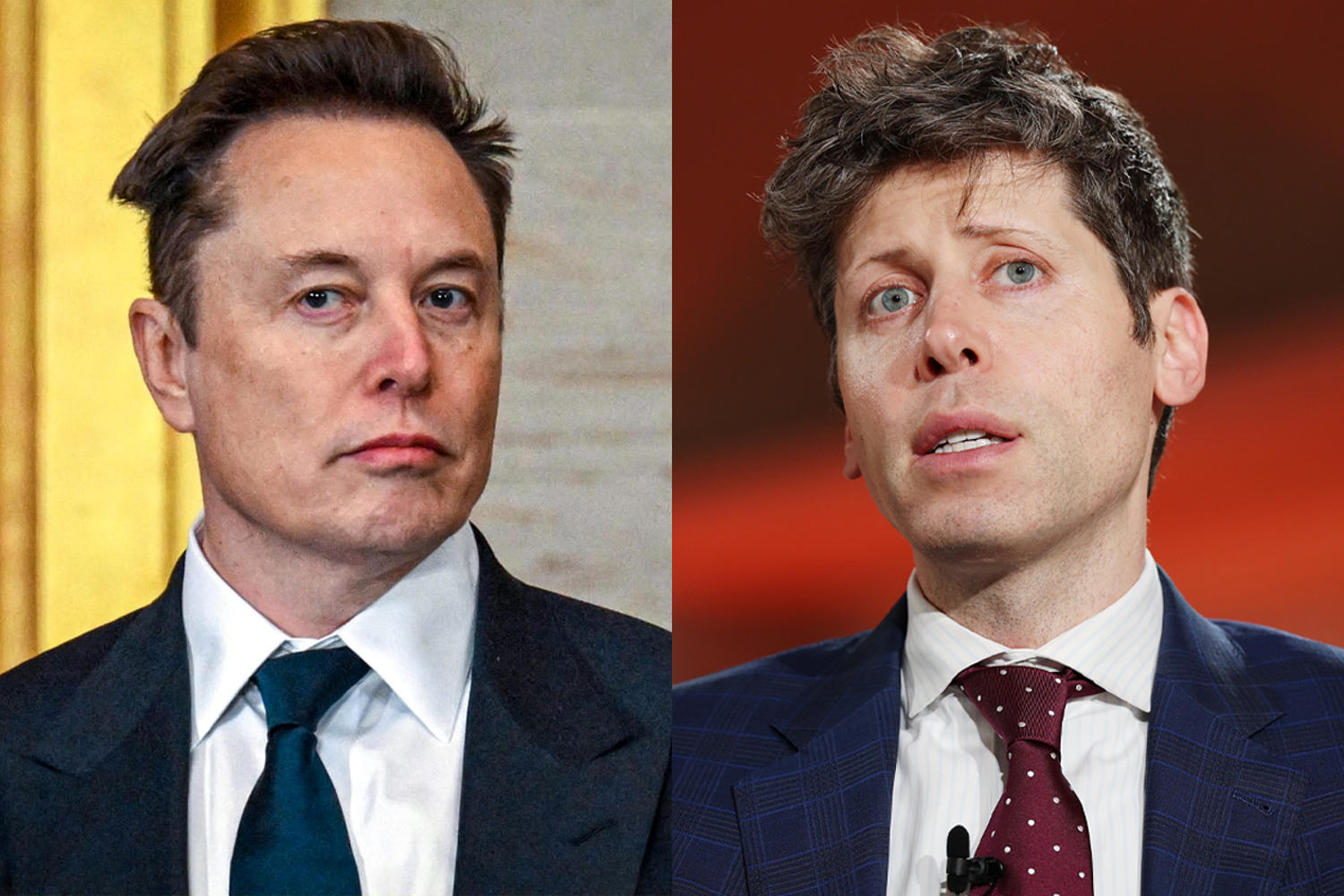
The legal confrontation between Elon Musk and OpenAI (represented by Sam Altman and Greg Brockman) is not merely a breach-of-contract dispute; it is a fundamental conflict over the definition of "Non-Profit Industrial Complexes" and the control of Artificial General Intelligence (AGI). While public discourse focuses on personality clashes, the actual risk profile centers on the enforceability of "founding agreements" versus the fiduciary duties of board members in multibillion-dollar corporate restructures. At the core of this litigation lies a trilemma between open-source transparency, the capital requirements for high-compute development, and the proprietary nature of safe AGI.
The Constitutional Conflict: Non-Profit Mission vs. For-Profit Scale
The plaintiff's argument rests on the existence of a "Founding Agreement"—a set of written and verbal commitments made during OpenAI’s 2015 inception. This agreement ostensibly bound the organization to develop AGI for the benefit of humanity, rather than for shareholder profit. From a strategic consulting lens, this creates a Legal Path Dependency. If the court recognizes these early communications as a binding contract, OpenAI's transition into a "capped-profit" entity—and its subsequent $13 billion partnership with Microsoft—constitutes a fundamental breach of its charter.
The defense, however, operates on the principle of Corporate Evolution. In Delaware and California law, the governing documents (Articles of Incorporation and Bylaws) typically supersede informal founding intent. OpenAI’s shift was predicated on the economic reality of the "Compute Cost Function." Unlike traditional software startups, AGI development requires exponential increases in capital expenditure (CapEx) for GPUs and energy.
The mechanism of the conflict is a zero-sum game between three variables:
- Open-Source Commitments: Ensuring transparency to prevent a concentrated power monopoly.
- Safety Protocols: Withholding code to prevent bad actors from utilizing advanced models.
- Capital Access: Moving to a for-profit structure to attract the billions necessary for training runs.
OpenAI argues that (1) is now incompatible with (2) and (3). Musk contends that (3) was achieved by sacrificing (1) without a legitimate safety-based justification for abandoning (1).
The GPT-4 Threshold and the Definition of AGI
The technical heart of the lawsuit is the classification of GPT-4. Under the Microsoft-OpenAI agreement, Microsoft receives exclusive rights to OpenAI’s technology until the point that AGI is reached. Once AGI is achieved, the technology is excluded from the commercial license and must be dedicated to the public good.
This creates a massive Incentive Misalignment. If OpenAI’s board—which holds the power to define when AGI has been reached—delays that declaration, Microsoft retains access to increasingly powerful models. Musk’s complaint alleges that GPT-4 is, in fact, an early-stage AGI, or at the very least, a "reasoning engine" that should fall outside the commercial scope.
The definition of AGI used by OpenAI is "a highly autonomous system that outperforms humans at most economically valuable work." This definition is problematic because "economically valuable work" is a moving target.
- The Benchmarking Bottleneck: Standardized tests (MMLU, HumanEval) show GPT-4 approaching or exceeding human baselines in specific domains.
- The Generalization Gap: Critics argue GPT-4 lacks the cross-domain reasoning required for true AGI.
- The Revenue Incentive: Declaring AGI triggers a "kill switch" on OpenAI's primary revenue stream (Microsoft), creating a structural bias against making that declaration.
The Microsoft-OpenAI Vertical Integration Risk
The relationship between OpenAI and Microsoft functions as a "Synthetic Merger." By providing compute credits (Azure) instead of just cash, Microsoft has locked OpenAI into a specific hardware and cloud ecosystem. This creates a Platform Capture dynamic.
The lawsuit challenges the "Close Loop" nature of this partnership. If OpenAI was founded as an open-source entity, the pivot to a closed-source model behind a Microsoft firewall represents a transfer of value from the public domain to a private corporation. The quantification of this value transfer is staggering: the intellectual property developed using non-profit donations is now the engine behind a trillion-dollar valuation increase for Microsoft.
The logic of the defense centers on the Safe Harbor of Business Judgment. Board members will argue that they had to pivot to a for-profit model because the alternative was obsolescence. In their view, a non-profit that cannot afford the electricity to run its models is a failed non-profit. They chose "beneficent profit" over "bankrupt altruism."
Governance as a Single Point of Failure
The November 2023 board upheaval, where Sam Altman was briefly ousted and then reinstated, serves as the primary evidence for Musk’s claim of "Regulatory Capture" by Microsoft. The shift from a board comprised of safety researchers and academics to one featuring tech executives and Larry Summers indicates a transition from a Mission-Driven Governance model to a Market-Driven Governance model.
The structural flaw here is the Fiduciary Duty Paradox. In a standard corporation, the board must maximize shareholder value. In a 501(c)(3) non-profit, the board must protect the mission. By overlaying a for-profit subsidiary (OpenAI Global LLC) underneath a non-profit parent (OpenAI Inc.), the organization created a friction point where every decision creates a potential breach of one of these two conflicting duties.
- Transparency vs. IP Protection: Disclosing research (Mission) vs. maintaining a competitive moat (Profit).
- Safety Testing vs. Speed to Market: Delaying releases to ensure alignment (Mission) vs. capturing market share (Profit).
- Compute Allocation: Giving access to researchers (Mission) vs. prioritizing commercial API customers (Profit).
Tactical Implications for the AI Ecosystem
The outcome of this trial will set a precedent for "Dual-Entity" structures in Silicon Valley. If Musk succeeds, it will signal that early-stage mission statements are legally binding, potentially chilling the use of non-profit entities as "incubators" for later commercialization. If OpenAI wins, it confirms that the "Business Judgment Rule" provides near-total immunity for boards to pivot their mission in response to market conditions.
The second-order effect concerns the Open Source vs. Closed Source bifurcated market. A victory for Musk would force a higher degree of transparency, potentially accelerating the development of Llama (Meta) and other open-source challengers by lowering the barrier to high-level architectural insights. Conversely, an OpenAI victory cements the "Black Box" model as the standard for frontier AI development.
The final strategic consideration is the Sovereign Compute factor. Governments are watching this trial to determine if AGI can be safely managed by a private board of directors or if the "Public Good" mandate requires state-level oversight. The trial essentially asks: "Is the future of intelligence a private asset or a public utility?"
The most probable path forward for organizations in this space involves a three-pronged defensive strategy:
- Hard-Coding the AGI Definition: Moving away from subjective "economic value" definitions to specific, quantifiable performance thresholds in legal contracts.
- Explicit Governance Tiering: Clearly separating the voting rights of safety-focused non-profit boards from the economic interests of for-profit investors to avoid "synthetic capture."
- Compute Diversification: Reducing reliance on a single cloud provider to maintain tactical leverage during a mission pivot.
The litigation serves as a "Stress Test" for the legal frameworks of the 21st century. Current contract law is ill-equipped to handle an asset (AGI) that could theoretically render the very concept of a "market" obsolete. The strategic play for observers is not to bet on a winner, but to hedge against the volatility that a court-ordered restructuring of OpenAI would trigger in the global GPU supply chain and the broader SaaS economy.