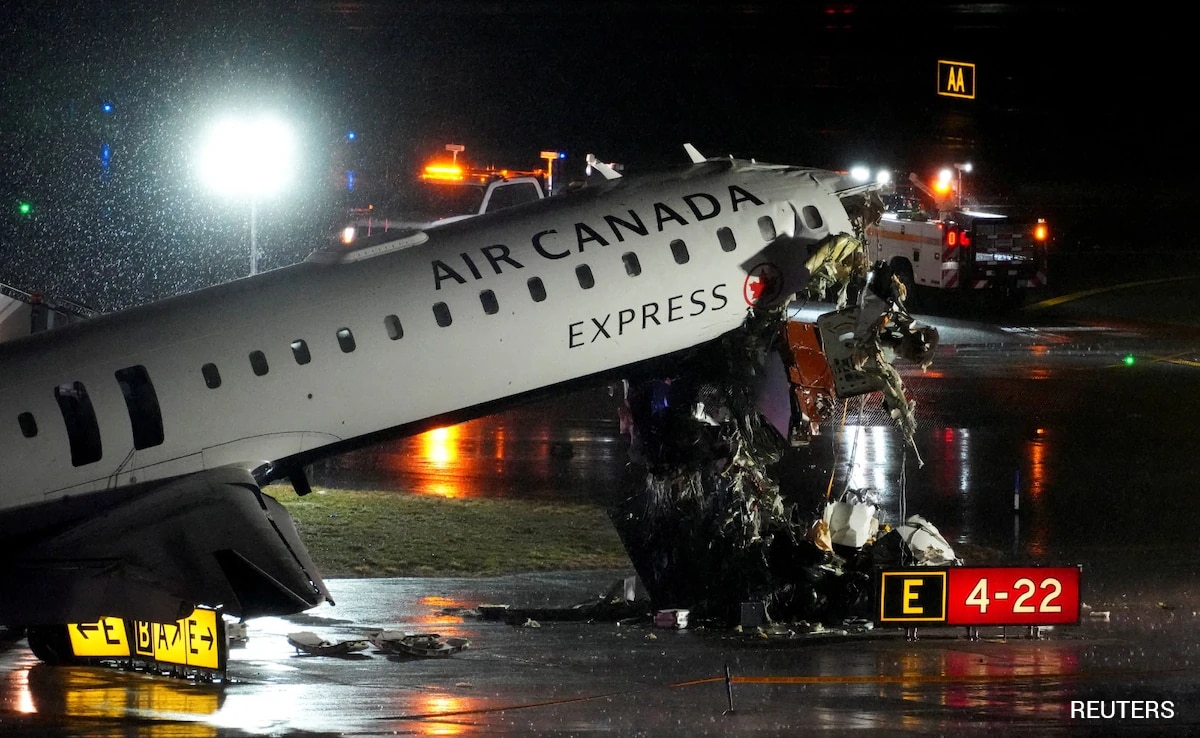
The convergence of a taxiing aircraft and a stationary vehicle is rarely the result of a single mechanical failure; it is the breakdown of a multi-layered safety system designed to prevent spatial conflicts. In the recent incident involving a Delta Air Lines Airbus A321 at Logan International Airport, the physical collision with a catering truck was the terminal event in a sequence of communication, visibility, and procedural lapses. While media reports focus on the immediate physical symptoms—the nausea and illness reported by flight attendants—a rigorous analysis must prioritize the kinematic and operational variables that allowed a massive airframe and a service vehicle to occupy the same coordinate at the same time.
The Kinematics of Ground Impact and Occupational Health
The reported illness among the cabin crew serves as a biological sensor for the force of the impact. Although an Airbus A321 is a high-mass object, even a low-speed collision with a 5-ton catering truck generates significant G-forces that are transmitted directly through the airframe. Unlike passengers, who are generally seated with seatbelts fastened during taxi, flight attendants are frequently in a state of "active cabin preparation."
This creates a specific vulnerability:
- Translational Energy Transfer: The energy of the impact is not absorbed by crumple zones as it would be in a car; instead, it travels through the aluminum or composite skin, causing a "whiplash" effect at the extremities of the aircraft (the galley and tail).
- Aerosolized Hydraulic or Fuel Stress: While nausea is often a symptom of concussion or vestibular disruption, analysts must also evaluate the "fume event" hypothesis. A collision can rupture seals in the Environmental Control System (ECS), allowing hydraulic fluid or engine oil to enter the bleed air system.
- Psychosomatic Response to Acute Stress: The sudden deceleration of a 200,000-pound machine triggers an immediate sympathetic nervous system response, which often manifests as gastrointestinal distress or dizziness.
The Triad of Ground Movement Control
Ground safety relies on three independent yet overlapping loops: Visual Separation, Radio Telephony (RT), and Transponder-based Monitoring. The failure at Logan suggests a breakdown in at least two of these pillars.
Pillar 1: The Visual Sightline Constraint
Pilots in a narrow-body aircraft like the A321 have significant blind spots, particularly regarding the wingtips and the area immediately beneath the nose. If a catering truck or tug enters the "Safety Envelope"—a predefined radius around the aircraft—it is the responsibility of the vehicle operator to maintain clearance. The truck in this instance was reportedly moving toward another aircraft, suggesting a "cross-traffic" error where the operator’s attention was fixed on their destination rather than the immediate hazard of the taxiing Delta jet.
Pillar 2: The Logic of the Taxiway Environment
Airport taxiways are governed by a strict hierarchy. Aircraft under their own power have the right of way over service vehicles. The movement of the truck toward another plane introduces a "task saturation" variable. If the driver was navigating toward a narrow window for a departing flight, their internal pressure to perform could have overridden the fundamental rule of yielding to active taxiway traffic.
Pillar 3: Electronic Surveillance Limitations
Airport Surface Detection Equipment (ASDE-X) is designed to alert controllers to potential collisions. However, the system's sensitivity is often tuned to prevent "nuisance alarms." Smaller service vehicles may not always trigger a conflict alert if their transponders are degraded or if the geometry of the encounter falls within the system's margin of error.
The Cost Function of Ground Collisions
For a major carrier, the "fender bender" is a misnomer. The financial and operational impact is calculated through a specific cost function:
$$C = (D_r + O_l) + (S_p + L_v)$$
Where:
- $D_r$ is the Direct Repair cost (structural inspection, skin replacement, sensor recalibration).
- $O_l$ is Operational Loss (re-booking 150+ passengers, crew time-outs, and flight cancellations).
- $S_p$ is the Safety Premium (increased insurance rates and regulatory scrutiny).
- $L_v$ is Liability and Victim compensation (medical evaluations for the flight attendants).
The grounding of a single A321 for a 48-hour inspection period can result in a revenue loss exceeding $250,000, excluding the actual repair costs. When crew injuries are factored in, the "soft costs" of litigation and FAA investigations can triple that figure.
Analyzing the "Moving Toward Another Plane" Variable
The most critical detail in the preliminary reports is that the truck was moving toward a different aircraft. This indicates a failure in Surface Situational Awareness (SSA).
The airport ramp is a high-entropy environment. The driver likely operated under a "confirmation bias" loop: they saw their target aircraft and assumed the path was clear because they had cleared that specific intersection a thousand times before. This is a classic "normalization of deviance" where small safety protocols (like stopping and looking at every taxiway crossing) are bypassed to save time.
Simultaneously, the flight crew of the Delta aircraft was likely focused on "heads-down" tasks—completing pre-takeoff checklists or communicating with the tower. If the truck entered their field of vision late, the sheer inertia of the A321 makes an immediate stop impossible. An aircraft traveling at 15 knots (approximately 17 mph) requires significant distance to reach a full stop, especially if the brakes are cold.
Regulatory and Technical Mitigation
To prevent the recurrence of such incidents, the industry is moving toward "Connected Ramp" technologies.
- Vehicle ADS-B: Equipping every catering truck and fuel bladder with ADS-B Out would allow pilots to see ground vehicles on their Electronic Flight Bag (EFB) displays. Currently, this is not a universal mandate, leaving a "dark zone" for pilots regarding non-aircraft obstacles.
- Automated Ground Braking: Modern avionics could theoretically integrate ground-radar data with the aircraft's braking system to initiate an emergency stop if a collision is imminent, similar to Pre-Collision Systems (PCS) in high-end automobiles.
- Enhanced Crew Briefings: Shifting the culture of "Sterile Cockpit" rules to include a more aggressive "Sterile Taxi" phase where both pilots are 100% heads-up until reaching the runway.
Structural Vulnerability of the Ground Support Tier
The ground handling sector faces a chronic labor bottleneck. High turnover and rapid training cycles for vehicle operators create a delta between "qualified" and "experienced" personnel. The driver in this incident was operating within a complex spatial puzzle where a five-second lapse in judgment results in a multi-million dollar liability.
The illness reported by the attendants is the human price of this systemic inefficiency. It highlights that ground safety is not just about protecting metal; it is about protecting the people inside who are subjected to the kinetic consequences of a ground-level navigational error.
Airlines must now move beyond simple incident reporting and implement high-fidelity telemetry on all ground vehicles. Monitoring speed, braking patterns, and proximity to active taxiways in real-time is the only way to transform the ramp from a reactive environment into a predictive one. Every catering truck must be treated with the same level of surveillance as the aircraft it serves.
The immediate strategic requirement for Delta and Logan International is a full-scale audit of the "Ground-to-Cockpit" communication link. If the truck was authorized to cross a path that was simultaneously cleared for a taxiing aircraft, the failure lies in the Air Traffic Control (ATC) Ground frequency management. If the truck was unauthorized, the failure is one of ramp security and driver training. Either path requires a fundamental redesign of the spatial handoff protocols between the terminal gates and the active taxiway system.