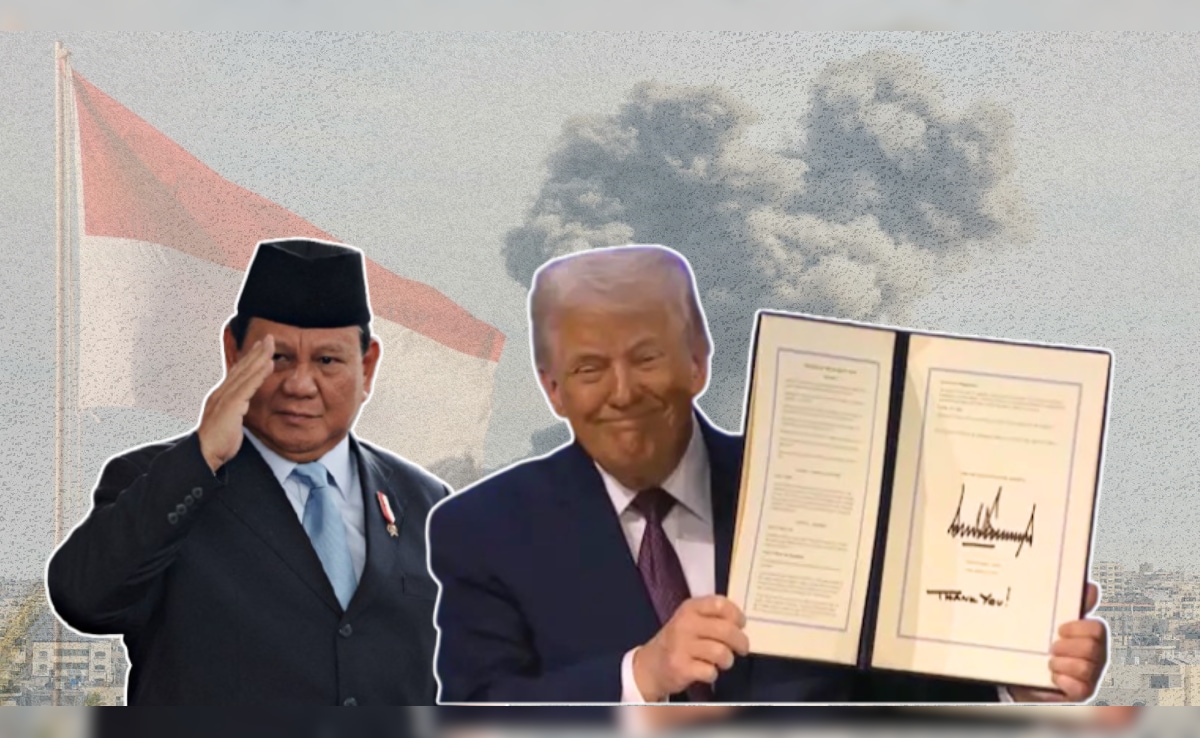
Don't expect Indonesia to pull out its checkbook for Donald Trump’s latest global venture. President Prabowo Subianto just made it clear that Jakarta isn't interested in the $1 billion "entry fee" for a permanent seat on the Board of Peace (BoP). It’s a bold stance that highlights a growing tension between Trump’s transactional diplomacy and the traditional, principled approach of Southeast Asia’s largest economy.
The "Board of Peace" sounds like something out of a mid-century utopian novel, but in 2026, it’s a very real, very controversial reality. Established after the Trump administration helped negotiate a ceasefire in Gaza back in October, the BoP was pitched as a new way to manage global conflicts outside the often-gridlocked halls of the United Nations. But there’s a catch—and it’s a massive one. If a country wants a permanent, influential seat at the table, it’s expected to pony up $1 billion.
Prabowo isn't having it. In a blunt statement recently shared on his presidential YouTube channel, the former general was unequivocal. "We never said that we wanted to contribute $1 billion," he said. "We never made any financial commitments at all."
The Price Of Peace
The idea that you can buy your way into a global peacekeeping body has ruffled feathers from Brussels to Jakarta. Critics call it "pay-to-play" diplomacy. For Trump, it’s likely seen as "burden sharing"—a way to ensure that the countries benefiting from global stability are the ones paying for its upkeep.
According to leaked drafts of the BoP charter, countries that don't pay the $1 billion can still join, but only for a three-year term. Their stay is essentially at the whim of the Board’s chair—Donald Trump himself. Permanent members, by contrast, get a lasting vote on how billions in reconstruction funds are spent. For a country like Indonesia, which has long championed the cause of Palestinian statehood, having a say in the reconstruction of Gaza is vital. But doing it through a billion-dollar "membership fee" feels less like diplomacy and more like a subscription service.
Why Jakarta Is Digging In Its Heels
Indonesia’s refusal isn't just about the money, though $1 billion is a lot for any developing nation to hand over for a "temporary mechanism." It’s about optics and national identity.
- Constitutional Mandate: Indonesia’s constitution literally says that "colonialism must be abolished... as it is incompatible with humanitarianism." Joining a body that looks like an exclusive club for the wealthy—and one chaired by a leader whose support for Israel is seen as problematic by many Indonesians—is a tough sell domestically.
- Domestic Pressure: Prabowo is walking a tightrope. He’s already faced heat from Indonesian Muslim groups for even joining the BoP in the first place and pledging 8,000 peacekeeping troops to Gaza. Critics at home, like Professor Nur Rachmat Yuliantoro from UGM, have called the move a "foreign policy blunder."
- Transactional vs. Principled: Indonesia has always stuck to an "independent and active" foreign policy. They don't like being told what to do by the West, and they certainly don't like the idea of global peace being treated like a real estate deal.
Prabowo has been smart about his rebuttal. He hasn't walked away from the BoP entirely. Instead, he’s pivoted. He’s offering "boots on the ground" instead of cash in the bank. Indonesia is still ready to send those 8,000 peacekeepers to Gaza to help keep the peace and protect civilians. In Prabowo's mind, that contribution of human life and military expertise is worth far more than a billion-dollar wire transfer.
The Problem With Trump’s Board
The Board of Peace is essentially a shadow UN Security Council. While the UN is often slow and bogged down by vetoes, the BoP is designed to be fast and decisive. But that speed comes at the cost of inclusivity. By making permanent membership a financial transaction, Trump has essentially created a hierarchy of nations.
Wealthy Gulf states like Saudi Arabia, Qatar, and the UAE have already pledged massive amounts. They’ll likely have the loudest voices in the room when it comes to deciding what the new Gaza looks like. Indonesia, despite being the world's most populous Muslim-majority nation, risks being sidelined if it doesn't pay up.
But Prabowo is betting that Indonesia's regional weight and its willingness to provide actual soldiers will make it indispensable. He’s even hinted that Indonesia might contribute financially later, through organizations like the National Alms Agency (Baznas), but only once reconstruction is actually underway and the ceasefire holds. He’s refusing to pay for the seat; he might pay for the rebuilding. There’s a massive difference there.
What This Means For The Future Of Global Diplomacy
We’re seeing a shift in how the world handles crisis. The old institutions are failing to keep up, and new, more aggressive models are stepping in. If Trump’s Board of Peace succeeds in rebuilding Gaza, it will be a major win for this brand of transactional diplomacy. But if it feels like an exclusive club for the rich, it will alienate the very countries it needs to be effective.
Indonesia’s stance is a reminder that you can't always buy influence—at least not everywhere. Prabowo has made it clear that Indonesia’s support is conditional. If the BoP doesn't actually benefit the Palestinians or if it starts to clash with Indonesia's national interests, Jakarta will walk.
Keep an eye on the other "non-paying" members. If more countries follow Indonesia’s lead and offer resources instead of cash, the BoP's $1 billion price tag might just become a suggestion rather than a rule.
If you're following the shifting dynamics of 2026's geopolitics, look closely at how other Southeast Asian nations respond to this "fee." Indonesia's move could be the blueprint for how middle powers navigate the new era of American-led, transactional international relations. Check the official statements from the Indonesian Foreign Ministry for any updates on the "on hold" status of the peacekeeping mission—it'll be the first sign of whether the relationship with the BoP is truly souring.