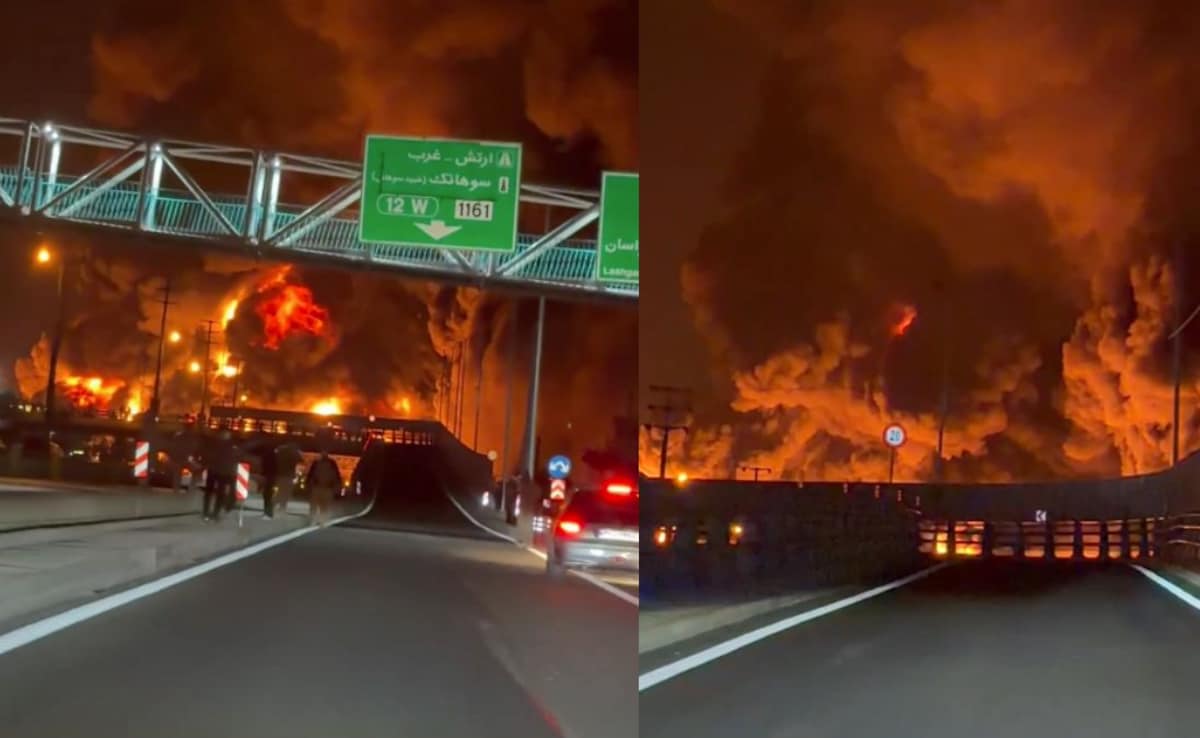
The recent diplomatic volatility between Washington and Jerusalem regarding a potential strike on Iranian oil assets reflects a fundamental misalignment in geopolitical risk calculus. While the "WTF" message reportedly sent by the White House functions as a rhetorical marker of frustration, the underlying conflict is rooted in a disagreement over the kinetic management of global energy markets. The strategic divergence centers on whether the degradation of Iranian economic capacity outweighs the systemic risk of an oil price shock during a sensitive domestic political window in the United States.
The Trilemma of Regional Containment
The Biden administration’s reaction to a potential strike on Iranian oil fields is best understood through a three-variable pressure system. Policymakers are attempting to balance:
- Regime Attrition: Diminishing the Islamic Revolutionary Guard Corps’ (IRGC) ability to fund regional proxies.
- Price Stability: Preventing a supply contraction that could spike Brent Crude prices and trigger inflationary cycles.
- Escalation Management: Avoiding a direct, sustained conflict between Israel and Iran that would force U.S. military intervention.
Israel’s objective functions differently. The Israeli security establishment views the Iranian energy sector not merely as a commodity market, but as a strategic fuel tank for Hezbollah and Hamas. From this perspective, the short-term global economic cost is secondary to the long-term objective of neutralizing an existential threat. When the White House reacts with incredulity to these plans, they are signaling that Israel has reached the upper bound of the U.S. "Escalation Budget."
The Mechanics of an Energy Shock
An attack on the Kharg Island terminal—which handles roughly 90% of Iran's crude exports—would remove approximately 1.5 to 1.8 million barrels per day (mb/d) from the global market. While this represents less than 2% of global supply, oil prices are determined at the margin.
The volatility is not dictated by the loss of volume alone, but by the uncertainty of the response function. If Iran responds by targeting production facilities in the Saudi Eastern Province or the United Arab Emirates, the supply loss could scale from 1.5 mb/d to over 10 mb/d. This creates a "tail risk" that the U.S. Treasury Department views as unacceptable. The diplomatic friction arises because Israel operates on a logic of tactical necessity, while the U.S. operates on a logic of global macroeconomic defense.
The Intelligence Asymmetry Gap
The reported "WTF" message suggests a breakdown in the De-confliction Protocol. In standard alliance management, "no-surprises" policies ensure that strategic partners can prepay the political costs of a strike. When Israel bypasses these channels or presents a target list that includes global economic chokepoints, it creates a tactical vacuum.
The U.S. intelligence community likely views an oil strike as a "low-reward, high-risk" maneuver. Because China is the primary purchaser of Iranian oil, a strike would theoretically damage the Chinese economy more than the American one. However, the resulting global price hike would hurt the U.S. consumer at the pump. This creates a perverse incentive where the U.S. is effectively protecting the energy infrastructure of its primary Middle Eastern adversary to maintain domestic economic equilibrium.
The Escalation Ladder and Proportionality
Geopolitical conflict follows a predictable ladder of escalation. The transition from targeting military infrastructure (missile silos, command centers) to economic infrastructure (oil refineries, power grids) represents a significant jump in intensity.
- Level 1: Military-to-Military: Striking IRGC bases. This is generally accepted as "proportional."
- Level 2: Dual-Use Infrastructure: Striking transport hubs or communication nodes.
- Level 3: Strategic Economic Assets: Striking oil fields. This signals an intent to cause state collapse or severe civil unrest.
By moving toward Level 3, Israel is testing the limits of the Carter Doctrine, which states that the U.S. will use military force, if necessary, to defend its national interests in the Persian Gulf. Ironically, the U.S. is now using the logic of the Carter Doctrine to restrain its own ally, fearing that the "defense of interests" would require a massive naval mobilization to keep the Strait of Hormuz open following an Israeli strike.
The Cost of Strategic Ambiguity
The lack of a unified front creates a "deterrence deficit." If Iran perceives that the U.S. is actively restraining Israel, the IRGC gains a psychological advantage. They recognize that their energy infrastructure is being shielded by American economic anxiety. Conversely, if Israel proceeds despite U.S. warnings, the resulting rift weakens the perceived strength of the U.S.-Israel security umbrella.
The friction is exacerbated by the timing. In an election year, the "Price of Gasoline" is a critical political metric. Any action that threatens to raise that price is viewed by the White House not as a foreign policy maneuver, but as a domestic political threat. This creates a Political Bottleneck where foreign policy is dictated by the fluctuations of the retail fuel market.
Strategic Realignment Requirements
To resolve this impasse, the U.S.-Israel coordination must shift from reactive messaging to a "Structured Contingency Framework." This requires three immediate adjustments:
- Redefining High-Value Targets: Shifting the target list toward the "shadow fleet" logistics and the financial nodes that facilitate oil sales, rather than the physical extraction sites. This achieves the goal of revenue degradation without triggering an immediate physical supply shock.
- Pre-positioned Market Buffers: Coordinating with OPEC+ (specifically Saudi Arabia) to ensure spare capacity is brought online the moment a strike occurs. This mitigates the "fear premium" in the markets.
- Formalized "No-Go" Zones: Establishing clear boundaries for what constitutes a manageable strike versus a systemic risk.
The current diplomatic shouting match is the result of trying to solve a 21st-century proxy war with 20th-century diplomatic tools. Until the U.S. can decouple its domestic economic stability from Middle Eastern energy output, Israel will continue to view U.S. restraint as an obstacle to its national survival, and the U.S. will continue to view Israeli initiative as a threat to its global economic standing.
The immediate strategic play for Israel is to pivot away from Kharg Island and toward the Refined Product Infrastructure. By targeting refineries that produce fuel for internal Iranian consumption rather than crude for export, Israel can inflict maximum pain on the Iranian regime with minimal impact on the global Brent Crude price. This bypasses the U.S. "Price Stability" constraint while still delivering a Level 3 escalation.
Would you like me to analyze the specific logistics of Iran's "Shadow Fleet" and the tactical feasibility of a maritime-only containment strategy?