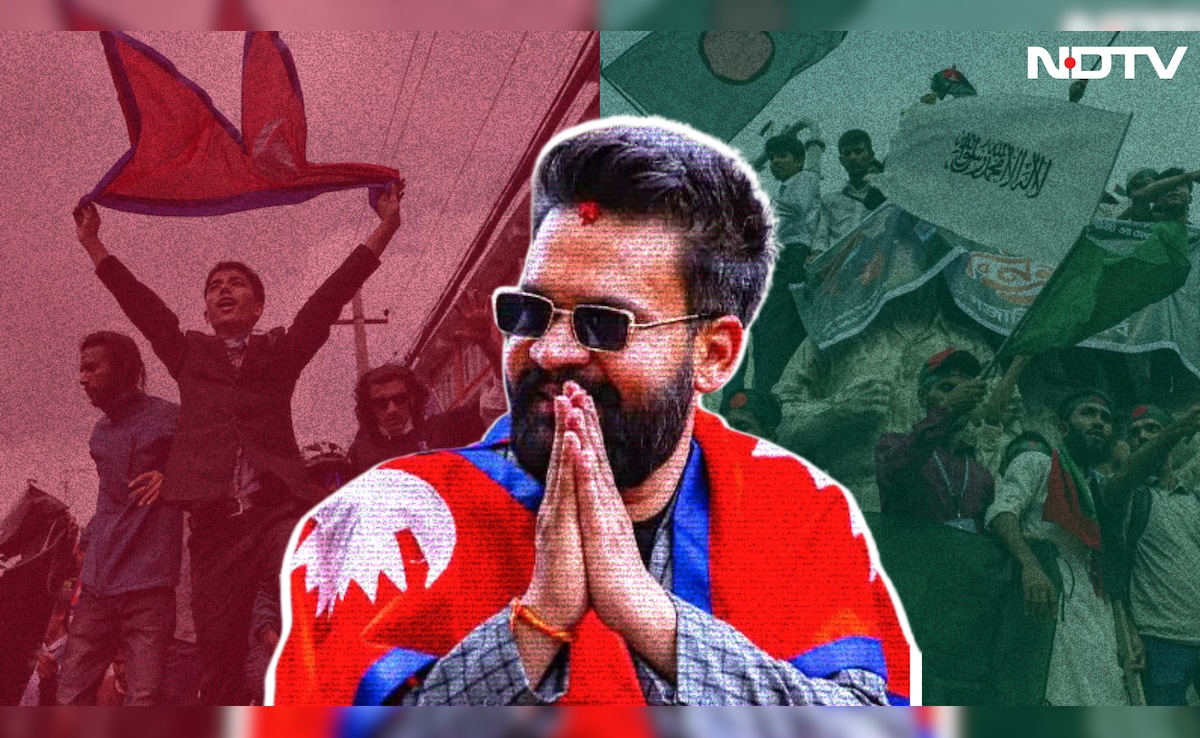
The emergence of Gen Z candidates in Nepal’s local and federal elections is not a decorative trend or a peripheral "youth wave" but a fundamental recalibration of the country’s political cost-benefit analysis. While media narratives often center on the charismatic "Balen Effect," the underlying data suggests a more systemic shift: a transition from patronage-based mobilization to high-leverage digital visibility. This shift effectively lowers the barrier to entry for independent candidates who lack the capital-heavy infrastructure of traditional parties like the Nepali Congress or the CPN-UML. To understand this transition, one must analyze the convergence of three distinct variables: the collapse of traditional gatekeeping, the professionalization of the "Independent" brand, and the demographic density of the digital-native electorate.
The Erosion of the Patronage Monopoly
For decades, the Nepali political system functioned on a vertical hierarchy where local leaders traded votes for access to state resources. This created a high financial barrier to entry; if a candidate could not guarantee patronage or fund a massive ground campaign, their viability was zero. Gen Z candidates have disrupted this model by utilizing a horizontal communication structure.
In this new model, the Customer Acquisition Cost (CAC) of a voter is drastically reduced through organic social media reach. Traditional parties operate on a high-burn rate, requiring physical rallies, transportation, and "cadre management" (the distribution of funds to local workers). Conversely, Gen Z independents utilize a zero-marginal-cost distribution model. A single viral video on TikTok or a focused policy breakdown on YouTube reaches the same density of voters as a regional rally, but at a fraction of the physical and financial risk. This creates a "lean startup" approach to governance, where candidates test their platform with minimal overhead before scaling into formal campaigns.
The Three Pillars of the New Political Electorate
The success of younger candidates is supported by a specific triad of voter motivations that differ significantly from the ideological loyalty of the 1990s and 2000s.
- The Competency Premium: Voters are increasingly de-prioritizing "struggle history"—the years spent in prison or underground by old-guard leaders—in favor of technical proficiency. This is visible in the demand for candidates with backgrounds in engineering, law, and urban planning. The "struggle narrative" has reached a point of diminishing returns.
- Digital Accountability Cycles: Gen Z voters utilize a real-time feedback loop. Unlike the five-year silence between elections typical of the older guard, younger candidates maintain a persistent digital presence. This creates a perceived "shortened distance" between the voter and the representative, fostering a sense of psychological ownership over the candidate’s success.
- The Identity of the Non-Aligned: There is a growing demographic of "swing voters" who are no longer bound by family political affiliations. In urban centers like Kathmandu, Chitwan, and Dharan, the rejection of the Party-less or Multi-party binary has led to a vacuum that Gen Z candidates fill with hyper-local, issue-specific platforms.
The Infrastructure of Independent Mobilization
To classify these new poll stars merely as "viral sensations" ignores the tactical sophistication of their campaigns. Many Gen Z candidates are applying professional project management principles to their ground games. The "Beyond Balen" cohort—including figures like Ranju Darshana, Sobita Gautam, and Dr. Toshima Karki—utilized specific structural levers:
- Volunteer-to-Voter Ratios: Instead of paid cadres, these campaigns rely on volunteer networks driven by shared ideological goals. This shifts the labor cost from a financial liability to a social asset.
- Data-Driven Geographic Targeting: Using available census data and social media analytics, campaigns are now identifying high-yield wards where a small shift in independent sentiment can overcome a split party vote.
- Policy Granularity: Traditional manifestos in Nepal are often broad, promising vague national prosperity. Gen Z candidates tend to focus on "micro-governance"—sewage, traffic management, transparency in local spending, and digitizing bureaucracy. This specificity builds trust because the outcomes are measurable and immediate.
The Risks of the "Founder Syndrome" in Politics
The primary threat to this movement is the lack of a sustainable institutional framework. Most Gen Z success stories in Nepal operate as "solo-preneurs" in the political space. This creates a bottleneck. While an individual can win a seat through charisma and a low-cost digital strategy, they often lack the legislative "buffer" needed to pass bills or influence a parliament dominated by entrenched parties.
The "Independent" label functions as a powerful brand during an election, but it becomes a liability in a parliamentary system designed for collective bargaining. Without the support of a caucus, these younger representatives risk being sidelined or co-opted. This is the Scalability Paradox: the very independence that makes them attractive to voters limits their ability to deliver complex, multi-stakeholder results.
The Transformation of Political Capital
We are seeing a shift from Physical Capital (land ownership, family name, muscle power) to Symbolic Capital (digital influence, academic credentials, perceived integrity). In the 2022 elections, the ratio of votes per dollar spent was significantly higher for younger independents than for established party candidates.
However, the mechanism of "virality" is volatile. A candidate who rises on a wave of social media sentiment is equally vulnerable to a rapid decline in that same sentiment if they fail to produce immediate "optics" of success. Unlike party candidates, who have a floor of support from loyal cadres regardless of performance, independents have a much higher "churn rate." Their survival depends on constant high-performance or the successful transition from an independent "star" to a member of a disciplined, youth-led political organization.
Strategic Trajectory for the Next Election Cycle
For the Gen Z political movement to move from a series of "outlier events" to a permanent shift in the Nepali state apparatus, the strategy must pivot from disruption to institutionalization.
The current bottleneck is the fragmentation of the youth vote across too many independent candidates. In the upcoming cycles, the logical move is the formation of a "Platform Party"—a structure that provides the logistical and legal support of a party while maintaining the decentralized, competency-focused brand of an independent. This would allow for a shared resource pool (legal defense, data analytics, media production) while mitigating the risks of individual burnout.
The era of the "Political Dynasty" in Nepal is not ending because of a moral shift, but because the economics of the system have changed. The old guard is holding onto a high-cost, low-efficiency model in a market that now demands high-transparency and low-overhead. The candidates who win in the next five years will be those who treat their constituency not as a "vote bank" to be managed, but as a community of stakeholders requiring a return on investment.
The strategic play for any emerging leader is to move beyond the aesthetic of youth and into the mechanics of institutional power. This requires building a "shadow cabinet" of technical experts long before the first ballot is cast. The winners will not be the loudest on TikTok, but those who can translate digital sentiment into a disciplined, multi-cycle voting bloc that survives the inevitable backlash from the established order.


