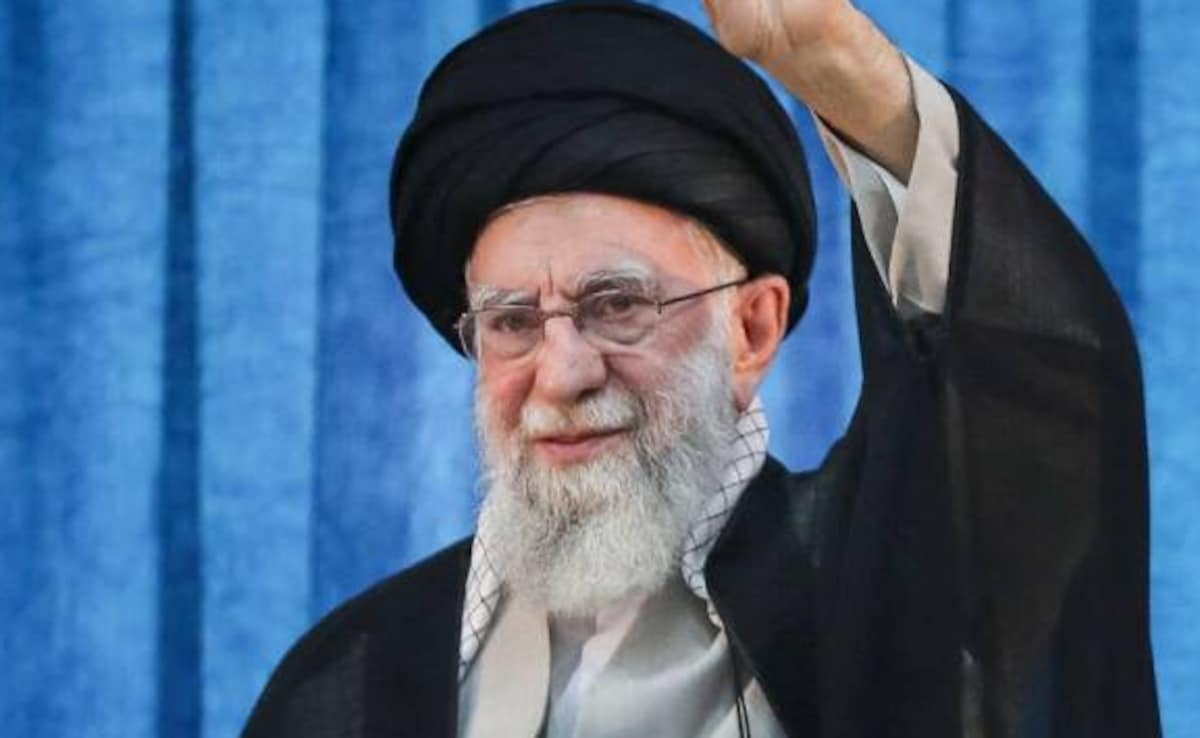
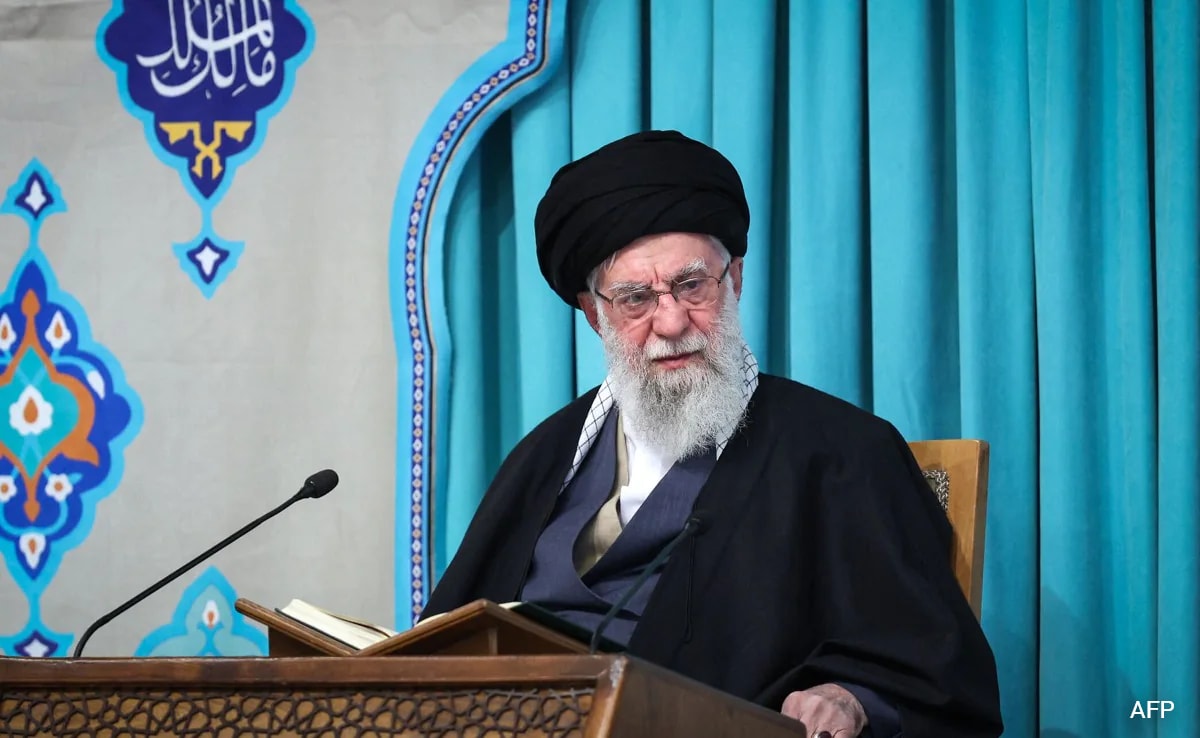
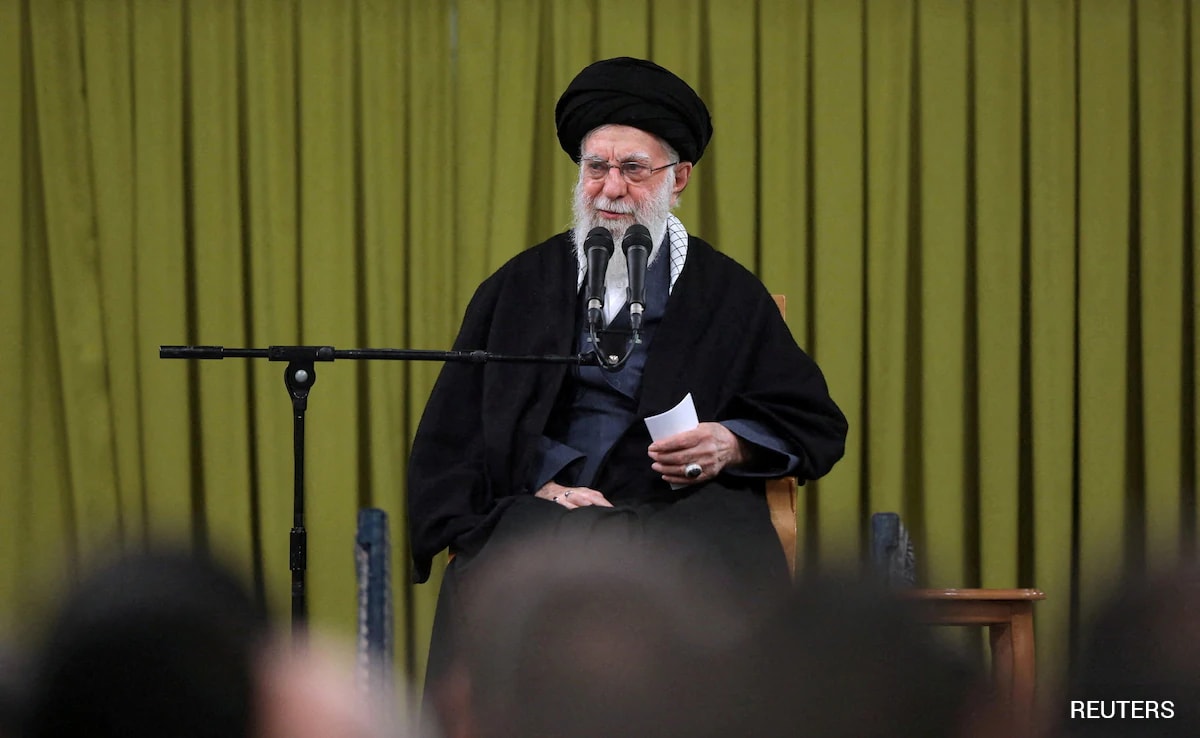
The transition from shadow warfare to direct state-on-state kinetic exchange marks a fundamental shift in Middle Eastern escalation dynamics. When a sovereign state responds to the decapitation of its leadership, the objective is rarely pure destruction; it is the restoration of deterrence through a calibrated display of reach and penetration. To analyze the Iranian response to the death of a Supreme Leader, one must look past the emotive descriptors of "ferocity" and instead quantify the operation through the lens of missile physics, integrated air defense (IAD) saturation, and the economic toll of defensive attrition.
The Triad of Escalation Management
Iran’s military doctrine in high-stakes retaliation rests on three distinct pillars. These variables dictate whether an attack is a symbolic gesture or a structural shift in regional security.
- Volume of Fire vs. Precision Probability: The use of mass-produced loitering munitions, such as the Shahed series, serves as a "screen" to exhaust interceptor inventories. By forcing a defender to expend a $2 million interceptor on a $20,000 drone, Iran achieves economic parity even if the drone is destroyed.
- The Geographic Breadth of the Strike: Attacking from multiple vectors (Western Iran, Yemen, and Southern Lebanon) creates a 360-degree threat profile. This forces the defender to distribute their radar coverage and engagement assets, reducing the probability of a 100% intercept rate.
- Signal Transmission: The choice of targets—military intelligence hubs versus civilian population centers—communicates the intended ceiling of the conflict. A strike on a desert airbase is a tactical warning; a strike on a financial district is an invitation to total war.
Quantifying the Attrition Ratio
The effectiveness of any "ferocious" attack is measured by the Leakage Rate: the percentage of munitions that bypass the multi-layered defense shield. In modern engagement, this is a function of terminal velocity and maneuverability.
- Subsonic Cruise Missiles: These are easily tracked and intercepted by conventional aircraft and mid-tier batteries. Their primary value is in timing; they arrive simultaneously with other assets to overwhelm the decision-making cycle of the Command and Control (C2) nodes.
- Ballistic Missiles: The Fattah or Kheibar-type missiles operate on high-arc trajectories. The "ferocity" here is found in the kinetic energy upon reentry. Even if intercepted, the debris field of a ballistic missile traveling at several times the speed of sound causes significant localized damage.
- Hypersonic Claims: Iranian claims of hypersonic capability introduce a psychological variable. If a missile can maneuver at speeds exceeding Mach 5, it reduces the "decision window" for automated defense systems from minutes to seconds.
The cost-exchange ratio favors the attacker. A massive salvo may cost Iran $100 million in hardware, but the combined cost of the interceptors (Arrow, Patriot, and naval-based SM-3s) plus the economic downtime caused by nationwide alerts can exceed $1 billion per engagement.
The Structural Failure of Rhetorical Deterrence
Vague media terminology often obscures the reality that "total war" is a logistical impossibility for a sanctioned economy. Iran’s strategy is not to defeat a superior technological power in a head-to-head conventional battle but to make the cost of maintaining the status quo unsustainable for the adversary.
The death of a Supreme Leader creates a "legitimacy vacuum." The regime must respond with enough visible force to satisfy internal hardline factions and regional proxies (the "Axis of Resistance"), while avoiding a response that triggers a decapitation strike against their own remaining infrastructure. This creates a narrow Escalation Corridor. If the attack is too weak, the regime looks fragile; if it is too strong, it invites an existential counter-strike.
The Feedback Loop of Proxy Coordination
The coordination with non-state actors in Iraq, Syria, and Lebanon acts as a force multiplier. This "distributed lethality" means that even if Iran’s domestic launch sites are neutralized, the threat remains active across several borders. This complicates the adversary's targeting logic: do they strike the source (Iran) or the symptom (the proxies)? Striking the source is an escalation to regional war; striking the symptom is a tactical treadmill that yields no long-term resolution.
Intelligence Parity and the OODA Loop
The success of any retaliation depends on the Observe-Orient-Decide-Act (OODA) loop. In historical "massive" strikes, the element of surprise is often sacrificed for the sake of political signaling. By telegraphing the intent to strike through diplomatic channels, Iran allows the adversary to prep their defenses, effectively "choreographing" the escalation.
- Cyber Integration: A physical strike is almost always preceded by attempts to blind or delay early warning radars through electronic warfare or cyber intrusions.
- Sensor Saturation: The sheer number of objects in the air (decoys, flares, and multiple types of drones) is designed to create "ghost tracks" on radar screens, forcing the defender to prioritize targets under extreme duress.
The limitation of this strategy is the Depletion Variable. Iran has a finite stock of high-end precision-guided munitions (PGMs). A "ferocious" attack that fails to destroy critical infrastructure or significantly degrade the enemy's offensive capability is a strategic net loss. It reveals the extent of one's reach while depleting the very arsenal meant to deter a follow-up invasion.
The Economic Barrier to Sustained Conflict
War is a function of industrial capacity. While Iran has developed a robust domestic missile industry, it lacks the deep-water naval power or the advanced air force required to hold territory or enforce a long-term blockade. Therefore, the "most ferocious attack in history" is likely a singular, high-intensity event designed to force a ceasefire or a return to the negotiating table from a position of perceived strength.
The bottleneck for the Iranian military is the replacement rate of sophisticated components. Sanctions have forced an emphasis on quantity over quality. In a prolonged exchange, the technological gap between Iranian munitions and Western-aligned defense systems would widen as the most advanced Iranian assets are expended in the opening salvos.
The Strategic Play
The transition from shadow to surface indicates that the previous "Rules of Engagement" are obsolete. To navigate this new environment, observers must ignore the hyperbole of state media and focus on the Damage Assessment/Cost Ratio.
If the objective is to ensure the survival of the clerical establishment post-Supreme Leader, the military will prioritize the protection of the nuclear program and internal security apparatus over a total victory in the Levant. The strategic recommendation for regional actors is to prepare for "Persistent Asymmetry"—a state of perpetual high-tension where the threat of a massive strike is used as a diplomatic lever rather than a prelude to a ground invasion.
The immediate tactical move is the reinforcement of theater-wide integrated air defenses and the hardening of energy infrastructure. The battle is no longer about who has the bigger bomb, but who has the more efficient "shield" and the deeper pockets to keep it powered. The next phase of this conflict will be defined by the endurance of the defender's logistics rather than the initial violence of the attacker's opening move.