The world woke up today to a reality that energy analysts have spent decades losing sleep over. On March 1, 2026, the Strait of Hormuz isn't just a geographical chokepoint; it's a no-go zone. Following the massive U.S. and Israeli airstrikes on February 28—a campaign codenamed Operation Epic Fury—the Islamic Revolutionary Guard Corps (IRGC) has effectively pulled the plug on the world's most vital artery for oil and gas.
If you're looking for a formal, legally binding declaration of closure from the Iranian government, you won't find it yet. But for the captains of the 150-plus tankers currently dropping anchor in open waters, the distinction doesn't matter. When the IRGC broadcasts over VHF radio that "no ship is allowed to pass," and you see smoke rising from a Palau-flagged tanker hit north of Khasab Port, you don't ask for a permit. You stop.
The 20 Million Barrel Question
We aren't talking about a minor supply glitch here. This is a systemic collapse of the energy status quo. Roughly 20% to 30% of global seaborne oil flows through this narrow strip of water. That's about 20 million barrels of crude every single day.
Most people don't realize how fragile the geography actually is. The strait is only 21 miles wide at its narrowest point. The actual shipping lanes? They're just two miles wide in either direction. It's a shooting gallery for a military force that specializes in asymmetric warfare. By using drones, sea mines, and shore-based missiles, Iran doesn't need a massive navy to win. They just need to make the insurance premiums so high that no sane company will send a hull into the Gulf.
What's actually happening on the water
- The Skylight Attack: A small products tanker, the Skylight, was struck today. While it only carries about 80,000 barrels, the message was loud and clear. Total evacuation of the crew. Multiple injuries.
- Electronic Warfare: Reports are streaming in of massive GPS jamming and AIS (Automatic Identification System) spoofing. Ships don't know where they are, and the U.S. Fifth Fleet is struggling to provide a "safe" corridor when the digital ground is shifting under their feet.
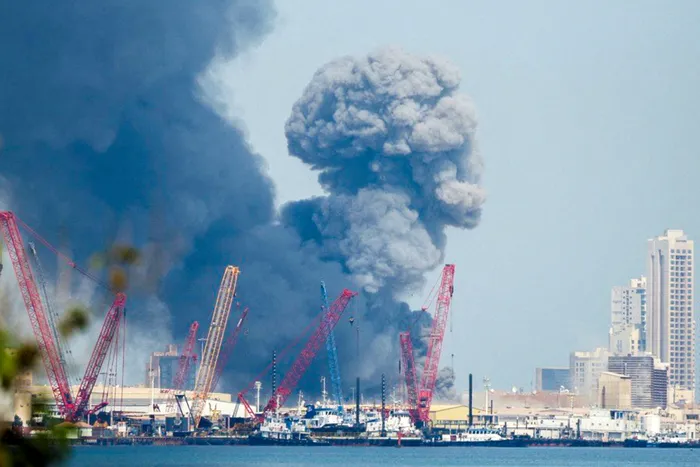
- Port Shutdowns: DP World has suspended operations at Jebel Ali in Dubai. Ports in Bahrain and Oman are effectively ghost towns.
Why This Time Feels Different
We've seen Iran rattle the saber before. Usually, it's a bluff. Tehran knows that closing the strait is a suicide pact because it also kills their own ability to export oil. But the context of March 2026 is fundamentally different.
The death of Supreme Leader Ayatollah Ali Khamenei in the recent strikes has removed the "old guard" of strategic patience. The IRGC is now operating in a "nothing to lose" vacuum. When a regime feels its core survival is at stake, economic self-interest goes out the window. They aren't trying to win a trade war; they're trying to set the house on fire because they're trapped inside.
The $100 Oil Floor
On Friday, Brent crude was sitting around $73. By the time markets open on Monday, analysts are bracing for an immediate jump to $100. If this blockade lasts more than 72 hours, we're looking at $120. If infrastructure—like the massive processing plants in Saudi Arabia or the LNG terminals in Qatar—gets hit, $200 isn't just a doomsday prediction. It's a math problem.
The ripple effect is going to hit your wallet faster than you think.
- Inflation Spike: For every $10 increase in oil, global inflation jumps by about 0.5%.
- Fertilizer Crisis: The Strait is a primary exit point for urea and ammonia. If the ships don't move, global crop yields for 2026 are going to crater.
- The China Factor: 80% of the oil through Hormuz goes to Asia. China is the biggest customer. If they can't get Gulf oil, they'll start outbidding Europe and the U.S. for Atlantic supplies, driving prices up everywhere.
Navigation in the New Dark
U.S. Central Command (CENTCOM) says they'll escort commercial vessels. Sounds great in a press release. In practice? It's a nightmare. Trying to protect a 300-meter-long supertanker from a swarm of $20,000 suicide drones is like trying to protect a whale from a thousand piranhas.
Insurance companies like Marsh and Lloyd’s of London have already started canceling "war risk" policies for the region. Without insurance, a ship doesn't move. Period. Even if the U.S. Navy clears a path, the lawyers might still keep the fleet at anchor.
The "Strait of Hormuz risk" used to be a footnote in an investment prospectus. Today, it's the only headline that matters. We're moving into a period where energy security isn't about price—it's about physical availability.
If you're holding energy stocks or commodities, watch the VHF reports from the UK Maritime Trade Operations (UKMTO) more than the official Iranian state media. The truth is on the water, not in the briefings. Keep an eye on the "anchorage clusters" off the coast of Fujairah. If those clusters start to grow, the global economy is officially on life support.