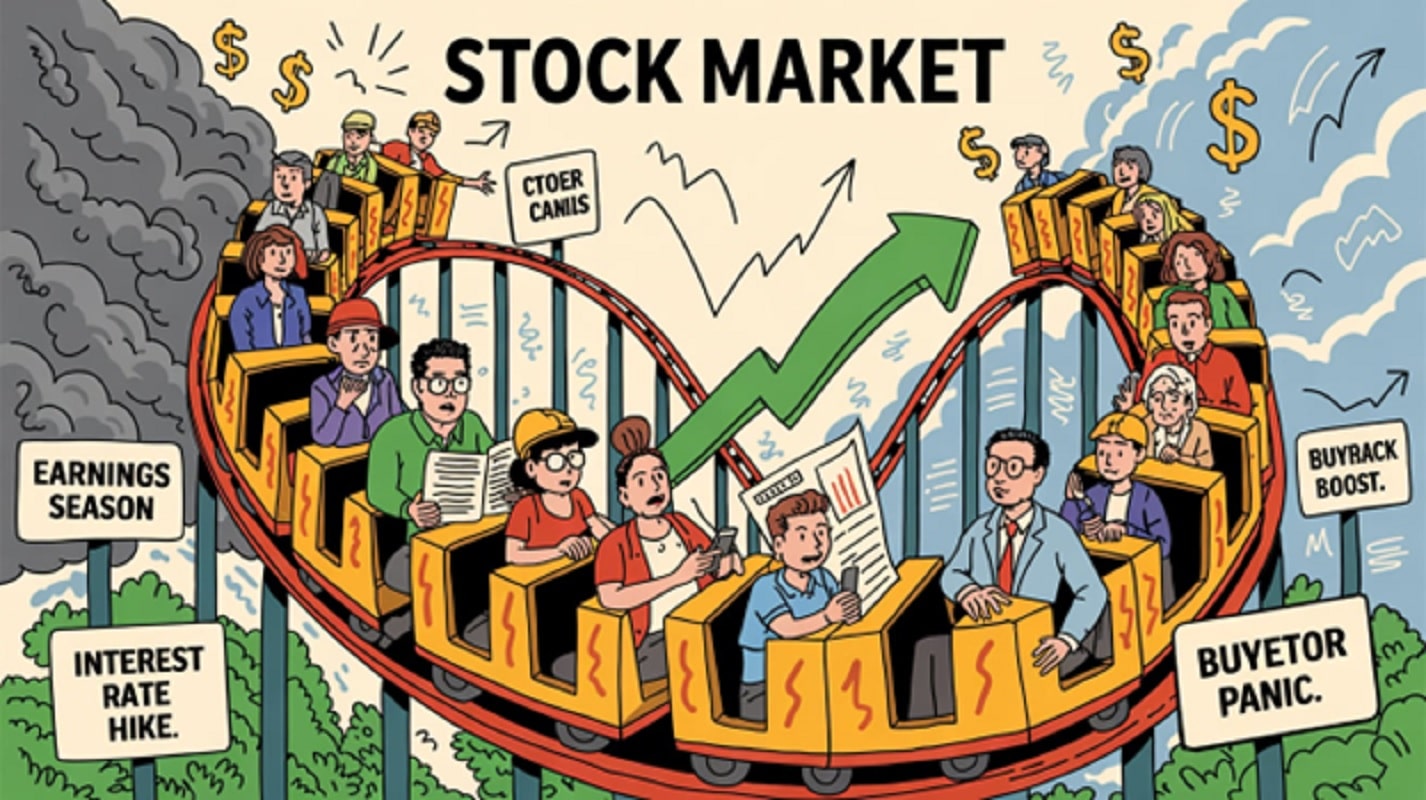
You’ve seen the headlines. Analysts are busy bumping up their profit estimates for the S&P 500, yet the actual stock market is behaving like a grumpy teenager. It makes zero sense on the surface. If companies are making more money than we thought, why are people selling?
The reality is that stock prices and earnings forecasts don't move in a clean, synchronized dance. They’re more like a couple in a messy breakup where one is moving on while the other is stuck in the past. We’re seeing a massive disconnect right now because the market is shifting its focus from "how much" a company makes to "how much it costs" to wait for those profits.
The Valuation Trap Is Snapping Shut
Stock prices are a function of two things: earnings and the multiple you pay for those earnings. If earnings go up by 5%, but the multiple investors are willing to pay drops by 10%, the stock price falls. It’s basic math, but it feels like a betrayal when you’re holding a portfolio of high-performers.
We’ve lived through a decade where "growth at any price" was the mantra. That's over. Investors are now looking at the risk-free rate—what they can get from a boring government bond—and realizing they don't need to chase risky tech stocks to find yield. When the 10-year Treasury yield climbs, the present value of future cash flows shrinks. This hits the "expensive" stocks hardest, even if their earnings reports are glowing.
Think about it this way. If you’re at a restaurant and the steak is amazing, you’ll pay $50. But if the restaurant raises the price to $150 just because they added a sprig of parsley, you’re walking out. The steak is still great—maybe even better than last time—but the deal is gone. That’s the stock market right now. The "steak" (earnings) is improving, but the "price" (valuation) has become offensive.
Why Revision Trends Are Often A Lagging Indicator
Wall Street analysts are notorious for being late to the party. They usually raise their forecasts after a company has already signaled strength. By the time that revised forecast hits your news feed, the "smart money" has already priced it in. They bought the rumor months ago and are now selling the news to you.
I’ve watched this cycle repeat for years. High earnings revisions often mark the top of a cycle, not the beginning of a new leg up. When everyone finally agrees that things look great, there’s nobody left to buy. The optimism is fully baked into the cake. You aren’t getting an edge by following upward revisions; you’re often just catching the tail end of a momentum trade that’s running out of steam.
Look at the semiconductor sector in early 2024. Earnings estimates were hitting record highs week after week. Yet, several of these stocks started to stall or pull back. Why? Because the market started asking, "What comes after the peak?" Investors began worrying about "double ordering" and whether the AI-driven demand was a pull-forward of future sales rather than a permanent shift.
The Role of Sticky Inflation and Interest Rates
You can’t talk about this disconnect without mentioning the Federal Reserve. Inflation isn't dying as fast as people hoped. It’s sticky. It’s stubborn. And it means interest rates are staying higher for longer.
Rising earnings are great, but if those earnings are being driven by companies raising prices, it’s a double-edged sword. Eventually, the consumer snaps. We’re seeing signs of "frugality fatigue" where people are finally cutting back on everything from streaming services to high-end coffee. If analysts are raising forecasts based on price hikes that consumers can no longer afford, those forecasts are built on sand.
The "cost of capital" is the real story here. When money was free, every business idea looked like a winner. Now that it costs 5% or 6% to borrow, those rising earnings have to work much harder. A company growing earnings at 10% was a superstar in 2021. In 2026, with higher inflation and rates, that 10% barely keeps you even in real terms.
What To Do When The Market Ignores Good News
Stop looking at the EPS (earnings per share) number in a vacuum. It’s a vanity metric if it isn't backed by free cash flow and reasonable valuations. If you see a stock you own reporting record earnings and a raised outlook, but the price drops 4% on the news, pay attention. The market is telling you that the story is already told.
- Check the PEG Ratio. The Price/Earnings to Growth ratio is your best friend. A company with rising earnings but a PEG ratio over 2.0 is often vulnerable. It means you’re paying way too much for that growth.
- Watch the Margins. Are earnings up because the company is selling more stuff, or just because they fired 10% of their staff? Cost-cutting can only drive earnings for so long. You want to see "top-line" revenue growth.
- Follow the Credit Markets. Often, the bond market is smarter than the stock market. If bond yields are spiking while stock analysts are cheering, trust the bonds. They usually sniff out the trouble first.
Don't panic sell just because a good earnings report led to a price drop. But don't ignore it either. It’s often a sign that the market’s internal plumbing is shifting. The transition from a "growth-obsessed" market to a "value-conscious" one is always painful and messy.
Check your portfolio for companies that are "priced for perfection." If a stock needs a beat-and-raise just to stay flat, it’s a dangerous place to be. You want to find the companies where the bad news is already priced in, not the ones where the good news is already exhausted. Focus on businesses with low debt and the ability to self-fund their growth. In a world of high interest rates, cash is no longer trash—it's a tactical advantage.