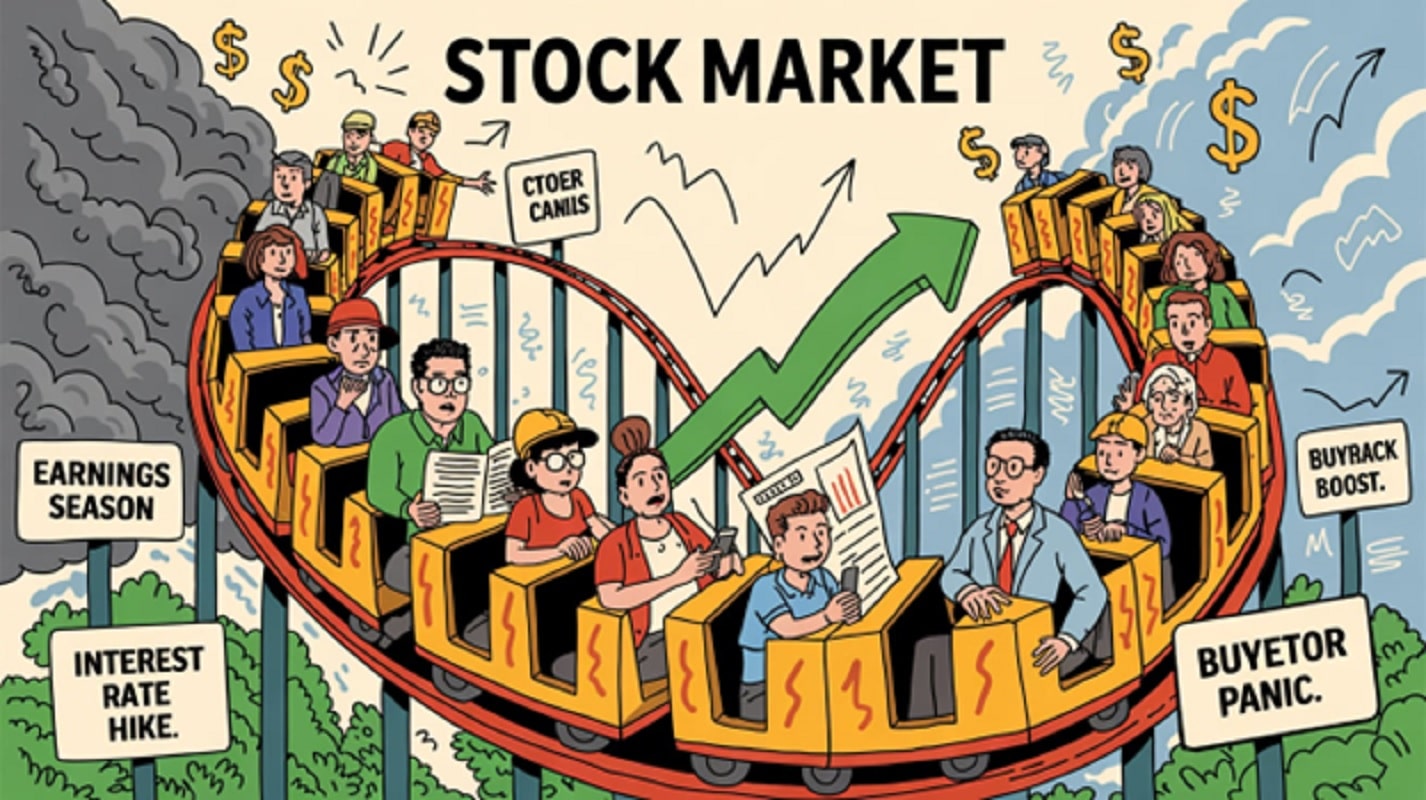
The Bank of England has sounded a rare, high-decibel alarm regarding the stability of the global financial system as conflict in the Middle East threatens to spill over into a full-scale regional war. While central banks usually prefer the muffled language of "downside risks" and "monetary tightening," the latest assessment from Threadneedle Street suggests a fundamental shift in how the UK and its allies view the fragility of the current economic order. The core danger isn't just a spike in the price of a barrel of oil. It is the sudden, violent repricing of risk across every major asset class.
Investors have spent years operating under the assumption that geopolitical flare-ups are temporary blips that the market can eventually absorb. This time, the Bank of England is signaling that the buffer is gone. With global debt at record highs and interest rates still biting, the financial system lacks the elasticity it once had to catch a falling knife. If the "Iran war shock" accelerates, we are looking at a liquidity crunch that could freeze credit markets faster than the 2008 collapse.
The Liquidity Trap in a High Tension Environment
Central banks are currently caught in a vice. For the better part of a decade, the solution to any systemic tremor was to print money and lower rates. That tool is broken. With inflation still a sensitive nerve, the Bank of England cannot simply flood the gates with liquidity if oil prices push energy costs back into the stratosphere.
The immediate concern for the Financial Policy Committee (FPC) is the "dash for cash." In a scenario where tensions between Iran and Israel escalate into a sustained maritime blockade or a direct strike on energy infrastructure, institutional investors will likely dump everything but the safest government bonds. This creates a feedback loop. As prices fall, margin calls trigger more selling, and the gears of the private credit market—which has grown into a $1.7 trillion behemoth with very little oversight—could seize up entirely.
We have seen this movie before, but the actors are different. In previous decades, big banks held the bulk of the risk. Today, that risk has migrated to the "shadow banking" sector—hedge funds, private equity firms, and pension funds. These entities are not regulated with the same rigor as high-street banks. If they start to fail under the weight of geopolitical volatility, the Bank of England has very few ways to step in and save them without destroying the value of the British pound.
Energy as a Financial Weapon
Oil is no longer just a commodity; it is a financial derivative that dictates the health of every pension fund in the West. When the Bank of England discusses the "Iran war shock," they are looking at the Strait of Hormuz. Roughly 20% of the world’s total oil consumption passes through that narrow waterway.
If that transit point is compromised, the math is simple and devastating.
- Supply Shock: Crude prices jump to $120 or $150 per barrel almost overnight.
- Inflationary Spike: Transportation and manufacturing costs skyrocket, forcing central banks to keep interest rates high—or even raise them—despite a slowing economy.
- Debt Servicing Failure: Corporations that loaded up on cheap debt during the 2010s find themselves unable to refinance at 7% or 8% while their input costs are doubling.
This isn't a theory. It is a mechanical certainty of the current debt-to-GDP ratios across the G7. The Bank of England’s warning is a quiet admission that the "soft landing" everyone hoped for is predicated on a geopolitical stability that no longer exists. They are telling us that the margin for error is zero.
The Fragility of the UK Banking Sector
While British banks are better capitalized than they were twenty years ago, they are not immune to a global confidence crisis. The FPC’s report highlights that the interconnectedness of the UK financial system means a shock in the Middle East hits London through a thousand different cuts.
Foreign investment into UK commercial real estate, much of it originating from the Gulf, could evaporate or be pulled back to cover domestic losses in those regions. Furthermore, the UK’s reliance on international wholesale funding markets makes it vulnerable to "sudden stops." If global lenders become spooked by the prospect of a wider war involving Iran, they stop lending to everyone, including the most "stable" institutions in the City of London.
The Hidden Risk of Derivatives and Hedging
We also need to talk about the pipes. Most major corporations hedge their energy costs using complex derivatives. These contracts require collateral. When the price of the underlying asset—oil or gas—moves violently, the companies holding those contracts must post more collateral (margin) immediately.
If a major energy provider or a massive industrial conglomerate cannot find the cash to meet a margin call because the credit markets have tightened, they go into technical default. This creates a domino effect. The Bank of England is particularly worried about this "non-bank financial intermediation." It’s the dark matter of the financial universe: you can't see it until it starts pulling things apart.
The Geopolitical Premia is Finally Being Paid
For too long, the "peace dividend" was priced into the markets. Analysts assumed that global trade was so integrated that no one would be "stupid" enough to start a war that destroys their own economy. That logic has been proven false repeatedly over the last few years.
The Bank of England is now forcing a reality check. They are acknowledging that we have entered an era where political ideology and regional hegemony outweigh economic self-interest. This means the "risk-free rate" is a myth. Every investment now carries a heavy geopolitical premium that most models simply aren't equipped to handle.
If you look at the sovereign debt market, the signals are already there. Gold is hitting record highs, not because it’s a great productive asset, but because it’s the only thing that doesn't have a counterparty risk. When the Bank of England issues a report like this, they are essentially telling you that the "counterparty" for the entire global financial system is currently standing on a powder keg.
What the "Shock" Means for the Average Household
It is easy to get lost in the macroeconomics of central bank reports, but the "Iran war shock" has a direct line to the kitchen table. The BoE’s concern is that a financial system under pressure cannot support the real economy.
If banks have to hoard capital to protect themselves against global volatility, they stop lending to small businesses. They tighten the screws on mortgages. They increase the interest rates on credit cards. You end up with a "stagnation trap" where the cost of living remains high due to energy prices, but the economy stops growing because the financial arteries are clogged.
The Bank is essentially warning the government that they cannot spend their way out of this one. With the UK's debt-to-GDP ratio hovering around 100%, there is no "fiscal space" to provide the kind of energy subsidies we saw a few years ago. If the shock hits, the public will feel the full weight of the market's reaction.
Moving Beyond the Traditional Playbook
The old ways of managing a crisis—dropping rates and issuing "forward guidance"—are effectively dead in the water. To survive a sustained geopolitical shock, the financial system needs a level of resilience that isn't built on debt.
The Bank of England’s report is a plea for realism. It is a signal to investors to deleverage, a signal to banks to tighten their risk models, and a signal to the government that the era of "easy money and stable borders" is over. The "shock" isn't a possibility; it's an environment we are already living in.
The only way to navigate this is to assume the volatility is permanent. Diversification is no longer about picking different stocks; it is about geographical and systemic hedging. You have to assume that the supply chains you rely on can be severed by a single drone strike in the Persian Gulf. You have to assume that the "liquidity" in your portfolio might vanish when you need it most.
Stop waiting for a return to "normal." This is the new baseline. The Bank of England has laid out the map; it’s up to the market to realize that the ground has already shifted.
Move your capital into assets with minimal counterparty risk and prepare for a decade where "return of capital" is more important than "return on capital."