SpaceX just scrubbed another Starship launch. The internet is already full of groans, disappointed tweets, and critics claiming Elon Musk’s timeline is falling apart. If you came here looking for another sensationalist headline mourning the delay of the world’s largest rocket, you’re in the wrong place.
Scrubs happen. They are normal. In fact, delaying a flight is often the smartest decision a launch director can make.
When SpaceX halts a Starship countdown, it isn't a sign of failure. It’s evidence that the iterative design process is working exactly as intended. In aerospace engineering, rushing a flawed vehicle to the pad is a spectacular way to lose hardware, waste millions of dollars, and set a program back by years.
Let's look at why these pauses matter and what is actually happening behind the scenes at Starbase.
The Reality Behind the Starship Countdown Scrubs
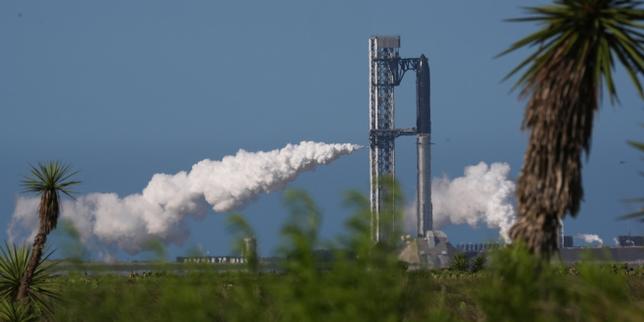
Most people don't realize how complex a fully reusable, 120-meter-tall steel rocket really is. Starship requires thirty-three Raptor engines on the Super Heavy booster alone. Another six power the upper stage. That is thirty-nine complex liquid methane and liquid oxygen engines that have to fire in perfect synchronization.
SpaceX operates on a philosophy of rapid prototyping. They build, test, break things, and fix them. But "breaking things" is meant for the test stands, not when a fully stacked flight vehicle is sitting on the orbital launch mount.
Starship Stacking Height: 120 meters (Super Heavy + Ship)
Total Raptor Engines: 39 (33 Booster, 6 Ship)
Propellant: Liquid Methane (CH4) and Liquid Oxygen (LOX)
When a sensor reads a fraction of a percent outside its allowable limit, the computer calls a halt. It could be a tiny valve glitch. It might be a minor pressure fluctuation in the massive tank farm. Sometimes, it's just the unpredictable Texas coastal weather.
Take a look at NASA's history. The Space Shuttle program suffered dozens of high-profile scrubs. The Artemis I mission faced multiple delays over hydrogen leaks before its successful flight. Cryogenic propellants like liquid methane and liquid oxygen are notoriously difficult to manage. They shrink metals, stress seals, and require precise thermal conditioning.
If a team pushes through a warning sign just to hit a media deadline, things blow up. We don't want that.
Why Methane Makes Launch Windows Slippery
SpaceX chose liquid methane as its primary fuel for a very specific reason: you can theoretically manufacture it on Mars using the Sabatier reaction. But methane brings massive engineering hurdles on Earth.
Methane must be kept sub-cooled at roughly -161°C. Liquid oxygen requires temperatures around -183°C. When you load thousands of tons of these super-chilled liquids into a stainless-steel rocket, the entire structure contracts.
The plumbing stretches. Seals shift.
If the launch controllers notice the propellant temperature rising even slightly during a hold, they have to dump the fuel and recycle. You can't just let a loaded rocket sit on the pad indefinitely. The fuel boils off, turns back into gas, and creates dangerous overpressure risks.
A scrub isn't a design flaw. It is a validation of the safety systems keeping the pad intact.
Lessons from the Soviet N1 Rocket Failure
History tells us exactly what happens when you rush a multi-engine rocket. In the late 1960s and early 1970s, the Soviet Union tried to beat NASA to the Moon with the massive N1 rocket. Like Super Heavy, the N1 relied on a massive cluster of engines—thirty NK-15 engines on its first stage.
The Soviet teams lacked the computing power to manage that many engines simultaneously. They lacked the budget for proper ground testing. They rushed their launches to beat political deadlines.
The result? Four consecutive launch attempts. Four catastrophic explosions.
Soviet N1 Rocket vs. SpaceX Super Heavy:
- N1 First Stage: 30 engines, 0 successful orbital flights
- Super Heavy: 33 engines, massive digital telemetry, iterative testing success
SpaceX understands this history. They designed the Raptor engines with advanced digital telemetry that monitors thousands of data points per second. If a single engine out of the thirty-three behaves oddly during the final seconds of ignition, the flight computer shuts down the whole system safely.
Tracking the Path to the Launchpad
If you want to know when Starship will actually fly, stop looking at the tentative dates posted on social media. Watch the regulatory and physical milestones instead.
First, look for the Federal Aviation Administration (FAA) launch license modifications. SpaceX cannot legally fly without this piece of paper. The FAA reviews safety profiles, environmental impacts, and flight trajectories before giving the green light.
Second, watch the static fire tests at Boca Chica. A successful static fire means SpaceX has cleared the vehicle for flight operations. If the engines fire for the full duration without an anomaly, a real launch attempt usually follows within a week or two.
Keep an eye on local marine and airspace closures. The Coast Guard and FAA publish these notices several days in advance. If you see temporary flight restrictions over Brownsville and notices to mariners covering the Gulf of Mexico, a launch attempt is genuinely imminent.
Don't get discouraged by the delays. Every time the countdown clocks stop, the engineering teams gather invaluable data. They refine the software, swap out suspicious valves, and ensure that when the thirty-three Raptors finally lift that steel beast into the sky, it stays up. Track the FAA updates, watch the pad testing, and get ready for the next attempt. It'll be worth the wait.