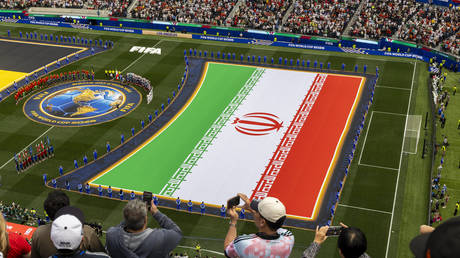
The whistle blows, and ninety thousand voices in the stadium instantly drop an octave. On screen, a exhausted midfielder collapses onto his knees, his jersey dark with sweat, chest heaving. It is the World Cup. The air is thick with humidity, and the referee has just signaled a mandatory hydration break.
For the players, it is a fleeting lifeline. For the millions watching at home, it is a moment to breathe, to parse the tactical madness of the last thirty minutes, to feel the shared anxiety of a nation's sporting destiny hanging by a thread.
Then, the screen cuts to black.
Suddenly, you are no longer in Doha or Mexico City. You are being screamed at by an energetic actor selling truck insurance. The tension evaporates. The collective trance of the global game is shattered, replaced by the jarring coldness of a corporate pitch.
When Fox Sports decided to chop up these crucial, ambient pauses during their World Cup broadcasts and fill them with traditional, full-screen commercials, they did not just buy ad space. They bought a ticket to a public relations nightmare. Football fans are fiercely protective of the game's sacred ninety minutes. Unlike American football or baseball, soccer relies on continuous, uninterrupted narrative tension. Breaking that flow is dangerous territory.
Fox learned this the hard way. The backlash was swift, loud, and deeply felt across social media and sports bars alike. But what happened next is not just a story about a network backing down. It is a glimpse into the high-stakes, invisible war currently being fought for our attention span.
The Anatomy of a Sixty-Second Disconnect
To understand why people got so angry, you have to look at how we actually consume sports. Think about a hypothetical viewer named Marcus. He has been waiting four years for this tournament. His grandfather watched it; his kids are wearing the jerseys. When a match is tight, the commercials during halftime are an accepted truce. We expect them. We walk away, grab a drink, and check our phones.
But a hydration break is different. It happens in the middle of the battle.
When a network cuts away completely during live play, they are forcing Marcus out of the stadium. They are treating a live, breathing cultural event like a late-night rerun of a sitcom. The anger from fans was not just about seeing an ad; it was about the feeling of being commodified in a moment that demanded reverence.
The numbers behind these decisions are dizzying. Broadcasting rights for the World Cup cost hundreds of millions of dollars. Networks are under immense pressure to claw that investment back, cent by cent, second by second. Every tick of the clock is a monetization opportunity. The temptation to squeeze a standard thirty-second spot into a sudden pause in play is almost irresistible to an executive staring at a spreadsheet.
Yet, the spreadsheet failed to account for human psychology.
The immediate, visceral rejection of those full-screen ads proved that viewers have a breaking point. If you break the spell of live sports too violently, the audience does not just ignore the ad—they begin to actively resent the brand associated with the interruption.
The Split-Screen Compromise
Faced with a furious audience and a damaged product, Fox did something rare for a massive media conglomerate: they pivoted mid-tournament. They did not eliminate the advertising entirely—the financial realities of modern sports broadcasting make that an impossibility—but they changed the architecture of the interruption.
They embraced a hybrid ad model.
Consider what happens now when the referee halts play for a water break. The game does not vanish. Instead, the screen shrinks slightly, moving into a picture-in-picture format. On one side, the commercial plays, delivering its message. On the other side, the live stadium feed remains visible.
We can still see the coach frantically waving a clipboard. We see the players dousing their heads with water, the expressions of exhaustion or determination etched on their faces. We hear the low, ambient roar of the crowd underneath the commercial's audio.
It is a fascinating compromise. By preserving the visual continuity of the match, the network acknowledges that the fan's emotional investment has value. Marcus does not feel entirely abandoned. He can still track the body language of his team. The narrative thread remains unbroken, even if it is temporarily frayed.
The Hidden Cost of Our Attention
This shift towards hybrid, split-screen advertising is not an isolated incident. It is a symptom of a much larger, quieter transformation happening across all of entertainment. The traditional commercial break is dying, killed by skip buttons, ad-blockers, and premium streaming subscriptions that promise an ad-free existence.
Because we have learned to tune out the standard commercial, media companies are forced to find new ways to weave corporate messaging directly into the fabric of the things we love. It is no longer enough to advertise around the game; brands now want to exist inside the game.
This creates a delicate, agonizing balancing act for broadcasters.
Push too far, and you alienate the very audience that gives the broadcast its value. Pull back too much, and you cannot afford the rights to broadcast the event in the first place. The hybrid model is an attempt to walk this tightrope, offering a truce between corporate survival and fan loyalty.
It forces us to ask a larger question about what we are willing to tolerate as consumers. We want high-definition, multi-camera coverage of the greatest spectacles on earth, and we want it delivered to our living rooms instantly. But that infrastructure requires capital. If we refuse to pay massive subscription fees, we pay with our eyeballs, thirty seconds at a time.
The real danger lies in the slow erosion of the spaces where we are allowed to just watch. The moments of dead air, the brief lulls in a game where nothing but the wind and the crowd can be heard, are becoming extinct. Every corner of the screen is being optimized, monetized, and measured for engagement.
The Quiet Return to the Pitch
During the next match, when the heat rises and the referee points to the sidelines for a hydration break, watch the screen closely.
The advertisement will appear, neatly boxed in its designated corner. The colors will be bright, the font crisp, the corporate logo undeniable. But your eyes will inevitably drift to the other side of the screen. You will watch the player wiping the sweat from his eyes, looking up at the clock, calculating exactly how many minutes he has left to change the course of his life.
The network gets its revenue. The brand gets its impression.
But the true victory belongs to the fans who refused to let the screen go completely dark, keeping a stubborn eye on the game, waiting for the whistle to blow them back to reality.