The West Wing is a building measured not in square footage, but in seconds.
Every morning, the machinery of modern governance stumbles awake under the glare of fluorescent bulbs and the heavy scent of stale coffee. Telephones ring in muted tones. Printers hum like angry insects. Down the narrow, cream-colored corridors, past framed black-and-white photographs of former giants and forgotten staffers, a clock ticks against the wall with an almost aggressive rhythm. Time here is currency. Spend it badly, and you are history. Spend it well, and you might just survive the news cycle.
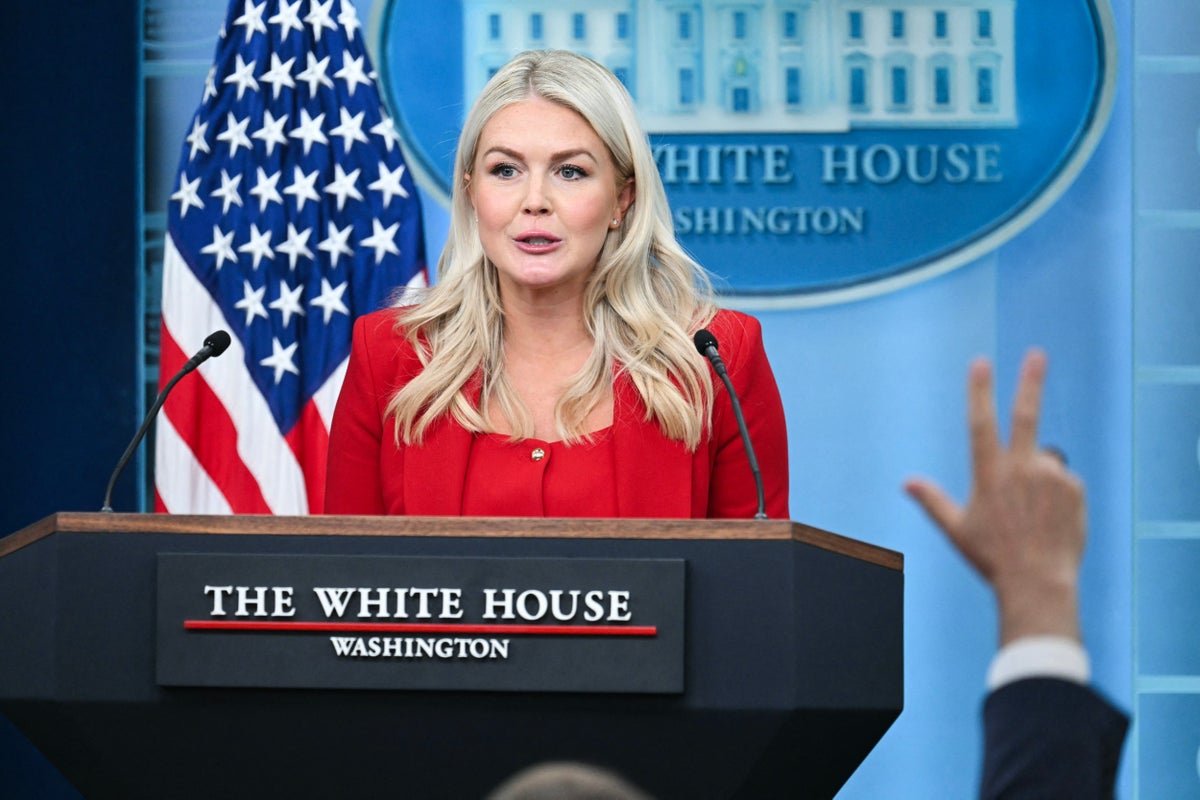
At the epicenter of this daily storm stands the James S. Brady Press Briefing Room.
It is smaller than it looks on television. The blue curtains absorb the noise, but they cannot absorb the tension. Underneath those low-hanging lights, a single human being stands behind a wooden lectern, facing rows of aggressive cameras and reporters whose careers depend on catching a stumble. Every syllable is dissected. Every pause is weaponized. Every sigh becomes a headline before the sentence has even finished leaving the speaker's teeth.
To understand what it means when an administration begins whispering about a revolving-door setup for a prominent communicator like Karoline Leavitt, you have to understand the sheer physical and psychological erosion of the job.
Imagine standing in front of a firing squad made of microphones for hours on end, day after grueling day, defending policies you did not write against accusations you did not invite. You are the shield. You are the lightning rod. You are the face that a fractured nation loves to blame and hates to pity.
Naturally, human beings can only sustain that level of hyper-vigilance for so long before something fractures inside them. Burnout is not a risk in the modern press office; it is a guarantee.
Conversations behind closed doors in the upper echelons of power rarely sound like the polished statements released to the public. They are gritty, tactical, and exhausted. When aides and strategists map out the trajectory of a high-profile press secretary, they are forced to confront an uncomfortable reality. No one stays forever. If a communications chief transitions out of the daily grind of the briefing room, what comes next? How do you keep the machine running without letting the exhaustion show?
The idea of a rotating framework—a revolving-door setup—begins to look less like an administrative whim and more like a survival strategy.
Think of it as a relay race where the baton is heavy enough to crush collarbones. You run your leg as hard as you can until your lungs burn, and then, before you collapse entirely, you hand it off to the next sprinter waiting in the wings.
This model changes the fundamental math of political communication. Historically, a press secretary was viewed as a fixture, an immovable pillar standing shoulder-to-shoulder with the executive branch until public fatigue or political shifts forced a dramatic, tearful resignation on the front lawn. But modern political combat moves too fast for static pillars. The news cycle does not wait for weekends. Social media fractures attention spans into micro-seconds.
By introducing a structured, fluid transition plan for a high-profile voice like Leavitt, an administration acknowledges a modern truth. The toll is too high for a single continuous run.
Consider what happens when the pressure cooker gets too hot. Mistakes slip out. Tempers flare. The message gets lost in the personal friction between the person at the podium and the reporters in the room. A planned rotation prevents that degradation. It allows a communicator to step away while their edge is still sharp, transitioning into strategic advisory roles or external advocacy where the lights are slightly dimmer, leaving the grueling daily combat to a fresh face with untried armor.
Yet, this fluidity carries its own silent hazards.
Every time a new voice steps up to that wooden lectern, the rhythm changes. Reporters have to recalibrate. The public has to adjust to a new cadence, a new cadence of defensiveness or aggression, a new set of verbal tics and defensive postures. Consistency is the anchor of institutional trust. When the face at the podium changes too often, the institution itself can start to feel temporary, untethered, like a ship constantly swapping out its captain in the middle of a gale.
The question whispered in the hallways of power is not just whether a rotating setup protects the individual. It is whether the public can still hear the signal through the static of constant reinvention.
Power is a performance. And every great performance requires an intermission before the final act.
As the political landscape twists and turns toward the next great electoral battle, the architects of communication are drawing up new blueprints. They are realizing that loyalty and longevity are not always synonyms. Sometimes, the most loyal thing you can do for an administration—and for your own sanity—is to know when to hand over the microphone, step back into the shadows of the wings, and let the next voice take the heat.
The clock on the West Wing wall keeps ticking. The cameras are already powered up. The reporters are sharpening their pencils. And somewhere down the hall, a door opens, letting in a cool draft from the outside world.