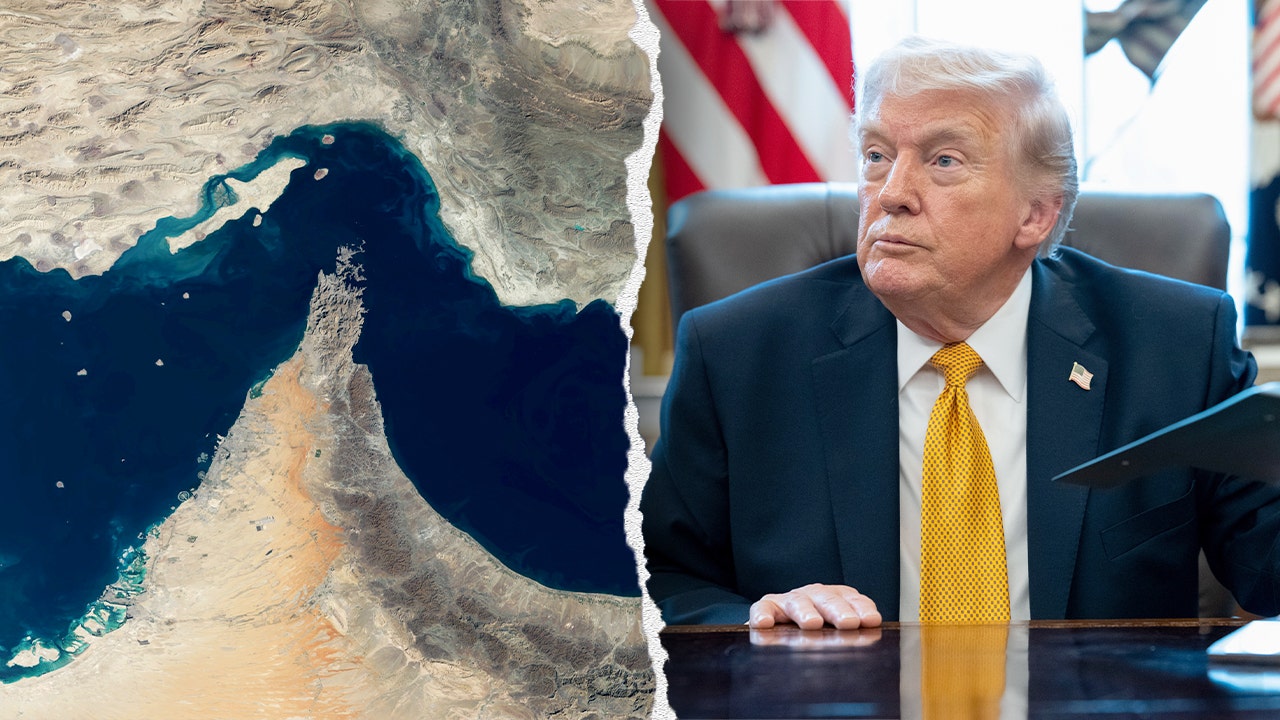
Geopolitical posturing rarely stays contained to social media feeds, but Donald Trump's recent digital map labeling the Strait of Hormuz as "NEW U.S. Territory" takes maritime provocation to a whole new level. Tehran didn't wait long to fire back. Iranian officials labeled the assertion a fantasy, warning that they are ready to correct the delusions of an unyielding American administration.
If you think this is just standard internet bluster between Washington and Tehran, look closer at the energy markets and naval movements. This clash over one of the world's most critical oil chokepoints carries real economic consequences that hit pocketbooks globally.
The Reality Behind the Rhetoric in the Persian Gulf
The war of words escalated after a political rally in New York where Trump declared he would "pretty soon" designate the Strait of Hormuz as sovereign United States soil. Shortly after, a map materialized on Truth Social depicting the crucial corridor under U.S. ownership.
Iran’s response was swift and uncompromising. Kazem Gharibabadi, Iran's deputy foreign minister for legal and international affairs, took to social media to state that the waterway cannot be seized via an online post, an election speech, or an aircraft carrier.
"The Strait of Hormuz has been Iranian, is Iranian, and will remain Iranian," Gharibabadi wrote, urging Washington to accept the reality of strategic stalemate.
Tehran maintains that the vital maritime passage remains heavily restricted and tied to broader political demands, including the lifting of oil embargoes and a comprehensive regional ceasefire. Meanwhile, the White House insists that naval patrols exercise total dominance, brushing off regional pushback as empty noise.
Why the Strait of Hormuz Matters Right Now
You can't understand this feud without looking at the raw numbers. Roughly one-fifth of the global petroleum supply flows through this narrow waterway. When political friction spikes here, crude prices jump almost instantly.
Voters in the United States are already feeling the pinch at the gas pump, and administrations on both sides know that energy affordability dictates political survival. Trump defended rising fuel costs by framing them as a necessary sacrifice to block Iran from obtaining nuclear capabilities. Yet, domestic critics argue that reckless territorial claims only inflate risks and keep commercial shipping lanes under unnecessary peril.
Mohsen Rezaei, the newly appointed head of Iran's Supreme National Security Council, pointed out the staggering geographic disconnect. He noted that the distance between Washington and the Persian Gulf spans thousands of miles, making claims of absolute ownership functionally absurd on the ground.
The Breakdown in Diplomacy
This latest map stunt arrives right as a tentative 60-day diplomatic window between Washington and Tehran has expired without a lasting framework. Direct talks have stalled out entirely, leaving third-party intermediaries like Qatar and Pakistan to pass messages back and forth.
With direct communication channels frozen, digital declarations act as substitute policies. But tweets and AI-generated maps don't clear water mines, nor do they convince international cargo carriers that transit is entirely safe.
If you are tracking global trade or energy stocks, ignore the viral posts. Watch the actual insurance rates for cargo ships traversing the gulf, monitor regional naval deployments, and keep a close eye on whether backchannel mediators can drag both governments back to reality before a localized miscalculation turns into a broader kinetic conflict.