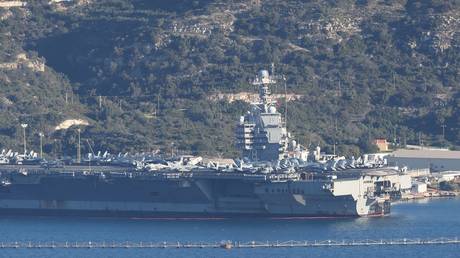
A fire on a warship is a nightmare. When that ship is the USS Gerald R. Ford (CVN 78), the most expensive and advanced piece of military hardware on the planet, that nightmare takes on a multi-billion dollar edge. Recent reports detailing the damage from a blaze aboard the Navy’s premier supercarrier suggest we dodged a bullet. But "dodging a bullet" in the world of naval aviation still means millions of dollars in repairs and questions about how a flagship vessel finds itself vulnerable to something as primal as fire.
The Ford isn't just another ship. It represents a $13 billion investment. It’s the lead ship of a new class designed to replace the aging Nimitz-class carriers. So, when smoke starts billowing from a compartment, the Pentagon holds its breath. We’ve seen this movie before with the USS Bonhomme Richard, which ended up as a total loss after a catastrophic fire in 2020. The Navy cannot afford a repeat performance, especially not with its crown jewel. Expanding on this topic, you can find more in: Why the Green Party Victory in Manchester is a Disaster for Keir Starmer.
What Actually Happened Beneath the Flight Deck
Details from the damage assessment indicate the fire broke out in a localized area, but the intensity was enough to trigger serious concern. While the Navy keeps specific compartment numbers close to the chest for security reasons, it’s clear the incident involved electrical systems. This is the Achilles' heel of the Ford class. These ships use an electromagnetic launch system (EMALS) and advanced arresting gear that rely on massive amounts of electrical power—way more than previous carriers.
Fire in an electrical space is a unique beast. You can’t just douse it with water and walk away. The corrosive nature of the smoke alone can ruin sensitive circuit boards and fiber optic cables ten rooms away from the actual flames. Crews had to deal with thick, toxic smoke that permeated several decks. It’s not just about the scorched metal. It’s about the invisible damage to the "brains" of the ship. Analysts at Al Jazeera have provided expertise on this situation.
The response was fast. Damage control teams on the Ford are some of the best-trained sailors in the fleet. They used specialized firefighting foam and isolated the ventilation systems to keep the fire from spreading to the hangar bay or, heaven forbid, the nuclear reactor spaces. If the fire had reached the ordnance elevators or fuel lines, we wouldn’t be talking about a repair bill. We’d be talking about a national tragedy.
Why Small Fires Are a Big Problem for the Ford Class
You might think a small fire on a ship that's 1,100 feet long shouldn't be a headline. You’d be wrong. The Gerald R. Ford is a "first-in-class" vessel. Every hiccup is a data point, and every failure is a potential design flaw. The Navy has been under fire for years over the Ford’s cost overruns and technical delays. A fire, even a contained one, feeds the narrative that these ships are too complex for their own good.
The technical complexity of the Ford means that parts aren't exactly sitting on a shelf at a local hardware store. Many components are bespoke. If a specific power distribution panel gets fried, it might take months to manufacture a replacement. This creates a ripple effect in the deployment schedule. When one carrier goes down for unscheduled repairs, the rest of the fleet has to pick up the slack. This leads to longer deployments for other sailors and more wear and tear on older ships. It's a domino effect that impacts global maritime strategy.
Lessons Not Learned from the Bonhomme Richard
After the USS Bonhomme Richard burned for four days in San Diego, the Navy promised a "culture of safety" overhaul. They released a massive report detailing 400 pages of failures, from broken fire mains to exhausted crews. The Ford incident shows that while response times have improved, the prevention side of the house still has gaps.
Industrial environments are inherently dangerous. Whether the ship is at sea or pier-side for maintenance, the risk of a "hot work" accident or an electrical short is constant. The Ford fire appears to have happened during a period of intense operations. This raises questions about the strain on the ship’s systems. Are we pushing these new technologies too hard, too fast? Or is the design itself lacking the physical partitions needed to stop smoke migration more effectively?
The Navy’s official stance is usually a variation of "the crew performed as trained." That’s fine. But we need to look at why the fire started in the first place. If it’s a component failure, that’s a supply chain and engineering issue. If it’s human error, that’s a training and leadership issue. Either way, it’s an expensive lesson.
The Financial Reality of Naval Maintenance
Let's talk numbers. Repairing damage on a nuclear carrier is never cheap. You're looking at labor costs for specialized technicians, the price of aerospace-grade materials, and the astronomical cost of "opportunity." Every day the Ford spends in port for repairs is a day it isn't projecting power in the Atlantic or the Mediterranean.
Conservative estimates for this kind of electrical fire damage usually start in the low millions. If the smoke damage requires a full "rip and replace" of wiring harnesses in adjacent compartments, that number jumps quickly. We also have to account for the recertification of systems. You don't just fix a wire and launch a F-35. You test, re-test, and then test again.
Moving Toward a More Resilient Fleet
The Ford fire is a wake-up call that technology doesn't replace basic seamanship and damage control. If anything, advanced tech makes those basics more critical. We need to see a shift in how these ships are monitored.
- Better Sensors: The Navy should integrate more AI-driven thermal sensors that can detect an electrical "hot spot" before a flame ever appears.
- Standardization: We need to stop making every part of these ships a "one-off" mystery. If parts were more modular, repairs wouldn't sideline a carrier for months.
- Training Realism: Sailors need more experience fighting fires in the specific high-voltage environments unique to the Ford class.
The USS Gerald R. Ford is back to work, but the scorched bulkheads serve as a reminder. We have the most powerful Navy in history, but it’s built on a foundation of hardware that can be brought down by a single short circuit. Protecting that investment requires more than just high-tech weapons. It requires a relentless focus on the boring, difficult work of fire prevention and shipboard safety. Keep an eye on the upcoming Naval Sea Systems Command (NAVSEA) reports for the final cost tally. It’s going to be a doozy.