The air inside the bunker at the Noshiro Testing Center always smells faintly of old grease, salt from the nearby northeastern coast, and nerves.
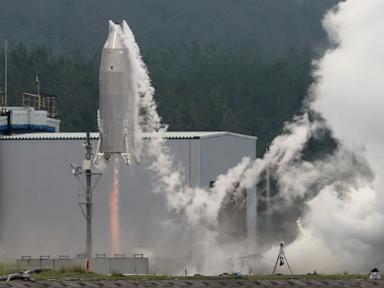
For ten years, a small engineering team has spent their mornings staring at a metal tube that doesn't look like the future. It looks like an industrial water heater. It is exactly 7.3 meters tall, about the size of a two-story house, and just under two meters wide. To the casual observer, it possesses none of the sleek, terrifying majesty of a rocket designed to pierce the upper atmosphere.
But this small machine, named the RV-X, carries the entire weight of an island nation's pride.
On a Saturday morning in July, Takashi Ito stood where he had stood so many times before. As the project manager for Japan’s reusable rocket program, his hair has grayed in direct proportion to the number of engine tests he has overseen. 165 times, this specific engine has roared to life on a test stand, held captive by steel clamps, burning its heart out while computers drank in data.
But holding a beast by its chains is vastly different from letting it go.
Building a rocket that goes up is difficult. Building a rocket that goes up, stops, thinks, and comes back down to the exact spot it left is an entirely different sort of madness. It requires a machine to fight its own nature.
The clock ticked toward zero. Outside, the gray skies of Akita Prefecture threatened to ruin a decade of preparation. A postponement in March due to harsh weather and sudden equipment failures had already bruised the team’s morale. Space development does not care about human schedules. It is a brutal master.
Then, the ignition.
A heavy, low-frequency thud shook the concrete floor under Ito’s boots. The RV-X didn’t scream like the massive H3 rockets that leave Tanegashima with enough fury to rattle windows miles away. This was a localized, focused roar.
The vehicle rose.
It did not rush toward the heavens. It climbed slowly, almost hesitantly, like a toddler taking a first step. It reached exactly 11 meters—barely high enough to clear a telephone pole.
To anyone watching who didn't understand the physics, it looked unremarkable. But inside the control room, the silence was total. Human eyes weren't watching the rocket; they were watching the telemetry. The machine was doing something extraordinarily complex: it was balancing on a needle-thin plume of fire.
If the internal algorithms miscalculated by a fraction of a degree, the rocket would tip, turn into a spinning top of volatile fuel, and blow the test pad into scrap metal.
Instead, the vehicle paused. It hovered. It slid sideways through the air by exactly 16 meters, its four shock-absorbing landing legs dangling like the limbs of a mechanical spider. It was hunting for its target.
The public has been conditioned by American billionaires to expect space travel to look like science fiction. We see towering boosters falling from the edge of space, punching through clouds, and sticking perfectly vertical landings on robotic drones in the Atlantic. It looks effortless because we only see the final act. We do not see the years of burning metal, the explosions, the quiet despair of teams rewriting code at three in the morning.
Japan entered this arena late, and the stakes are not merely commercial. They are existential.
For decades, the global space industry operated on a simple, incredibly wasteful economic model: you build a magnificent, multi-million-dollar machine, fire it once, and let it drop into the ocean to rust forever. Imagine flying a Boeing 747 from Tokyo to New York and scrapping the airplane the moment the passengers step off. It sounds insane because it is.
Yet, that was how humanity accessed the stars.
When SpaceX proved that a booster could be washed, refueled, and flown 35 times, the economics of the universe shifted permanently. The price of putting a single kilogram of matter into orbit plummeted. Suddenly, countries reliant on traditional, single-use rockets found themselves holding a very expensive, obsolete ticket to a game everyone else was playing for cheap.
Japan’s current flagship rocket, the H3, is a technological marvel. It is reliable. It is precise. But it is single-use. Every time it flies, millions of dollars of engineering excellence dissolve into the Pacific Ocean.
The government's Basic Space Plan lays out a terrifyingly ambitious goal: cut the cost of launching a satellite to one-tenth of the H3's current price by the early 2040s. You cannot achieve that with a machine you throw away.
That is why the RV-X exists. It is the crucible where Japan is learning how to stop throwing its money into the sea.
Back in Noshiro, the 40th second of the flight arrived.
The rocket began its descent. The engine throttled down, fighting gravity just enough to control the fall but not enough to stop it. The four mechanical legs touched the concrete pad.
A hiss of venting gas. A sudden, profound quiet.
The vehicle stood perfectly upright. It had survived.
"The flight test went well," Ito said later during an online briefing, his voice carrying the deep, flat exhaustion peculiar to engineers who have just escaped disaster. "I feel relieved."
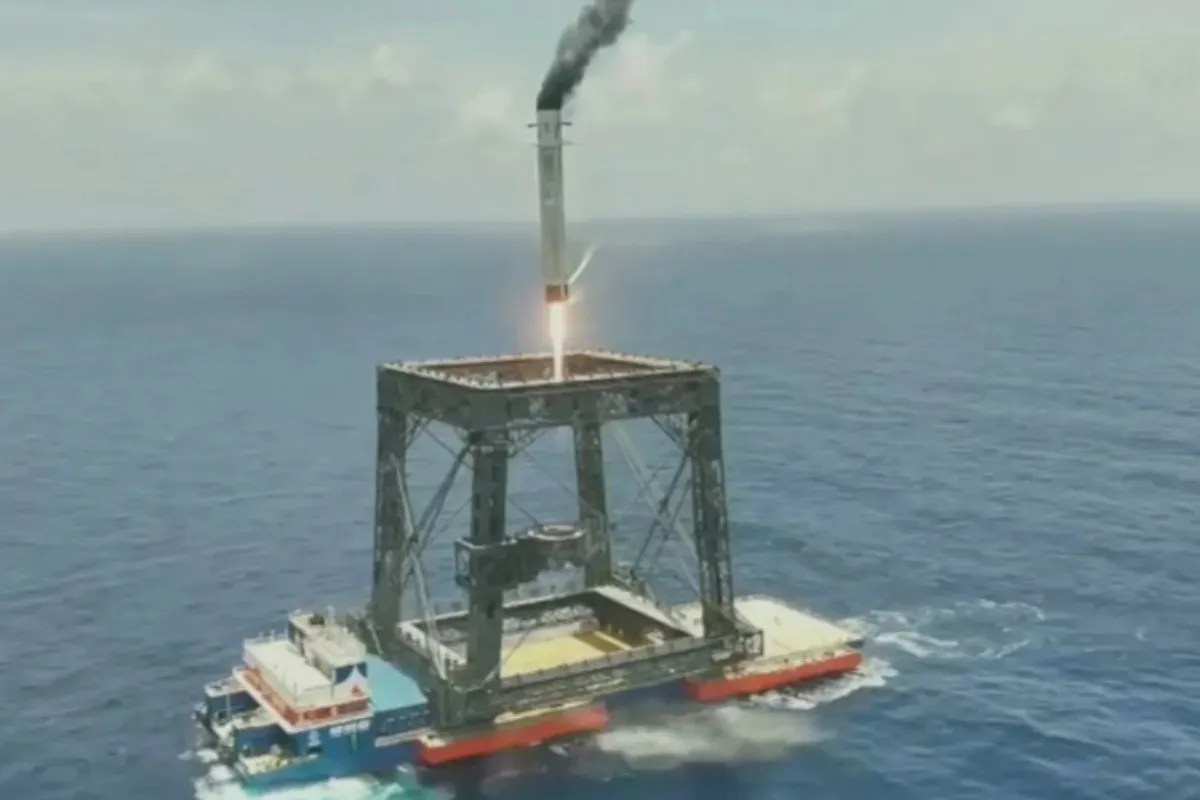
Relief is a temporary luxury in aerospace. Just twenty-four hours earlier, state media in China reported that their own space program had successfully recovered a rocket's first stage after a full liftoff. The neighborhood is getting crowded. The race is accelerating.
What happens next isn't about glory or planting flags. It is about logistics. The data pulled from this 40-second hop will be packed into crates and shared with partners in France and Germany. The goal is a larger vehicle called Callisto, designed to fly higher, faster, and face the true fury of atmospheric reentry before April.
We tend to look at space exploration through the lens of giant leaps. We celebrate the footprints in the dust. But the future of how humanity connects—our weather data, our global communications, our national security—depends entirely on these tiny, unglamorous hops in the mud of Akita Prefecture.
The RV-X sits on its pad now, ticking as the metal cools, smelling of soot and success. It is small, but it did what it was asked to do. It came home.
This video documents the operational context of Japan's current space program, showing the launch of the low-cost H3 variant that the new reusable technology aims to eventually succeed.