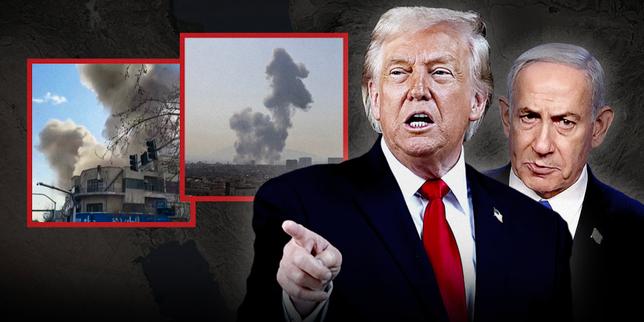
The media is currently gorging itself on satellite imagery of scorched earth in Iran, acting as if a few blurry pixels of a Parchin rooftop constitute a "victory" for transparency. They call it "verified imagery." I call it a distraction.
While armchair analysts on social media squint at Maxar snapshots to count craters, they are missing the entire point of modern kinetic diplomacy. The obsession with visual confirmation has turned the public into useful idiots for military intelligence wings. You think you’re seeing the "truth" because a 30-centimeter resolution photo shows a hole in a shed. You aren't. You’re seeing exactly what the target and the attacker want you to see.
The Myth of the "Surgical Strike"
Mainstream reporting focuses on how "precise" these strikes are. They point to a specific building in the Khojir missile production complex and marvel at the lack of collateral damage.
This is a fundamental misunderstanding of 21st-century warfare. Precision isn't just about hitting the target; it's about managing the narrative of the aftermath.
If Israel or the United States hits a specific wing of a facility, they aren't just destroying a centrifuge or a mixing vat for solid fuel. They are sending a coded message to the Iranian leadership that says: "We have the blueprints to your bedroom, not just your factory." When you focus on the "verified damage," you’re looking at the ink on the paper rather than reading the letter.
The Problem with Satellite Confirmation
Satellite imagery is the most overrated tool in the modern journalist’s kit. Here is why:
- The Decoy Factor: Iran is the world leader in "theatrical engineering." For decades, they have built decoy facilities specifically designed to look important from a Birdseye view. A "verified strike" on a decoy is a win for the defender, not the attacker.
- Internal Damage vs. External Scars: A building can look perfectly intact from space while its internal high-tech infrastructure has been turned to scrap by a high-frequency microwave weapon or a cyber-physical attack.
- The Delay: By the time a civilian satellite passes over and the images are cleared for public sale, the strategic reality on the ground has shifted three times over.
Stop Asking if it Happened and Start Asking Why You’re Allowed to See It
Whenever "verified images" of a sensitive site in Iran leak to the press, you need to ask who benefits from that leak.
In the intelligence world, we have a saying: "If it’s on the front page, it’s no longer intelligence; it’s propaganda."
Israel’s tactical silence followed by "anonymous" leaks of satellite coordinates is a deliberate psychological operation (PSYOP). It creates a sense of omnipresence. It forces the Iranian regime to scramble, not just to fix the hole in the roof, but to find the mole who gave up the coordinates.
When you share these images, you aren't "informing the public." You are amplifying a state-sponsored intimidation campaign.
The "Red Line" Fallacy
We keep hearing about "red lines." The media loves this phrase because it’s easy to visualize. But in the current Middle Eastern theater, there are no lines. There is only a fluid, constant state of "gray zone" conflict.
- The Competitor’s View: A strike happened, red lines were crossed, and now we wait for the escalation.
- The Reality: The strike is the de-escalation.
Counter-intuitive? Absolutely. But by hitting specific, non-nuclear targets, Israel provides a release valve for political pressure. It satisfies the domestic demand for action without forcing Iran into a total war scenario that would collapse the global oil market. The "damage" you see in the photos is the price of preventing a third world war. It’s theater, played out in high-explosives.
The Intelligence Community’s Battle Scars
I’ve watched agencies spend eight figures on signals intelligence (SIGINT) only to have the entire operation blown because a hobbyist on a flight-tracking app noticed a Gulfstream circling a weird coordinate.
We are living in an era where "Open Source Intelligence" (OSINT) is frequently wrong but never in doubt. The rush to be first on a thread has replaced the need to be right. I’ve seen analysts misidentify a cement factory for a nuclear enrichment site because they didn't understand the local topography or the specific type of shadow cast by a cooling tower at 10:00 AM in the Iranian desert.
The False Security of Digital Breadcrumbs
The public's reliance on "verified" videos from Telegram channels is the height of technical illiteracy.
We are currently in the "Golden Age" of deepfake and CGI-augmented combat footage. If a state actor wants to hide the fact that a strike failed, they don't hide the footage—they flood the zone with fifteen different versions of it.
They use "Digital Chaff."
Imagine a scenario where a drone strike misses its mark. Within ten minutes, the defending military’s cyber unit uploads three different "civilian" videos to Twitter showing a spectacular explosion at the correct coordinates. The OSINT community "verifies" the location. The media reports a successful hit. In reality, the target is untouched, and the attacker stops trying to hit it because they believe the job is done.
Why the "Nuclear Target" Narrative is a Trap
Every time a plume of smoke rises near Isfahan, the headlines scream about the "Nuclear Threat."
This is lazy journalism.
Iran’s nuclear program is buried under mountains of literal rock. You aren't going to see the "end" of the nuclear program on a Maxar feed. If the nuclear program is actually being degraded, it's happening via Stuxnet 2.0, or through the targeted disappearance of key physicists, or through the quiet sabotage of the supply chain for specialized carbon fiber.
A missile hitting a warehouse is rarely about the contents of the warehouse. It’s about the vulnerability of the warehouse’s location.
The Actionable Truth for the Cynical Observer
If you want to actually understand what’s happening between the US, Israel, and Iran, stop looking at the pictures.
- Watch the Insurance Markets: Look at the maritime insurance rates for tankers in the Strait of Hormuz. That is a far more accurate "barometer of war" than any satellite photo. If the rates aren't spiking, the "attacks" you’re seeing are considered manageable by the people with real skin in the game.
- Monitor the Currency: Watch the Rial. Domestic stability in Tehran is measured in the price of bread and the black-market exchange rate of the Dollar. A strike that doesn't move the currency is a strike that didn't matter.
- Ignore "Official Statements": Both sides lie. They have to. Iran must downplay the damage to save face; Israel must exaggerate the damage to maintain deterrence. The truth exists in the delta between the two lies.
The Final Deception
The most dangerous misconception is that we are "spectators" to this conflict. We aren't. In the age of the smartphone, the audience is a participant.
By demanding "verified images," we are forcing military leaders to choose targets that photograph well. We are literally shaping the targets of war based on what will look convincing on a 6-inch screen.
The next time you see a "verified" image of a strike in Iran, don't ask what was hit. Ask why they wanted you to see the smoke. The most effective strikes—the ones that actually change the course of history—don't leave a crater that can be seen from space. They happen in the dark, in the code, and in the quiet corridors of power where the cameras aren't allowed.
Stop squinting at the pixels. You're looking at the magician’s waving hand while the real trick is happening in his pocket.